How to Set Up Cloud Security Incident Remediation Automation

Cloudairy
 Copy link

Get your team started in minutes
Sign up with your work email for seamless collaboration.
Whiteboard
Copy link

A cloud security incident remediation template helps teams quickly respond to threats with automated actions, reduce manual effort, improve security response time, and maintain compliance across cloud environments.
A cloud security incident remediation template helps teams quickly respond to threats with automated actions, reduce manual effort, improve security response time, and maintain compliance across cloud environments.
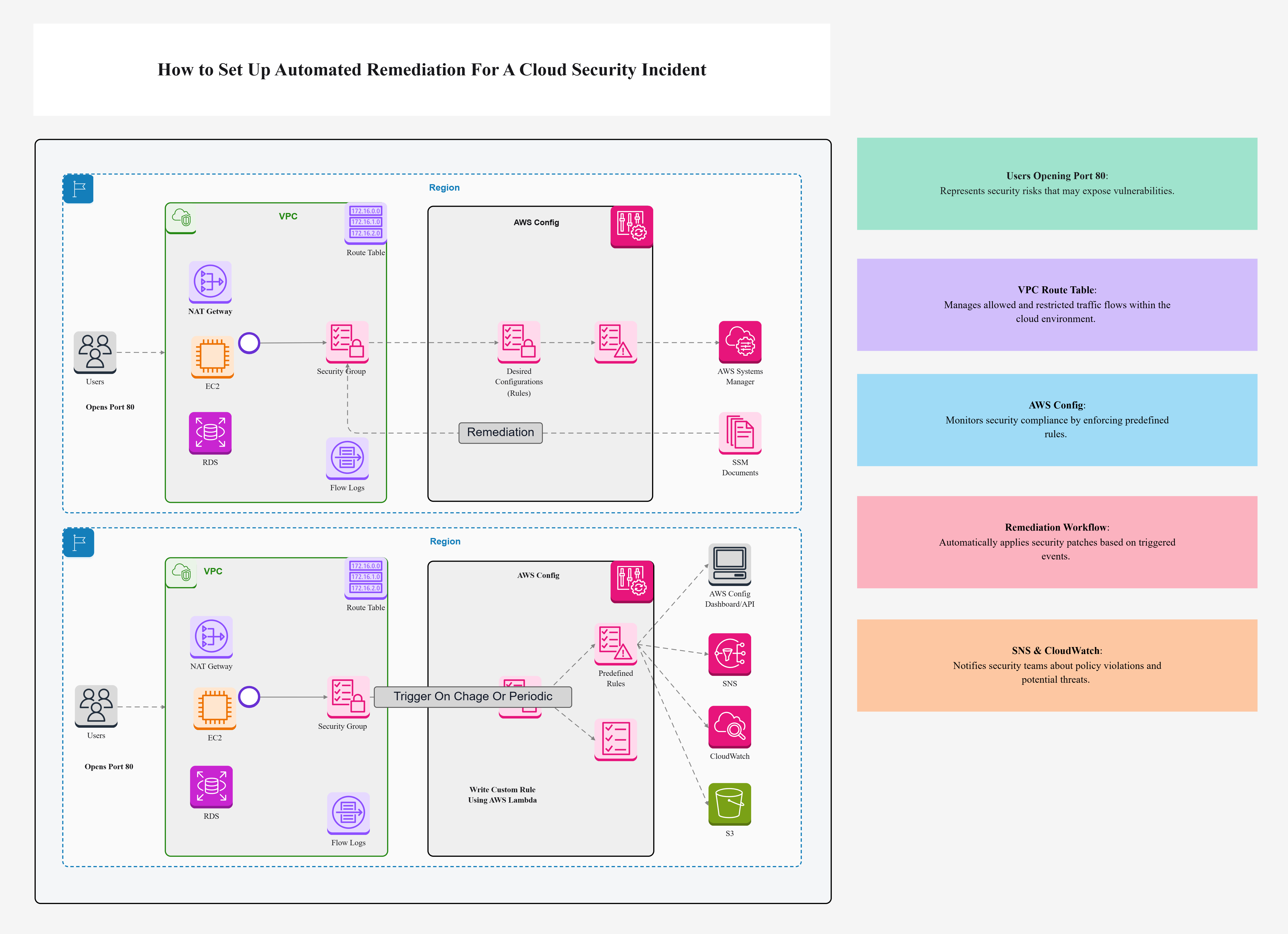
The Cloud Security Incident Remediation template shows you how to set up an automated system that fixes cloud security issues the moment they happen. It uses tools like AWS Config to track changes, AWS Lambda to take action when something off, and SNS to send burning alerts to your team. So instead of alert around for someone to notice a problem, the system finds it and fixes it right away.
Manually tracking every change in your cloud environment is not only exhausting it is risky. One delay or missed alert could expose sensitive data or leave your systems open to attack. With this template, you cut out the delay. It keeps an eye on your setup at all times, responds instantly to misconfigurations, and makes sure you stay in line with your security policies. It saves time, reduces stress, and helps you stay ahead of time.
If you're managing cloud infrastructure whether you're a cloud engineer, DevOps lead, or part of a security team this template is for you. It’s especially useful when your environment starts to grow and becomes harder to manage manually. The best time to use it? Before an issue turns into a breach. Get it in place early, so you’re not stuck reacting later.
Here’s what’s under the hood:
Getting started is easy:
When cloud security issues can strike in seconds, quick action matters. This template helps you stay ahead by undoubtedly spotting and adapting problems in real time. It takes the load off your team and keeps your setup safe, without delays.
Implementing Cloud Security circumstance Remediation is a vital step for organizations aiming to protect their workloads and conscious data in the cloud. As threats grow in complication , manual processes are often too slow to address issues before damage occurs. This guide explains how to set up Cloud Security Incident Remediation using automated workflows that detect misconfigurations, perceptivity, and active threats in real time. Automation ensures that incidents are composed expeditiously, minimizing downtime and abbreviating the risk of data exposure.
By adopting Cloud Security Incident Remediation, teams can consolidate their response strategy, reduce human error, and stay flexible with security frameworks. The process leverages monitoring tools, alerting systems, and predefined remediation scripts to enforce consistent policies across cloud environments. also, it helps align security operations with DevOps practices, ensuring that protection scales with infrastructure growth. With Cloud Security Incident Remediation, businesses strengthen resilience, improve operational ability, and maintain customer trust by addressing security incidents proactively, rather than reactively.
Loading subcategories...
 Manage all your work in one place
Collaborate with your team
Use Cloudairy for FREE—forever
Explore More