hero-bg-pricing

Get your team started in minutes

Sign up with your work email for seamless collaboration.

designing network security architectures
Technical Diagramming

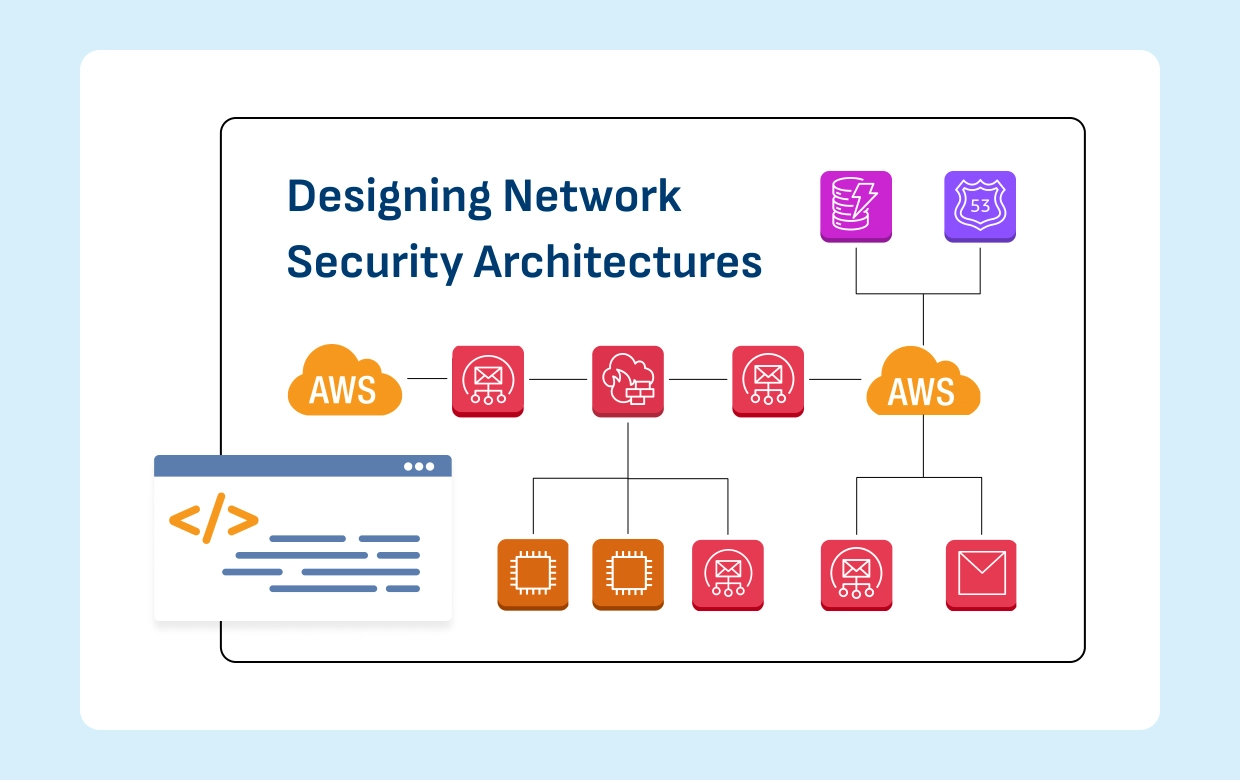
Designing Network Security Architectures
Author
Cloudairy
By Cloudairy Team
December 29, 2025
10 min read

What Is Network Security Architecture?

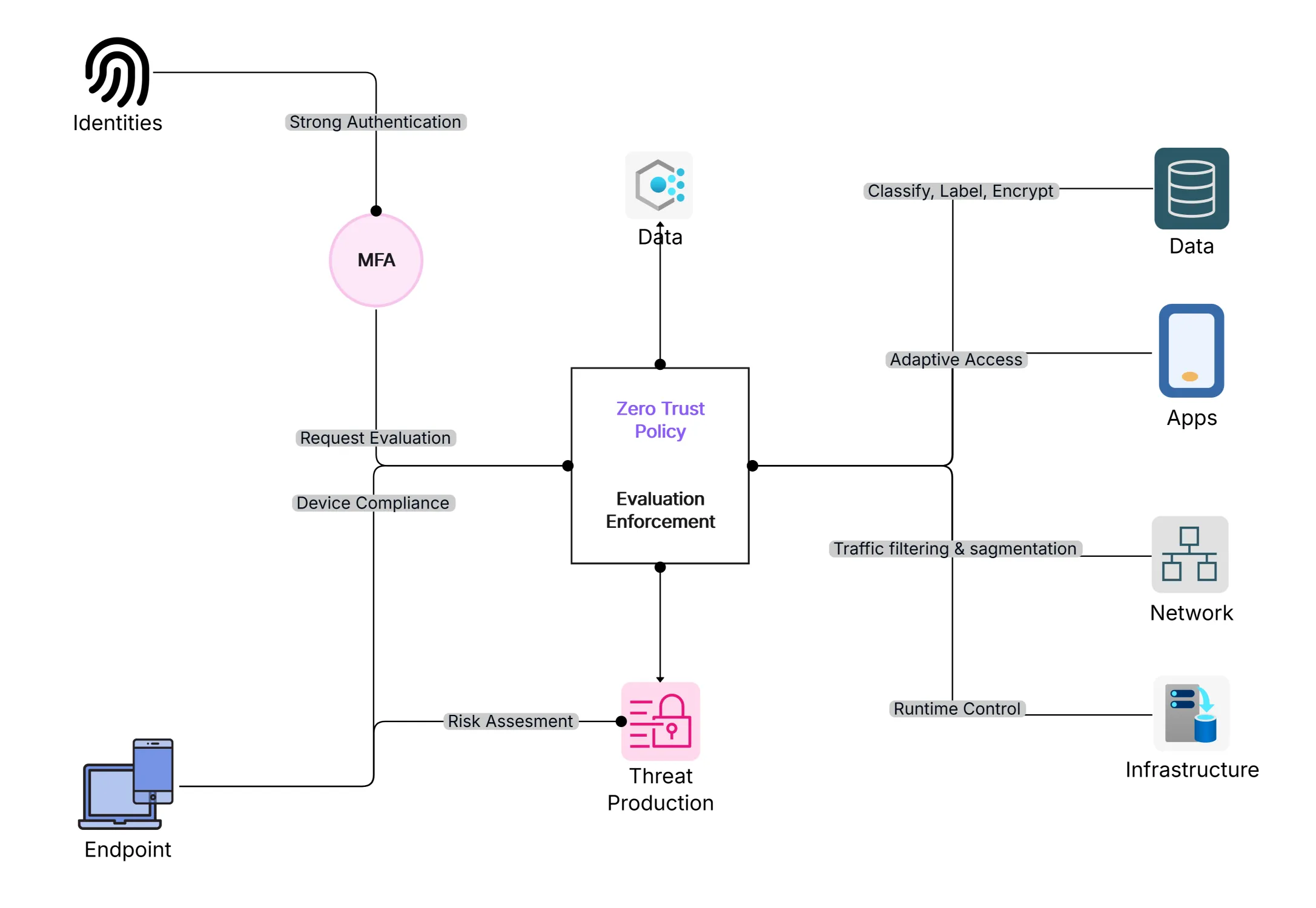
Network security architecture is the blueprint that governs how traffic moves, where trust is established, and how threats are contained. Rather than depending on a single perimeter, it layers controls—segmentation, gateway inspection, encrypted paths, and continuous monitoring—close to applications and data. The goal is simple: reduce blast radius, make attacker movement difficult, and gather evidence. Done right, it aligns with zero trust, hybrid cloud realities, and the way modern teams actually work.
Why Network Security Architecture Still Matters

Hybrid work, SaaS growth, and multi-cloud have dissolved traditional boundaries, yet attackers still rely on lateral movement and identity abuse. A modern network security architecture addresses both by shrinking trust zones, validating context on every hop, and logging with intent. It supports app-level access (ZTNA) alongside selective inspection, reducing performance tradeoffs. Most importantly, it makes security observable and repeatable so leaders can prove outcomes: fewer pathways, faster revocation, and cleaner audits.

Core Principles of Network Security Architecture

Great designs feel simple to use but strict under the hood. First, segment by value so critical data and workloads live behind tighter, purpose-built paths. Second, minimize implicit trust by replacing broad access with contextual, app-level authorization that can change mid-session. Third, design for observability so every decision and packet of interest is attributable and reviewable. These principles translate into tangible wins: reduced blast radius, predictable performance, and evidence on demand.

Segment by Value and Function

Segmentation is more than VLANs—it’s a deliberate map of who talks to what, why, and how much. Group systems by business function and data sensitivity, then erect policy-aware boundaries between them. Use microsegmentation to tame east–west traffic in data centers and clouds. Couple segments with named, audited paths so “unknown flows” are easy to spot and block. The outcome is smaller failure domains and fewer default highways for attackers to traverse.

Minimize Implicit Trust with Contextual Access

Implicit trust is where breaches grow. Replace “inside equals trusted” with contextual access decisions that consider identity, device posture, and behavior. Prefer application-level access (ZTNA) to blanket VPNs, and require step-up MFA for sensitive actions. Keep tokens short-lived and bind them to devices where possible. With continuous evaluation, access can tighten when risk rises—without tearing down every session. Users stay productive while your control plane stays decisive.

Design for Observability and Response

If you can’t observe it, you can’t defend it. Instrument gateways, meshes, and endpoints to emit structured logs and traces. Send them to SIEM/XDR where analytics correlate anomalies with identity and segment context. Pre-plan response actions—quarantine, re-auth, or route cuts—so automation can act within seconds. When incidents happen, rich telemetry turns confusion into evidence: who accessed what, from where, with which assurance, and how it deviated from normal.

Key Components & Diagram

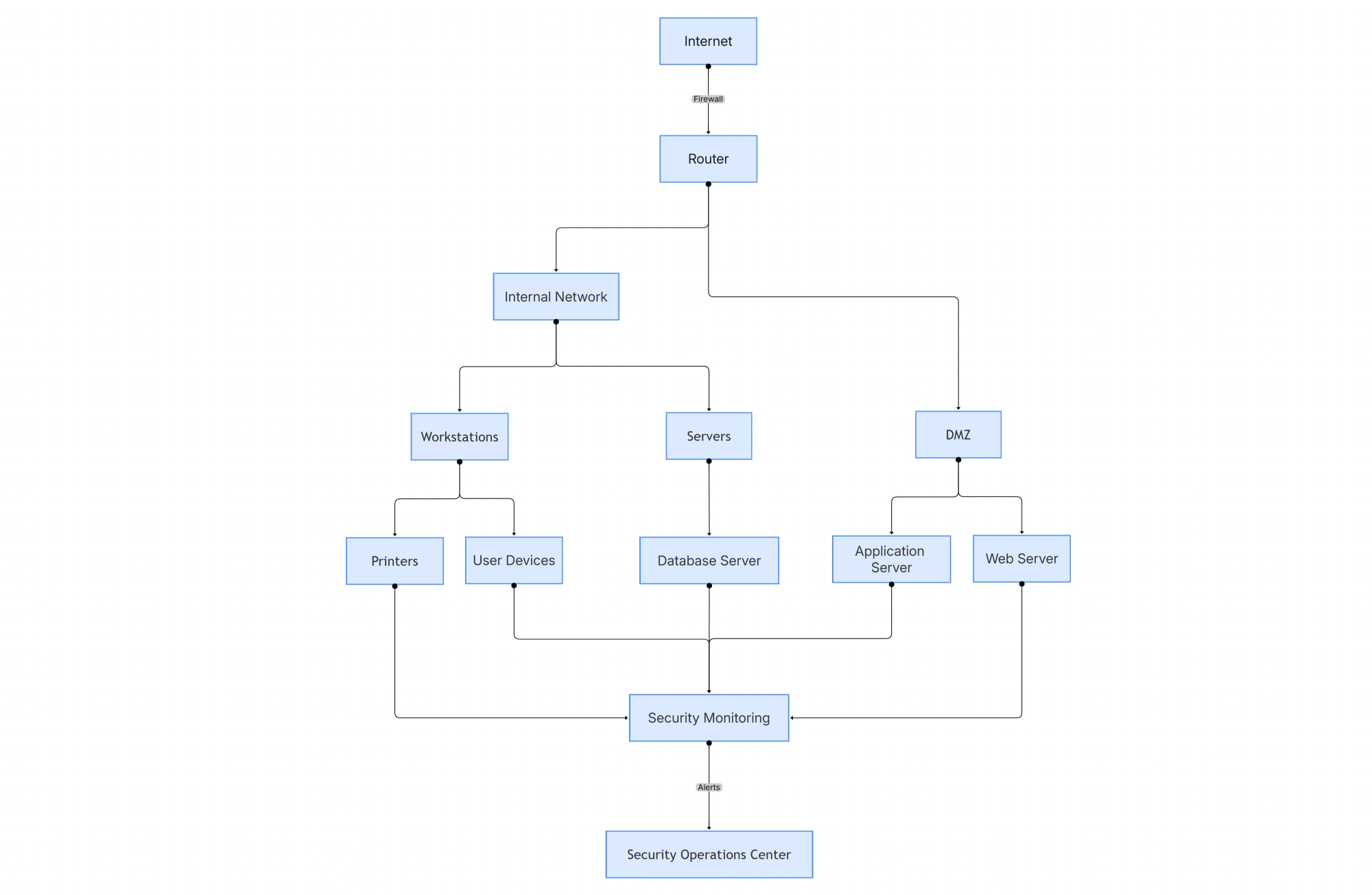
Intro: A practical diagram clarifies where policies execute and where telemetries converge. Begin at the “front doors,” trace traffic through segments, and end at monitoring and response. The numbered components below map directly to the Network Security Architecture Diagram Template and align with Zero Trust and IAM so identity and network decisions reinforce each other.
  1. Ingress/Egress Gateways & WAF
    Gateways terminate TLS, validate tokens, and enforce schema at the edge before traffic reaches apps. Pair with WAF for application-layer inspection and DDoS absorption. Document allowed routes and block the rest by default. Log request identity, device posture, and result codes for audits. When risk rises, trigger re-auth or throttle from the edge so internal tiers avoid overload and exposure.
  2. Microsegmentation & East–West Controls
    Divide workloads into logical zones—payments, PII services, admin planes—and restrict lateral paths. Use layer-7 policies where possible so decisions follow services, not subnets. Apply deny-by-default rules and maintain a “known good” service graph. Periodically validate flows with tests. The payoff is smaller blast radius, clearer troubleshooting, and fewer implicit highways for reconnaissance and pivoting.
  3. Zero Trust Network Access (ZTNA) & App Proxies
    Replace “full tunnel” VPNs with app-level access that brokers identity-bound sessions. Evaluate device health, user role, and location; then grant the minimum route needed. Force step-up MFA for admin or data-export actions. Expire tokens quickly and re-check on context change. Users see simple launches; you retain tight, instrumented control that’s easy to revoke mid-session.
  4. Secure Connectivity (IPsec/TLS, Private Links, SD-WAN)
    Encrypt in motion across branches, clouds, and data centers with modern suites (TLS 1.3, strong PFS). Prefer private links or service endpoints over public egress where feasible. Use SD-WAN for policy-aware path selection, steering risky or sensitive traffic through inspection. Rotate keys automatically and monitor SNI/metadata for anomalies without deep-packet inspection on every hop.
  5. DNS, Egress Control, and Threat Containment
    Treat DNS as both resolver and security signal. Enforce egress allow-lists, sinkhole known bad domains, and restrict direct internet access from sensitive zones. Tag flows with identity and purpose so strange destinations stand out. Combine egress policies with just-in-time exceptions that auto-expire, keeping rare access visible and contained.
  6. Telemetry, SIEM/XDR, and SOAR Automation
    Centralize logs from gateways, firewalls, meshes, and endpoints. Enrich with identity, device posture, and segment labels. Build detections for lateral movement, impossible travel, and mass data egress. Wire SOAR to quarantine hosts, expire tokens, or cut routes automatically. Link dashboards to owners so findings become fixes, not just alerts

Implementation Roadmap

Intro: Ship value in small, auditable slices. Pick a protection surface, segment it, enforce app-level access, and prove better outcomes. Then iterate outward. The steps below align with the Security Architecture Diagram Tool and reuse patterns from Zero Trust and Monitoring so designs stay coherent and measurable.

  1. Choose a High-Value Surface & Baseline Flows
    Select a critical app or dataset. Map callers, paths, and dependencies. Define “known good” routes and KPIs: reduced open ports, fewer lateral paths, lower time-to-revoke. Capture current logs so improvements are provable and non-controversial.
  2. Establish App-Level Access (ZTNA) at the Edge
    Front the surface with ZTNA or an app proxy. Enforce strong identity, device posture, and short token TTLs. Add step-up MFA for sensitive functions. Measure reduced VPN scope and cleaner audit trails. Keep a rollback plan while traffic migrates.
  3. Apply Microsegmentation & Deny-by-Default
    Create functional zones and restrict east–west traffic to explicit APIs. Replace broad ACLs with service policies. Validate paths with integration tests. Track decreases in reachable targets from a single compromise to quantify blast-radius reduction.
  4. Tighten Egress, DNS, and Encryption
    Implement egress allow-lists and DNS controls for the surface. Encrypt all inter-zone links with modern suites and rotate keys automatically. Monitor unusual destinations and auto-expire temporary exceptions. Report fewer unclassified outbound flows.
  5. Centralize Telemetry and Automate Response
    Stream logs to SIEM/XDR with segment and identity tags. Add detections for lateral movement and anomalous exports. Wire SOAR to quarantine or force re-auth on risk. Review metrics monthly and tune policies accordingly.

Common Mistakes and How to Avoid Them

Intro: Most network programs stumble by copying old perimeter habits into modern environments. Others over-inspect everything and crush performance, or they segment without observability. Use these pitfalls as a quarterly checklist. Each one pairs a symptom with a corrective action that improves both security and usability—so progress is visible to engineers, auditors, and leadership alike.

  1. Flat Networks Masquerading as “Simple”
    Convenience today becomes chaos tomorrow. Without segmentation, reconnaissance and pivots are trivial. Start with value-based zones and explicit routes. Publish a service graph and block unknown flows. Measure reachable hosts from a test vantage point and shrink that number each sprint.
  2. Inspection Everywhere, Context Nowhere
    Deep-packet inspection on every hop adds latency and blind corners. Prefer identity-aware gateways and selective decryption where risk warrants. Tie policies to user, device, and app context. The result is better security with fewer performance complaints and clearer evidence.
  3. Perimeter VPNs for Everything
    Full-tunnel VPNs hand out broad trust and unwieldy access. Replace with ZTNA that brokers per-app routes and re-checks context mid-session. Use short-lived tokens and step-up MFA. You’ll cut help-desk tickets and limit lateral paths in one move.
  4. Rules Without Ownership or Evidence
    Firewalls sprawl because nobody owns them. Assign owners to policies and link every rule to a business purpose. Export change logs and hit rates to dashboards. Retire rules with no traffic or justification. Audits become fast, and drift stops accumulating.
  5. Segmentation Without Monitoring
    Walls without windows hide problems. Stream gateway, mesh, and endpoint logs to SIEM/XDR with segment labels. Alert on new paths and unusual egress. Connect SOAR playbooks so isolation takes seconds, not hours, and feed lessons back into design.

Conclusion

Designing network security architectures is about clarity: clear paths, clear policies, and clear evidence. Segment by value, replace broad trust with contextual access, and centralize telemetry so response is fast and defensible. Start with one protection surface, prove better outcomes, and scale the pattern. Build your diagram with the Network Security Architecture Template in the Security Architecture Diagram Tool, and interlink with Zero Trust, IAM, and Security Monitoring for end-to-end assurance.

FAQs

1.How does network security architecture relate to Zero Trust?

Zero Trust is the strategy; network security architecture is one execution layer. You enforce identity-centric, least-privilege paths, segment by value, and keep tokens short-lived—then monitor everything.

2.Do I need microsegmentation everywhere?

Start where it matters: crown-jewel apps and sensitive data zones. Expand as tests and telemetry mature. Over-segmentation without observability can slow teams; balance precision with practicality.

3.Is ZTNA a VPN replacement?

For many use cases, yes. ZTNA grants per-app access based on identity and device posture, reducing broad network exposure. Some site-to-site needs still warrant tunnels; keep scopes tight.

4.How do I prove improvements to leadership?

Track reachable targets from a test host, time-to-revoke access, number of unknown flows, and incident containment times. Show quarter-over-quarter reduction as segmentation and ZTNA expand.

5.How do cloud and on-prem fit together?

Use consistent identity and policy models. Prefer private links or service endpoints and encrypt interconnects. Manage segments and telemetry uniformly; see Hybrid Cloud Security Architecture.

Ready to create smarter with AI?

Start using Cloudairy to design diagrams, documents, and workflows instantly. Harness AI to brainstorm, plan, and build—all in one platform.

Recommended for you
C4 Diagrams for Software Engineering
Technical Diagramming