50,000 + Trusted Users with
star star star star star

Trusted by Professionals at Leading Companies

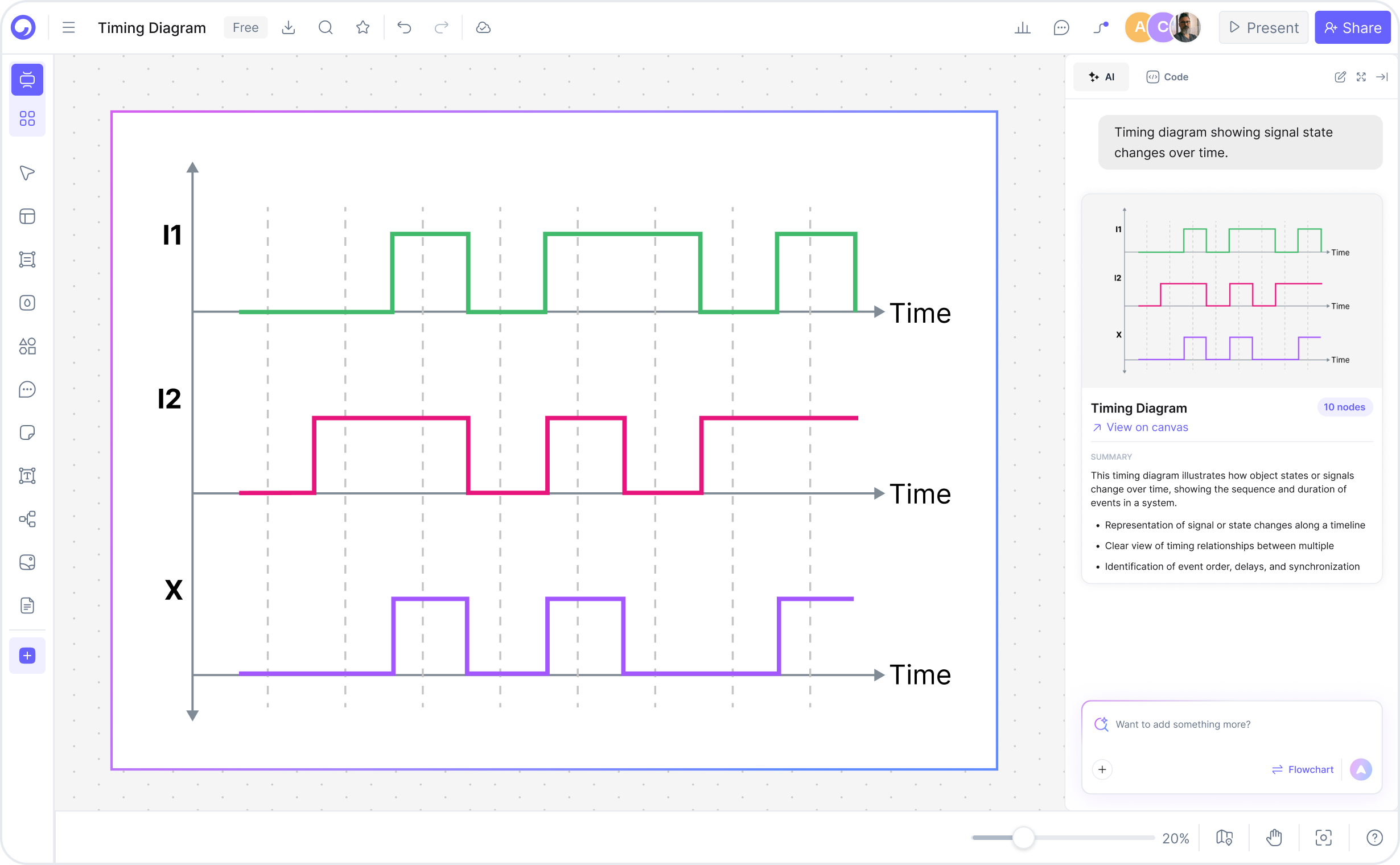
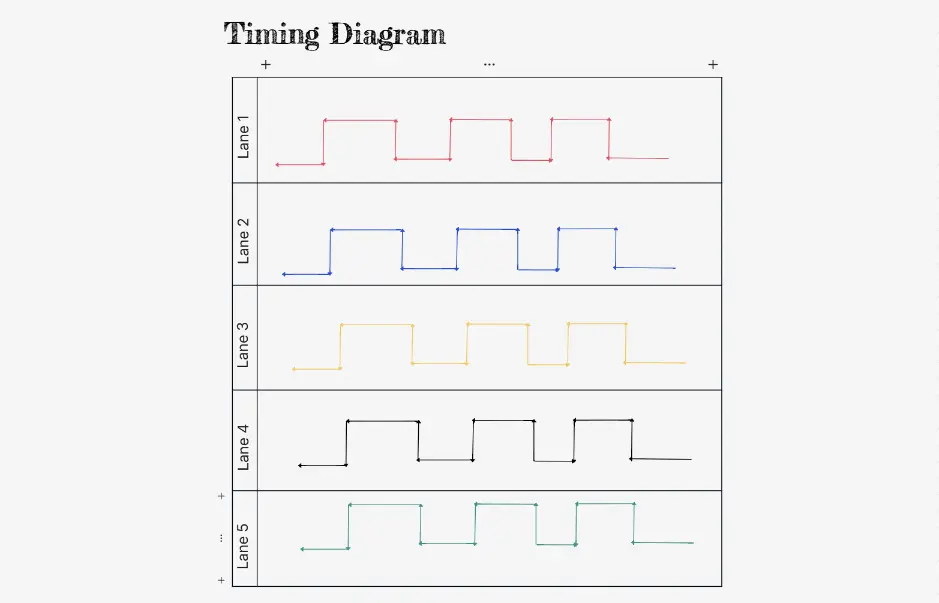
What is a timing diagram — example showing UML timing notation with signal waveforms, state transitions, and protocol timing

What Is a Timing Diagram?

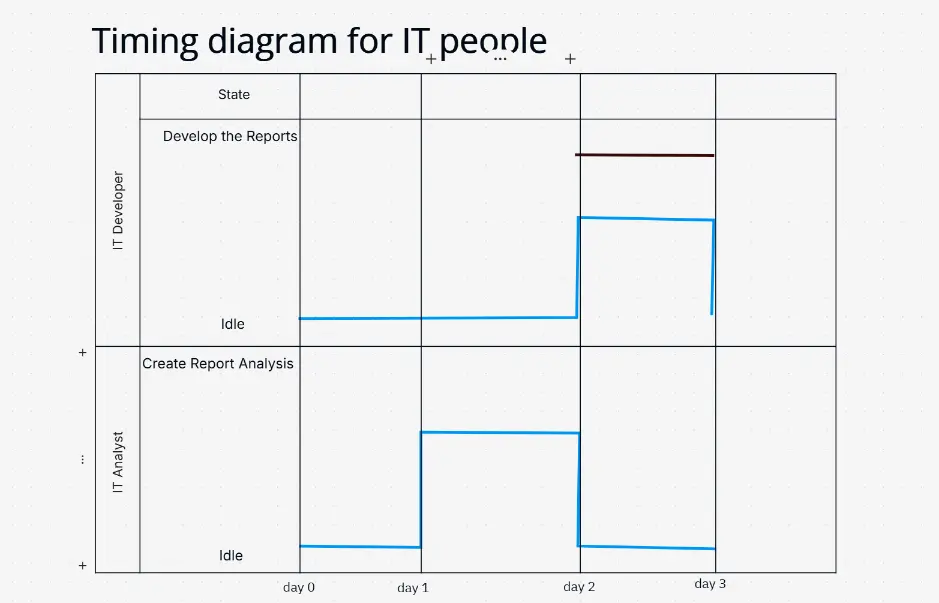
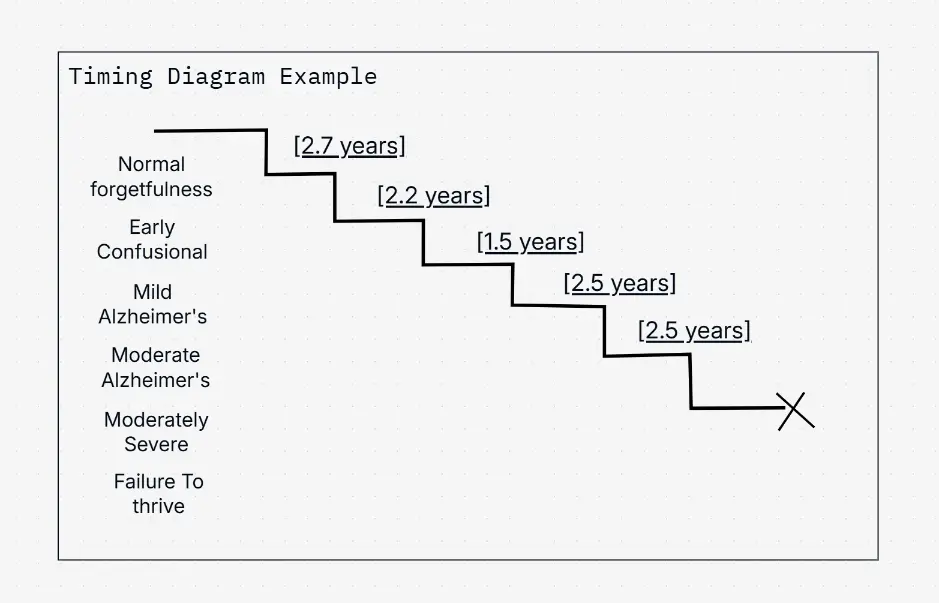
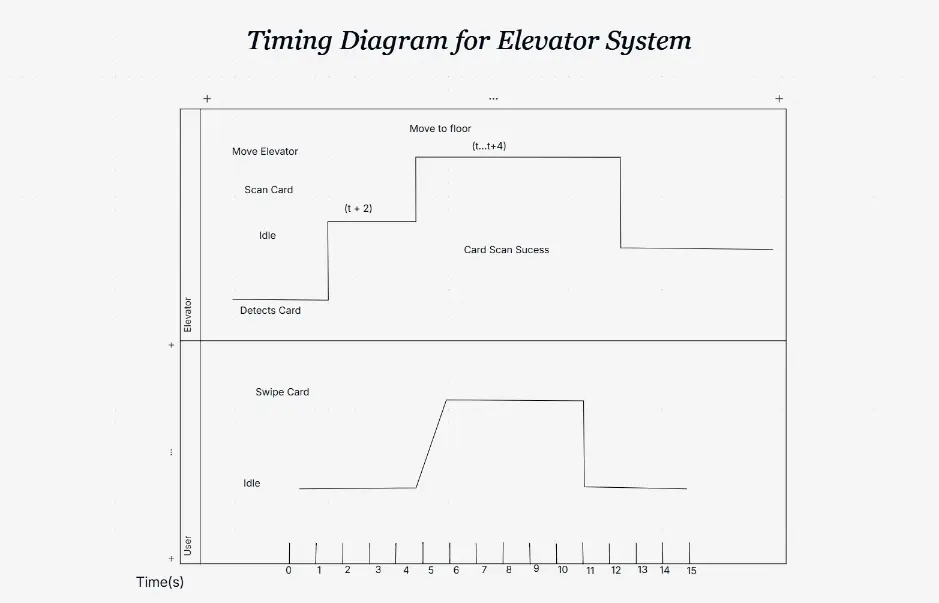
A timing diagram is a graphical representation that shows how signals, states, and events change over time in complex systems. In UML 2.x, timing diagrams are a standard behavioral diagram type used to model the temporal behavior of objects and components — showing state lifelines, state transitions, and timing constraints on a horizontal time axis. They are essential for specifying system interactions where time is a critical constraint.

Timing diagrams serve two critical audiences: UML architects who model system interactions and state sequences, and hardware engineers in FPGA, ASIC, and embedded systems development who need to visualize signal timing, communication protocols such as SPI, I2C, UART, and CAN, and DDR memory access patterns. Each use case requires precise waveform accuracy, proper time scaling, and clear protocol notation — all of which Cloudairy generates automatically.

Cloudairy's AI Timing Diagram Maker eliminates manual drawing and complex software learning curves. Describe your timing requirements in plain English — "SPI read transaction with 4 signals and 8-bit data frame" or "UML timing for a traffic light state machine" — and the AI generates a complete, production-ready timing diagram instantly. Export to PNG, SVG, or PDF for technical documentation, design reviews, and presentations. Perfect for hardware engineers, UML architects, embedded developers, and electronics students.

How to Create a Timing Diagram with AI (4 Steps)

Go from signal description to professional UML timing diagram or digital waveform chart in four steps — no manual drawing, no complex software, no coding required.

1

Describe your signals and timing

Type a plain-English description of your timing requirements. For example: "SPI read transaction with chip select, clock, MOSI, and MISO signals" or "UML timing diagram for a sensor state machine with Idle, Active, and Error states". Or choose from built-in prompt chips — SPI timing, I2C read/write, UART frame, DDR memory, FPGA clock, UML state timing.

2

AI generates the timing diagram

Cloudairy's AI instantly generates a complete timing diagram with accurate signal waveforms, proper time axis, state transitions, clock cycles, and timing constraints — all structured correctly and ready for review.

3

Edit with the timing diagram editor

Refine the diagram in Cloudairy's visual editor. Adjust signal timing values, add or remove signals, modify state labels, insert timing constraints and annotations, change clock frequency, or expand the time axis for more detail.

4

Export to your preferred format

Export to PNG for presentations and documentation, SVG for scalable vector graphics, or PDF for printing and design reviews. Share a live view-only or collaborative edit link with your team instantly.

How to create a timing diagram with Cloudairy — four steps from prompt to export

Start Creating Your Timing Diagram Free

Join hardware engineers, UML architects, and embedded developers worldwide who use Cloudairy to create professional timing diagrams in seconds. AI generation. UML 2.x notation. Protocol templates. Multi-format export.

No credit card required • Start creating in seconds

Why Use Cloudairy as Your Timing Diagram Tool

Cloudairy is the only AI timing diagram maker that combines AI text-to-diagram generation with UML 2.x notation, digital protocol templates for SPI, I2C, UART, CAN, and FPGA, multi-format export, and real-time collaboration — all on a single platform.

AI Prompt-to-Diagram

AI Prompt-to-Diagram

Describe your timing requirements in plain English and get a complete, accurate timing diagram in seconds. No manual drawing, no complex waveform editors, no coding. The AI understands signal names, timing values, clock cycles, state transitions, and protocol sequences.

UML 2.x Timing Notation

UML 2.x Timing Notation

Generate timing diagrams with full UML 2.x standard notation. Complete support for state lifelines, state transitions, timing constraints, duration constraints, and message events. Fully compatible with software architecture and system design documentation standards.

Digital Protocol Support

SPI, I2C, UART, CAN & FPGA Protocol Support

Generate digital waveform timing diagrams for all major communication protocols. Predefined templates for SPI, I2C, UART, CAN, DDR memory access, clock signals, and FPGA timing. Custom signals and timing constraints can be freely added for any hardware design requirement.

Multi-Format Export

Multi-Format Export

Export timing diagrams to PNG for presentations, SVG for scalable vector graphics, or PDF for printing and documentation. Your diagrams stay portable and ready to drop into technical reports, datasheets, and design review documents.

Real-Time Collaboration

Real-Time Collaboration

Multiple team members can work simultaneously on the same timing diagram, leave inline comments, and see changes in real time. Ideal for distributed hardware review sessions, peer reviews, and collaborative system design workflows.

Version History and Templates

Version History & Protocol Templates

Track every revision with full version history. Start from professionally designed protocol templates for SPI, I2C, UART, CAN, DDR, and more — then customize with AI assistance. Share diagrams via view-only links or live collaborative edit sessions.

Cloudairy vs Competitors — Timing Diagram Tools Compared

See how Cloudairy's AI timing diagram maker compares to traditional waveform editors, UML tools, and enterprise digital design platforms.

Feature Cloudairy WaveDrom Lucidchart EdrawMax ModelSim MathWorks
AI Generation from Text Yes No No No No No
UML 2.x Timing Notation Yes No Limited Yes No Limited
SPI / I2C / UART Templates Yes Yes No Limited Yes Yes
Real-Time Collaboration Yes No Yes Limited No No
PNG / SVG / PDF Export Yes Yes Yes Yes Limited Yes
Free Tier Yes Yes (open source) Limited Limited Limited No
Learning Curve Low Medium Medium Medium High Very High

Who Uses Timing Diagrams?

Hardware Engineers & FPGA Designers

Visualize signal timing for FPGA, ASIC, and digital circuit designs. Create SPI, I2C, UART, CAN, and DDR memory timing diagrams from plain-text descriptions — no waveform editor required.

Embedded Systems Developers

Document protocol timing for microcontroller and embedded system designs. Generate communication protocol waveforms for firmware specification, integration testing, and board bring-up documentation.

UML Architects & System Designers

Model temporal behavior of software components and system interactions. Generate UML 2.x compliant timing diagrams showing state lifelines, transitions, and timing constraints for architectural documentation and design reviews.

Software Engineers

Document API call timing, interrupt service routines, and real-time system behavior. Generate timing diagrams from plain English descriptions of concurrent processes and event-driven systems.

Electronics Instructors & Students

Teach digital electronics timing concepts and UML behavioral modeling. Generate timing diagram examples instantly from protocol descriptions and create practice exercises from real hardware scenarios.

Hardware engineers, UML architects, and embedded developers using Cloudairy for timing diagrams

Frequently Asked Questions

A timing diagram is a graphical representation that shows how electrical or logical signals change over time. It is used to document communication protocols, validate signal timing, and specify temporal behavior of systems in hardware and software design. Timing diagrams are critical for validating FPGA designs, embedded protocol implementations, and UML behavioral specifications.

Yes. Describe your timing requirements in plain English and Cloudairy's AI instantly generates a fully formatted, production-ready timing diagram. The AI understands signal names, timing values, clock cycles, state transitions, and protocol sequences — translating them into precise visual waveforms without any manual drawing.

Cloudairy supports UML 2.x standard timing diagrams and includes predefined templates for SPI, I2C, UART, CAN, DDR memory access, clock signals, and FPGA timing. Custom signals and timing constraints can be freely added and configured for any hardware or software design requirement.

UML timing diagrams model temporal behavior of objects and state transitions in software systems following UML 2.x notation — they show state lifelines, transitions, and timing constraints. Digital waveform diagrams show electrical signal levels (high/low) over clock cycles for hardware protocols like SPI, I2C, and UART. Cloudairy supports both types with AI-assisted generation on the same platform.

Yes. Multiple team members can work simultaneously on the same timing diagram, leave inline comments, and see changes in real time — similar to Google Docs. Full version history is maintained so every revision is recoverable. Ideal for distributed hardware review sessions and collaborative system design.

Cloudairy exports timing diagrams to PNG, SVG, and PDF with full quality preservation. PNG is ideal for presentations and documentation; SVG provides scalable vector output for high-resolution printing; PDF is ready for technical reports and design review packages — all formats are immediately usable in datasheets, specifications, and design documents.

Yes. Cloudairy's free tier includes unlimited timing diagram generation, AI prompt-to-diagram, predefined protocol templates for SPI, I2C, UART, CAN, and DDR, and PNG/SVG export. Premium plans unlock advanced features like PDF export, real-time collaboration, full version history, and priority support.

Timing diagrams are used by hardware engineers for FPGA, ASIC, and embedded systems design; UML architects for modeling system interactions; embedded software developers for documenting firmware protocol behavior; software engineers for real-time system documentation; and electronics students and instructors for learning and teaching digital signal concepts.

Start with Cloudairy's free AI timing diagram maker. Use AI generation to create diagrams from plain English signal descriptions, explore predefined protocol templates (SPI, I2C, UART, UML state timing), and iterate with the visual editor. Combine with UML 2.x specification resources and hardware protocol datasheets to deepen your understanding of timing requirements and notation standards.

Success Stories from Our Community

See how cloud architects, solutions engineers, and DevOps teams use Cloudairy to create Azure architecture diagrams faster and with better results.

As a cloud architect, I need precision and speed. Cloudairy helps me design complex Azure architectures in minutes without losing detail or accuracy. The official Azure icons save me hours every week.

Cloudairy makes Azure solution design so simple. I can create client-ready architecture diagrams instantly and focus on delivering value instead of spending hours formatting Visio files.

I'm studying for AZ-305 and Cloudairy helps me visualize Azure reference architectures instantly. I can generate a landing zone diagram from a single sentence and use it as a study aid.

I use Cloudairy to teach Azure architecture in my courses. The AI generator lets students produce real-world diagrams on the first day instead of spending weeks learning Visio.

Our team uses Cloudairy to document every Azure deployment. The Visio export means our diagrams drop straight into client deliverables without any reformatting. Huge time saver.

Secure, compliant, and enterprise-ready

Cloudairy safeguards your work with enterprise-grade security, compliance, and access controls — so your teams can create, collaborate, and scale with confidence.

SOC 2 Type II
SOC 2 Type Ⅱ

Cloudairy is SOC 2 Type Ⅱ certified and penetration tested annually, ensuring your architecture diagrams and data meet the highest standards for security and reliability.

GDPR
GDPR

We comply with the European Union General Data Protection Regulation (GDPR) and extend it to all our customers even those outside of the EU.

ISO 27001
ISO 27001

Our Information Security Management System is ISO 27001 certified — the leading global standard for information security.

Flexible Pricing for Every Team

Free

Discover what Cloudairy can do for you. Start for free

$0

for unlimited members
Try for free

Upgrade now

Show key features

up-arrow

Includes:

Starter

Unlock unlimited and private boards with important features

$4

per member / month

billed annually

monthly

Show key features

up-arrow

Includes everything in Free, plus:

money-back

Business

MOST POPULAR

Ideal for agencies or growing businesses managing multiple projects.

$5

per member / month
billed annually

Show key features

up-arrow

Includes everything in starter, plus:

Enterprise Plan

For large organizations needing scalability, control, and security.

contact-pricing
Contact for pricing
Contact us

Upgrade now

Show key features

up-arrow

Includes everything in Business, plus: