50,000 + Trusted Users with
star star star star star

Trusted by Professionals at Leading Companies

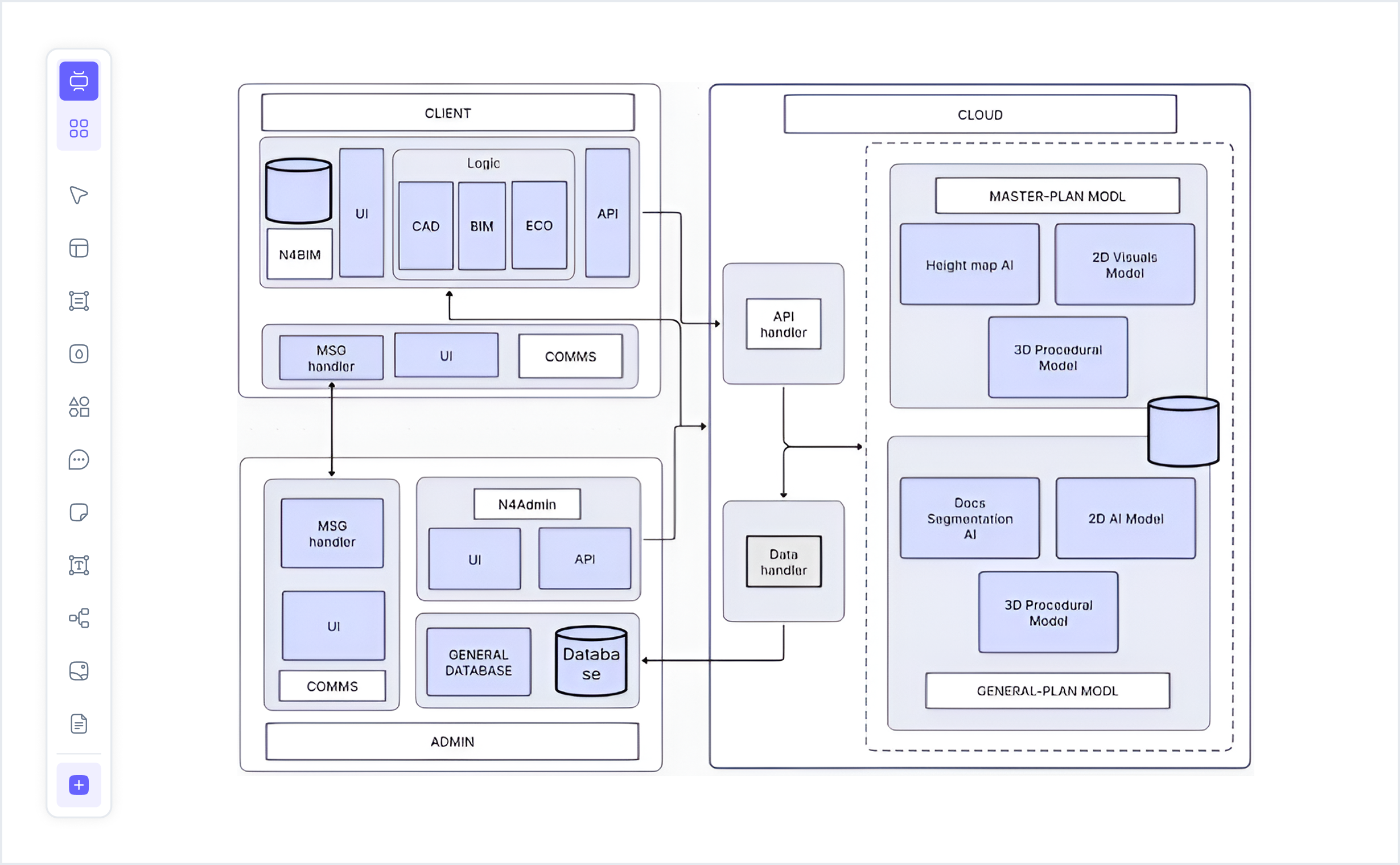
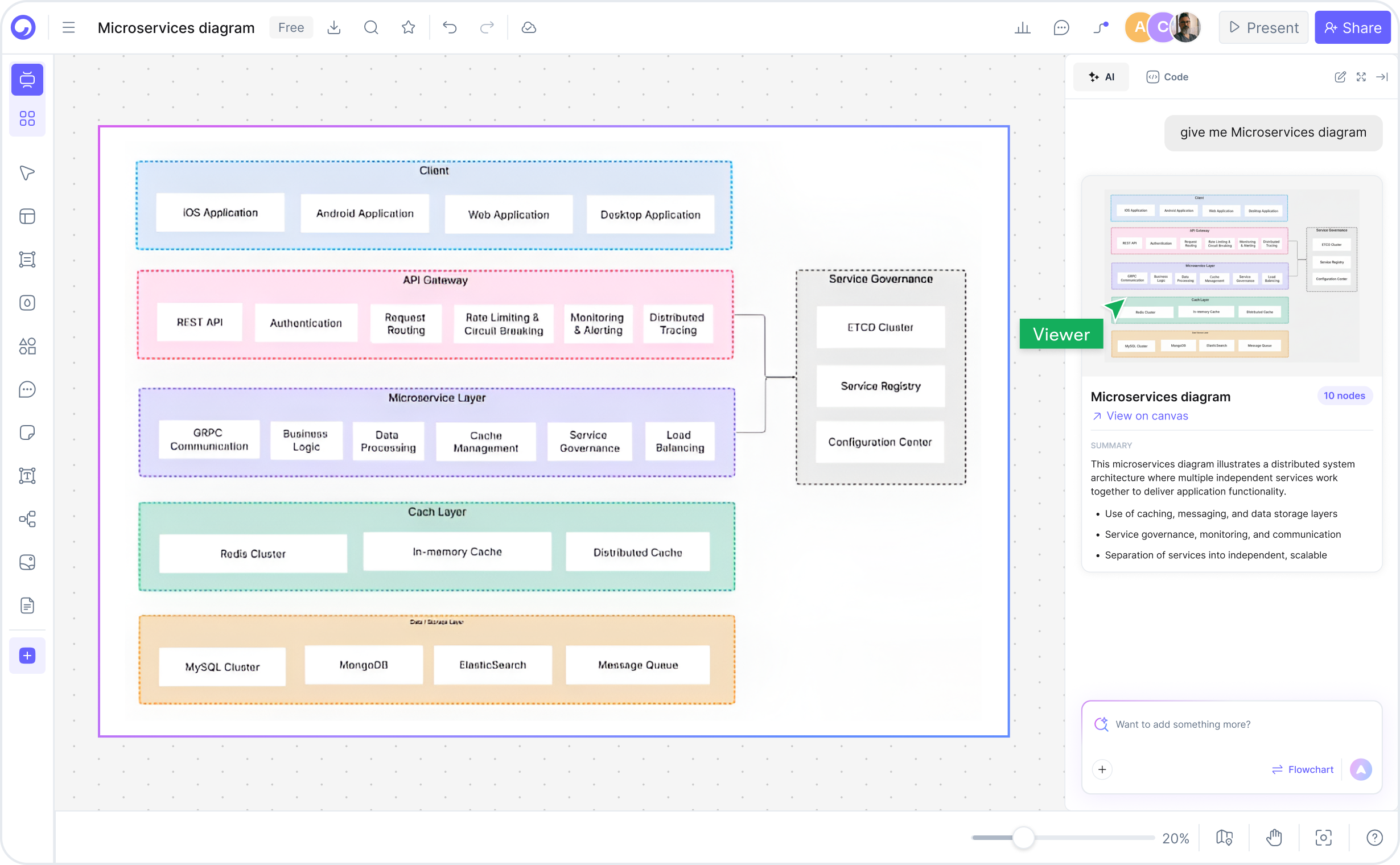
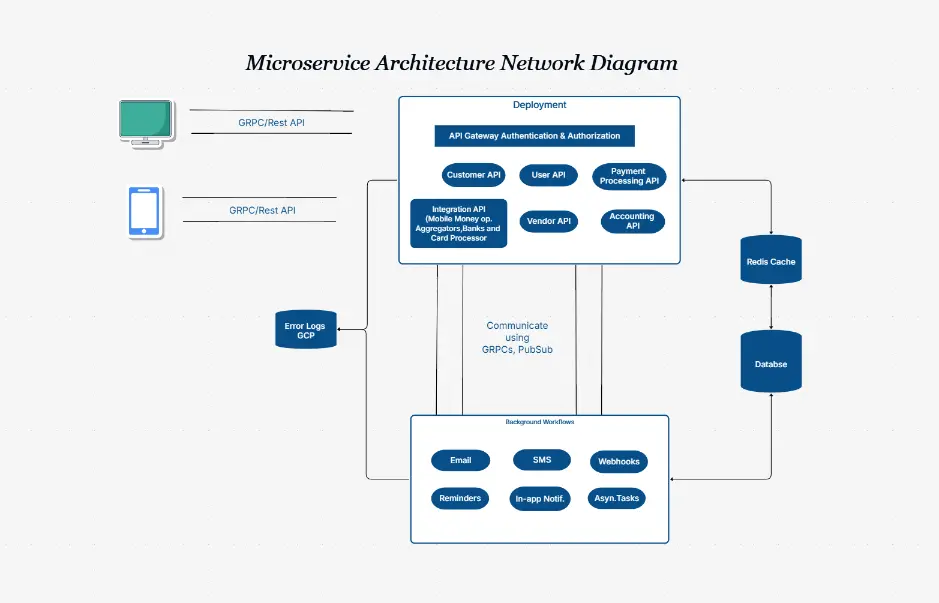
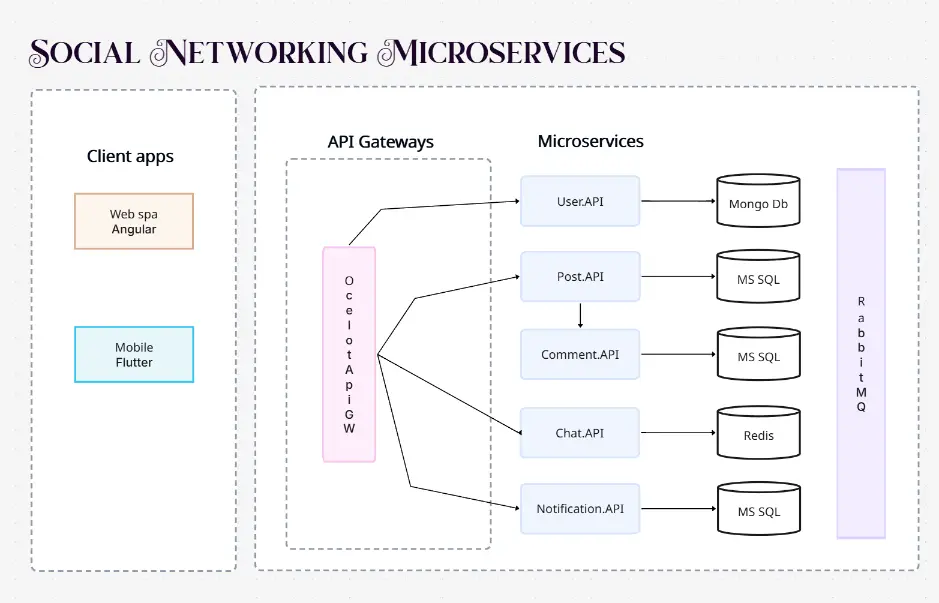
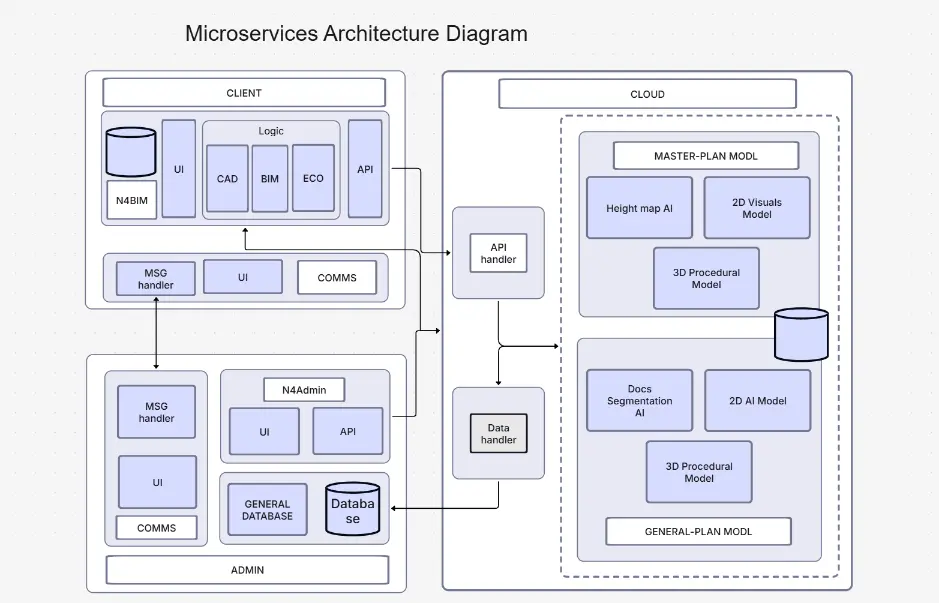
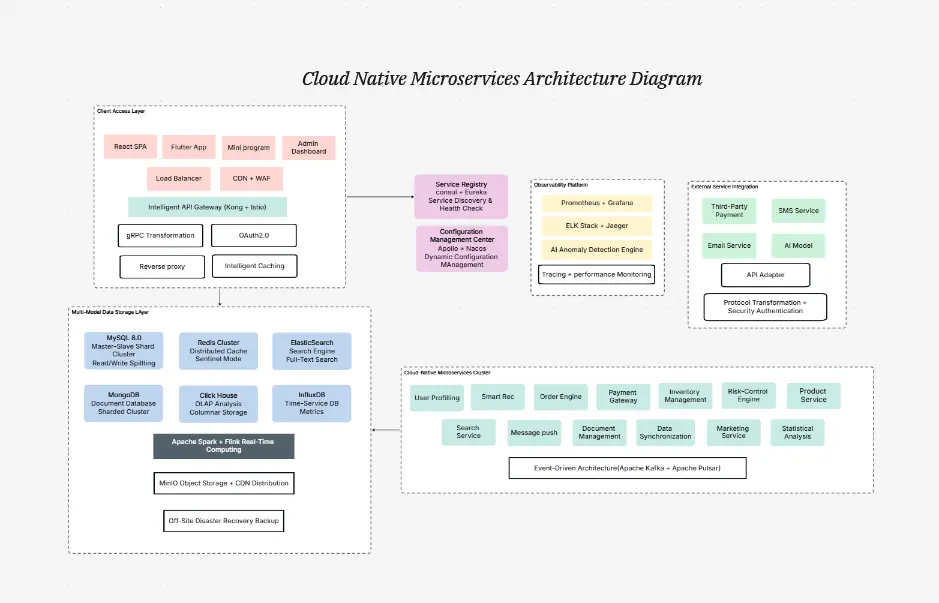
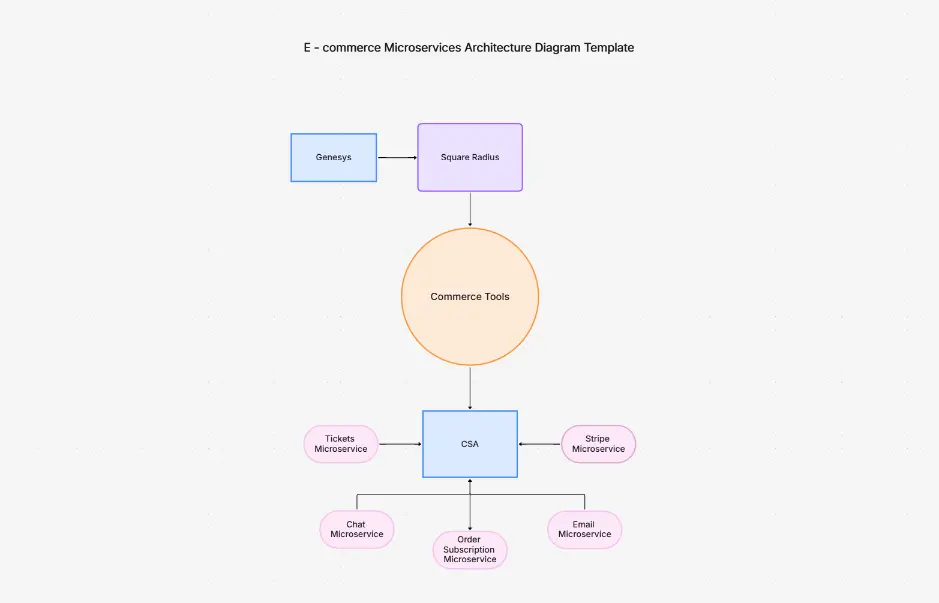
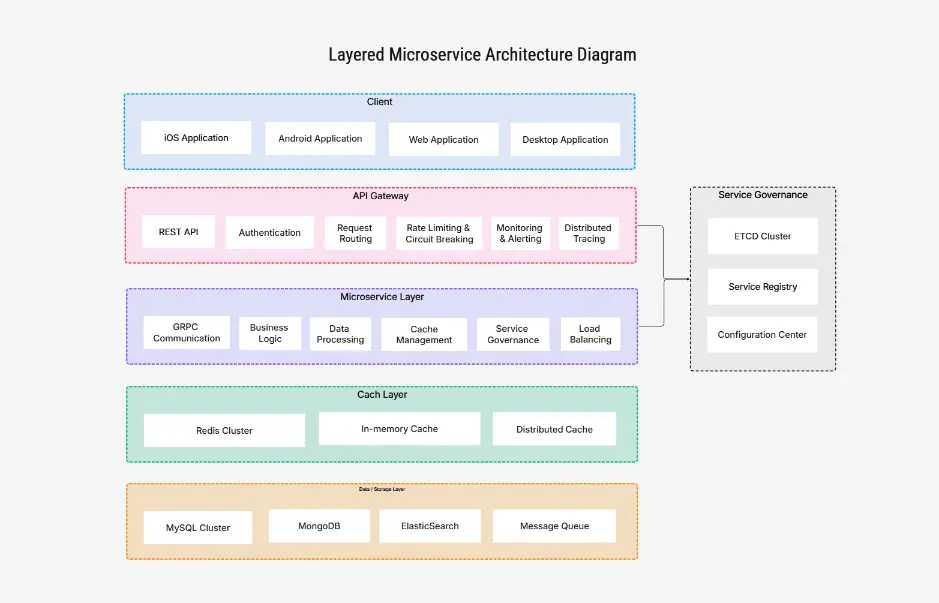
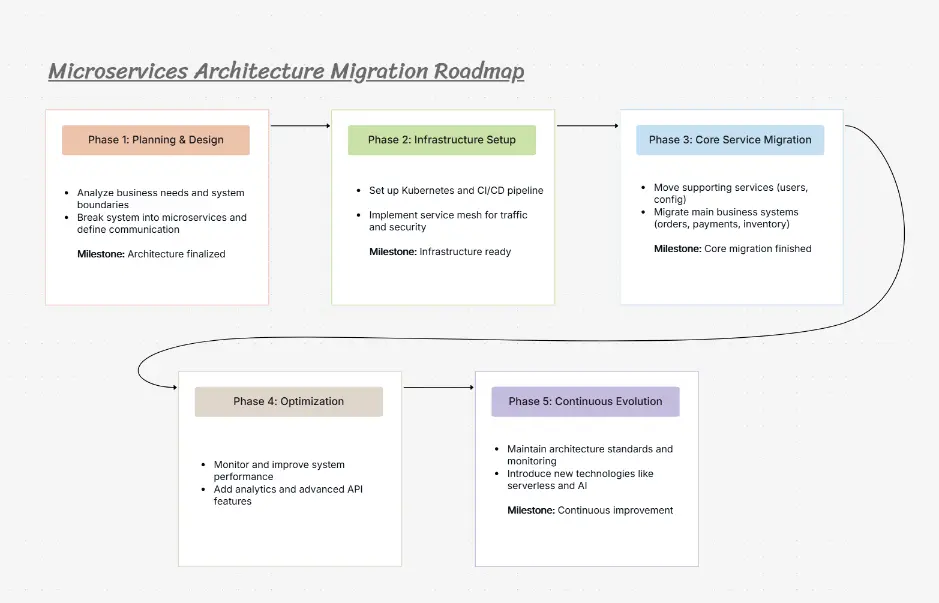
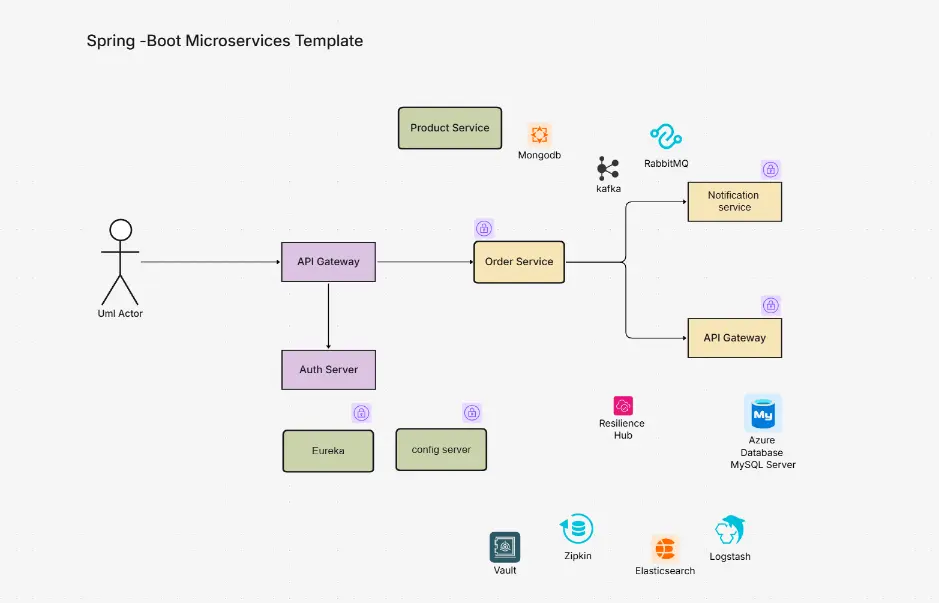
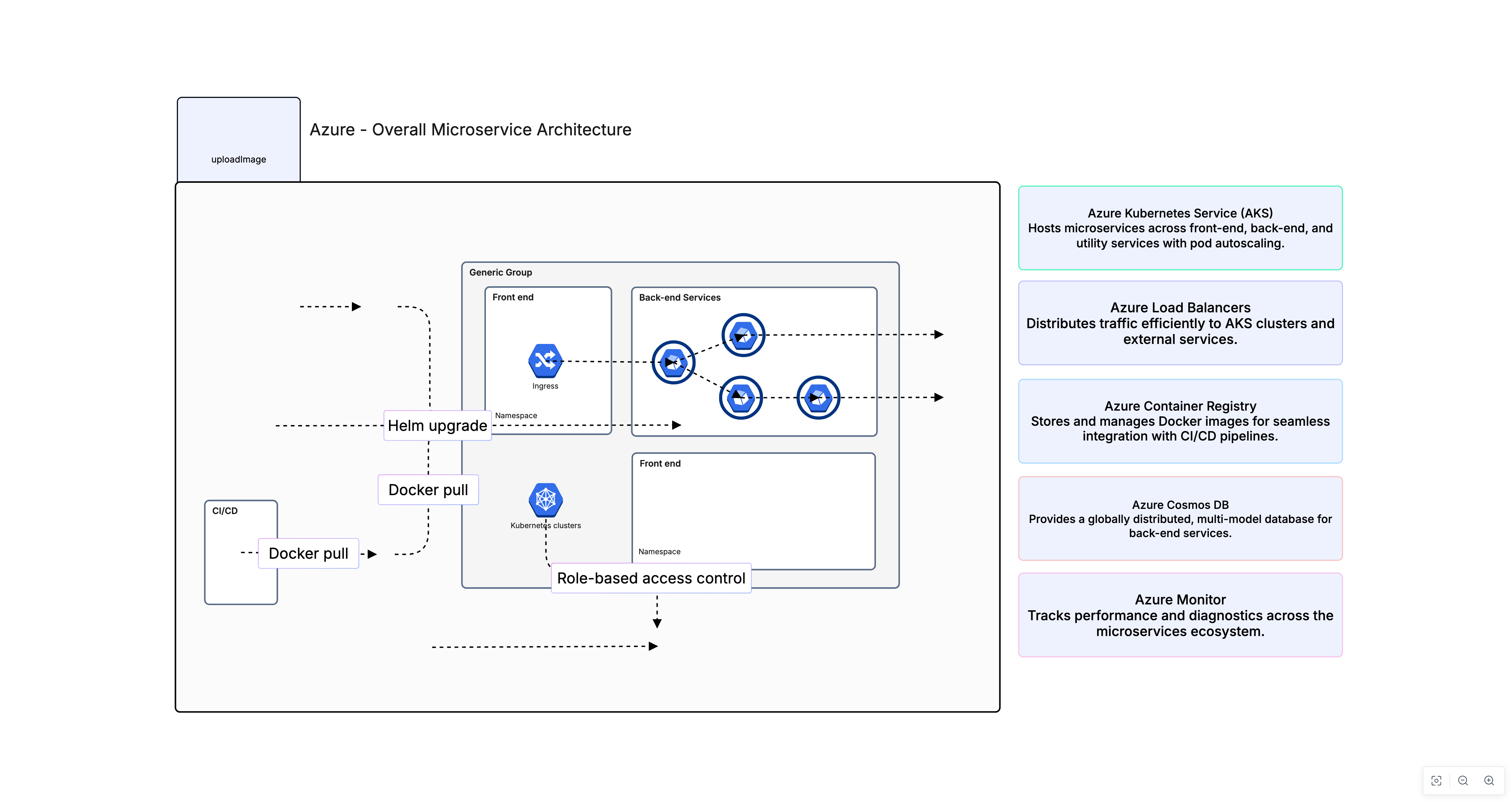
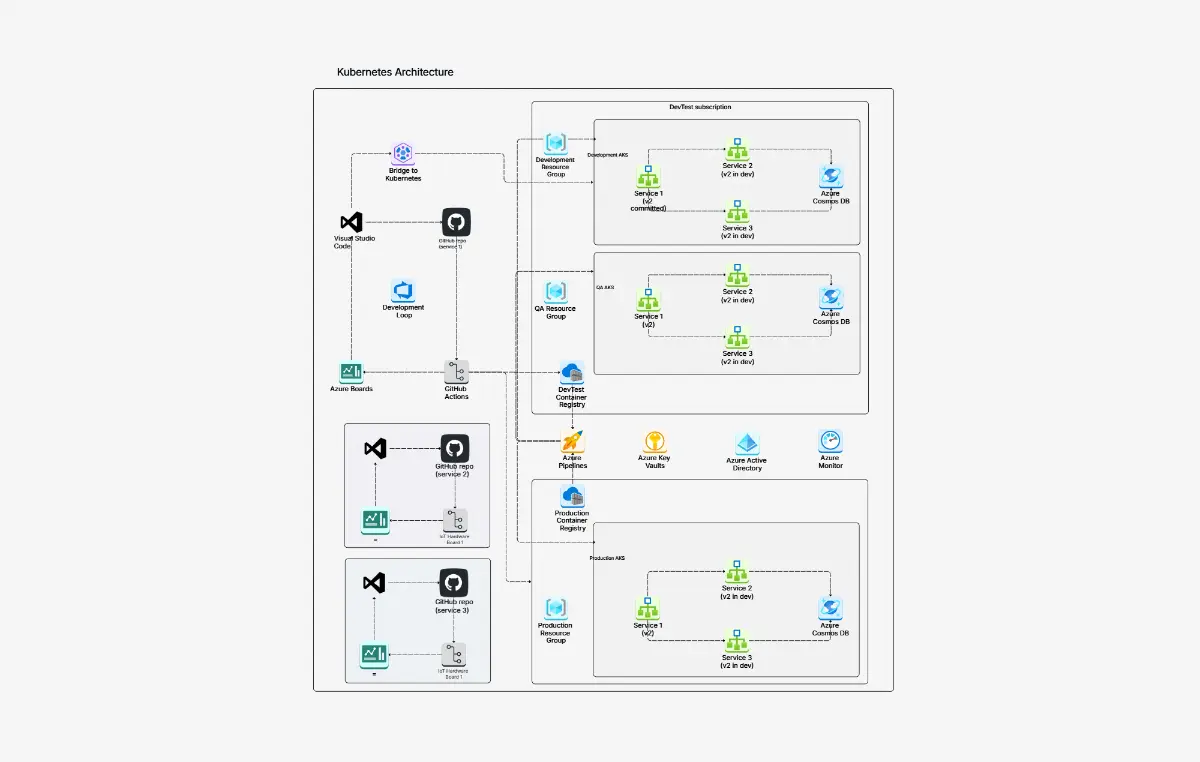
What is a microservices architecture diagram — example showing services, API gateway, message broker, and databases

What Is a Microservices Architecture Diagram?

A microservices architecture diagram is a visual representation of a distributed software system decomposed into independently deployable services. It maps each microservice's responsibilities, the API gateway routing external traffic, service-to-service communication protocols (REST, gRPC, GraphQL), message brokers (Kafka, RabbitMQ), databases (polyglot persistence), and infrastructure components like load balancers, service discovery, and circuit breakers.

Well-designed microservices diagrams use standard notation to show bounded contexts, data ownership boundaries, synchronous versus asynchronous communication, and deployment topology (Docker containers, Kubernetes pods). They serve as the canonical reference for architecture reviews, onboarding, incident analysis, and migration planning.

Cloudairy's AI Microservices Diagram Maker goes beyond static templates. Describe your system in plain English — "Netflix-style streaming platform with content, user, recommendation, and CDN services" — and the AI generates a complete, editable diagram in seconds. Pair your microservices diagrams with a system design diagram maker for high-level architecture views, or use the sequence diagram maker for inter-service communication flows.

How to Create a Microservices Architecture Diagram with Cloudairy

Go from a plain-English description to a production-ready microservices diagram in four steps — no manual drawing, no stencil downloads, no Visio license required.

1

Describe your microservices in plain English

Type your system description in the AI prompt box. For example: "E-commerce platform with API gateway, product service, order service, payment service, Kafka event bus, and Redis cache." Or choose an example chip — Netflix-style platform, AWS microservices with ECS, event-driven CQRS architecture.

2

Click Generate

Cloudairy's AI maps inter-service communication (REST/gRPC for synchronous, Kafka/RabbitMQ for asynchronous), adds infrastructure components (API gateway, load balancer, service discovery, databases with polyglot persistence), and builds the complete diagram instantly.

3

Customize — add patterns and deployment context

Refine the AI-generated diagram in Cloudairy's editor. Add service mesh (Istio/Envoy), circuit breaker patterns, bounded context grouping boxes, Docker container labels, Kubernetes namespace boundaries, or switch from orchestration to choreography for the saga pattern.

4

Export or share

Export to Visio (.vsdx), draw.io (.drawio), C4 model, PlantUML, Mermaid, SVG, or PNG. Or share a live collaboration link for architecture reviews — no account required for viewers.

How to create a microservices architecture diagram with Cloudairy — four steps from prompt to export

Start Building Your Microservices Diagram Free

Join thousands of backend engineers, cloud architects, and DevOps teams who use Cloudairy to create microservices architecture diagrams in seconds. All patterns. AI generation. Real-time collaboration.

No credit card required • Start creating in seconds

Why Use Cloudairy as Your Microservices Diagram Tool

Cloudairy is the only tool combining AI-powered microservices diagram generation with comprehensive pattern templates, real-world architecture examples (Netflix, Uber, Amazon), and multi-cloud support — all in one free platform.

AI Prompt-to-Diagram

AI Prompt-to-Diagram

Describe your microservices system in natural language and get a complete, production-ready diagram in seconds. The AI understands service boundaries, communication patterns (REST, gRPC, events), and infrastructure components (API gateway, service mesh, databases).

Full Pattern Library

Full Pattern Library

Generate diagrams for all major microservices patterns: API Gateway, Backend for Frontend (BFF), Event-Driven (Kafka/RabbitMQ), CQRS + Event Sourcing, Saga (orchestration and choreography), Service Mesh (Istio/Envoy), Sidecar, and Circuit Breaker.

Real-Time Collaboration

Real-Time Collaboration

Work on the same microservices diagram simultaneously with your entire team. Live cursor presence, inline comments, and @mentions keep backend engineers, architects, and DevOps teams aligned across distributed organizations.

Real-World Architecture Examples

Real-World Architecture Examples

Start from proven architectures — Netflix (Zuul, Eureka, Hystrix), Uber (domain-oriented microservices), Amazon (2-pizza team model), Spotify (Squads). Each example is fully editable and AI-extendable.

Multi-Format Export

Multi-Format Export

Export to Visio (.vsdx), draw.io (.drawio), C4 model, PlantUML, Mermaid, SVG, and PNG. C4 model export is ideal for documenting microservices context, container, and component views as code.

Version History and Sharing

Version History & Sharing

Track every architecture change with full version history. Roll back to any previous version, compare edits across sprint cycles, and share specific diagram versions for architecture decision records (ADRs).

Cloudairy vs. Other Microservices Diagramming Tools

See how Cloudairy compares to the tools currently ranking for microservices architecture diagrams.

Capability Cloudairy ProcessOn Multiplayer Lucidchart draw.io Miro
AI diagram generation Yes No No Limited No No
Microservices pattern library Yes No Partial Partial No No
Real-world examples (Netflix, Uber) Yes No No No No No
Export to Visio (.vsdx) Yes No No Yes Yes No
C4 model export Yes No No No No No
Multi-cloud templates (AWS/Azure/GCP) Yes No No No No No
Free tier available Yes Yes Yes Limited Yes Limited
Real-time collaboration Yes Yes Yes Yes Limited Yes

Who Uses Cloudairy for Microservices Architecture Diagrams?

Backend & Cloud-Native Engineers

Design service boundaries, communication protocols, and data ownership patterns. Generate diagram drafts with AI from architecture decision records, then refine and export to draw.io or C4 model for documentation.

DevOps & Platform Engineers

Document containerized deployments, Kubernetes namespaces, service mesh configurations (Istio/Envoy), and CI/CD pipelines. Keep diagrams in sync with infrastructure-as-code using version history and shareable live links.

Solutions Architects

Build client-facing microservices proposal diagrams quickly. The AI generates a complete architecture from a brief description — Netflix-style, event-driven, DDD-bounded-context — so you spend time on the solution, not the drawing.

System Design Interview Candidates

Practice designing microservices architectures for system design interviews. Generate visual diagrams for common interview topics — URL shortener, ride-sharing, streaming platform, payment system — in seconds.

Students & Certification Candidates

Prepare for CKA, AWS Solutions Architect, and Google Cloud Professional exams by visualizing microservices patterns. Generate study diagrams from course topics and reference architectures instantly.

Backend engineers, cloud architects, and DevOps teams using Cloudairy for microservices architecture diagrams

Frequently Asked Questions

A microservices architecture diagram is a visual map of a distributed system broken into independently deployable services. It shows each microservice, its API gateway, message brokers (Kafka, RabbitMQ), databases (polyglot persistence), load balancers, and service-to-service communication patterns. Cloudairy's AI generates these diagrams from plain English descriptions in seconds.

The 3 C's of microservices are: (1) Cohesion — each service has a single, well-defined responsibility aligned to a bounded context; (2) Coupling — services communicate through well-defined APIs (REST, gRPC) or events (Kafka, RabbitMQ) and remain independently deployable; (3) Communication — synchronous (REST/gRPC) or asynchronous (event-driven) patterns are chosen based on the use case. Cloudairy diagrams all three dimensions visually.

With Cloudairy: (1) Describe your microservices system in the AI prompt box — e.g., 'E-commerce platform with API gateway, product service, order service, payment service, and Kafka event bus'. (2) Click Generate — Cloudairy builds the diagram with services, communication arrows, databases, and infrastructure components. (3) Customize the layout, add service mesh or circuit breaker patterns. (4) Export to Visio, draw.io, C4 model, PlantUML, SVG, or PNG.

A monolithic architecture packages all application logic into a single deployable unit with a shared database. A microservices architecture decomposes the application into independent services, each with its own database (polyglot persistence), deployed via containers (Docker/Kubernetes), and communicating through APIs or event buses. Microservices enable independent scaling, faster deployments, and fault isolation — at the cost of distributed systems complexity.

Common tools include Cloudairy (AI-powered, free), draw.io (manual, free), Lucidchart (manual, paid), Visio (manual, paid), and ProcessOn (manual, free tier). Cloudairy is the only tool combining AI diagram generation, microservices pattern templates (API gateway, CQRS, saga, service mesh), real-world examples (Netflix, Uber, Amazon), and export to Visio, draw.io, C4 model, and PlantUML.

SOA (Service-Oriented Architecture) uses large, coarse-grained services communicating via an enterprise service bus (ESB) with shared databases. Microservices use fine-grained services communicating via lightweight APIs or event streams, each with its own database. Microservices are more loosely coupled, independently deployable, and optimized for cloud-native containerized environments.

Yes. Domain-Driven Design (DDD) is the recommended approach for designing microservices boundaries. DDD's bounded context concept maps directly to a microservice boundary — each service owns its domain model and database. Ubiquitous language within a bounded context reduces coupling and ambiguity. Cloudairy's AI understands DDD patterns and can generate microservices diagrams with proper bounded context boundaries.

Yes. Cloudairy offers a free tier that includes access to the AI microservices architecture diagram maker with pattern templates (API gateway, event-driven, CQRS, service mesh), real-world examples, and PNG export. Premium plans unlock Visio export (.vsdx), C4 model export, unlimited boards, and team collaboration features.

Success Stories from Our Community

See how backend engineers, cloud architects, and DevOps teams use Cloudairy to create microservices architecture diagrams faster and with better results.

As a backend engineer designing cloud-native systems, I need microservices diagrams that show service boundaries and communication patterns clearly. Cloudairy generates the exact architecture I describe in seconds.

Cloudairy is the first tool that actually understands microservices patterns. I can say "CQRS with event sourcing and Kafka" and it draws the right diagram. Saves me hours on every technical proposal.

I use Cloudairy to document our Kubernetes microservices deployments. The C4 model export is perfect for architecture decision records and the real-time collaboration means the whole team stays aligned.

I use Cloudairy to teach microservices architecture design. Students can generate a Netflix-style diagram in their first class instead of spending weeks learning Visio or draw.io.

Our team delivers microservices architecture assessments faster than ever. Cloudairy generates current-state and target-state diagrams from client descriptions — the Visio export drops straight into enterprise deliverables.

Secure, compliant, and enterprise-ready

Cloudairy safeguards your work with enterprise-grade security, compliance, and access controls — so your teams can create, collaborate, and scale with confidence.

SOC 2 Type II
SOC 2 Type Ⅱ

Cloudairy is SOC 2 Type Ⅱ certified and penetration tested annually, ensuring your architecture diagrams and data meet the highest standards for security and reliability.

GDPR
GDPR

We comply with the European Union General Data Protection Regulation (GDPR) and extend it to all our customers even those outside of the EU.

ISO 27001
ISO 27001

Our Information Security Management System is ISO 27001 certified — the leading global standard for information security.

Flexible Pricing for Every Team

Free

Discover what Cloudairy can do for you. Start for free

$0

for unlimited members
Try for free

Upgrade now

Show key features

up-arrow

Includes:

Starter

Unlock unlimited and private boards with important features

$4

per member / month

billed annually

monthly

Show key features

up-arrow

Includes everything in Free, plus:

money-back

Business

MOST POPULAR

Ideal for agencies or growing businesses managing multiple projects.

$5

per member / month
billed annually

Show key features

up-arrow

Includes everything in starter, plus:

Enterprise Plan

For large organizations needing scalability, control, and security.

contact-pricing
Contact for pricing
Contact us

Upgrade now

Show key features

up-arrow

Includes everything in Business, plus: