hero-bg-pricing

Get your team started in minutes

Sign up with your work email for seamless collaboration.

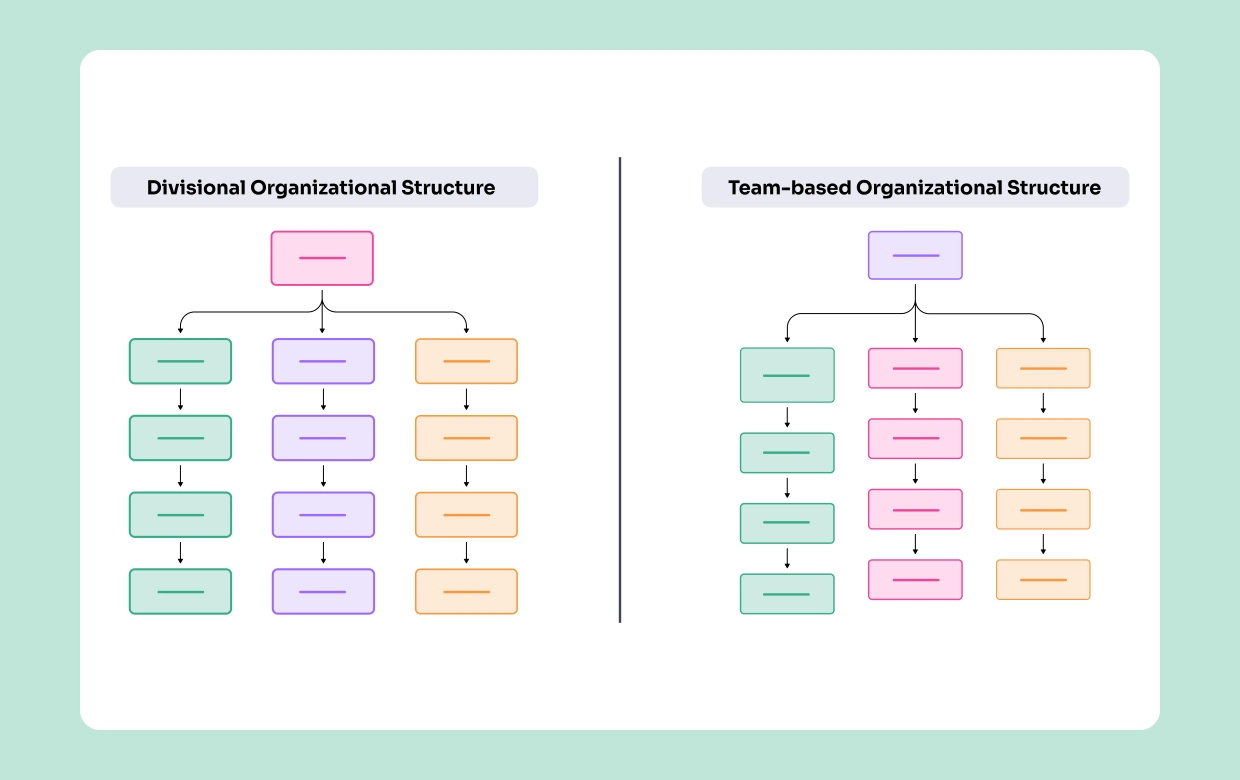
Divisional vs Team-Based Organizational Structure image
Org Chart

Divisional vs Team-Based Organizational Structure
Author
Cloudairy
By Cloudairy Team
January 10, 2026
10 min read

Introduction

Comparing divisional and team-based organizational structures shows that there are two different but at the same time mutually supportive methods to run a business. Divisional structures take advantage of independence, and they split the operations by products, market, or area to increase the degree of focus and accountability. On the contrary, a team-based structure is the one that presents flexibility, communication, and shared goals through the creation of cross-functional teams. These two models have the same target of increasing efficiency and innovation, however, they go about it very differently. The selection of the most appropriate one is based on the size, complexity, and culture of the organization. This guide offers a thorough exploration of their mechanisms, advantages, and applications.

What is a Divisional Organizational Structure?

The divisional organizational structure separates a corporation into self-sufficient parts called divisions. The divisions function as small firms under the corporate management, each one concentrating on a particular product line, market, or place. This setup provides the management with complete power over the performance, thus allowing faster reaction to the demands of the area and the habits of the consumers. This structure is especially appropriate for big or international businesses which have several products in the market and different demographics or regions but still want to keep the accountability strong.

See below for defining characteristics of a divisional organizational structure.
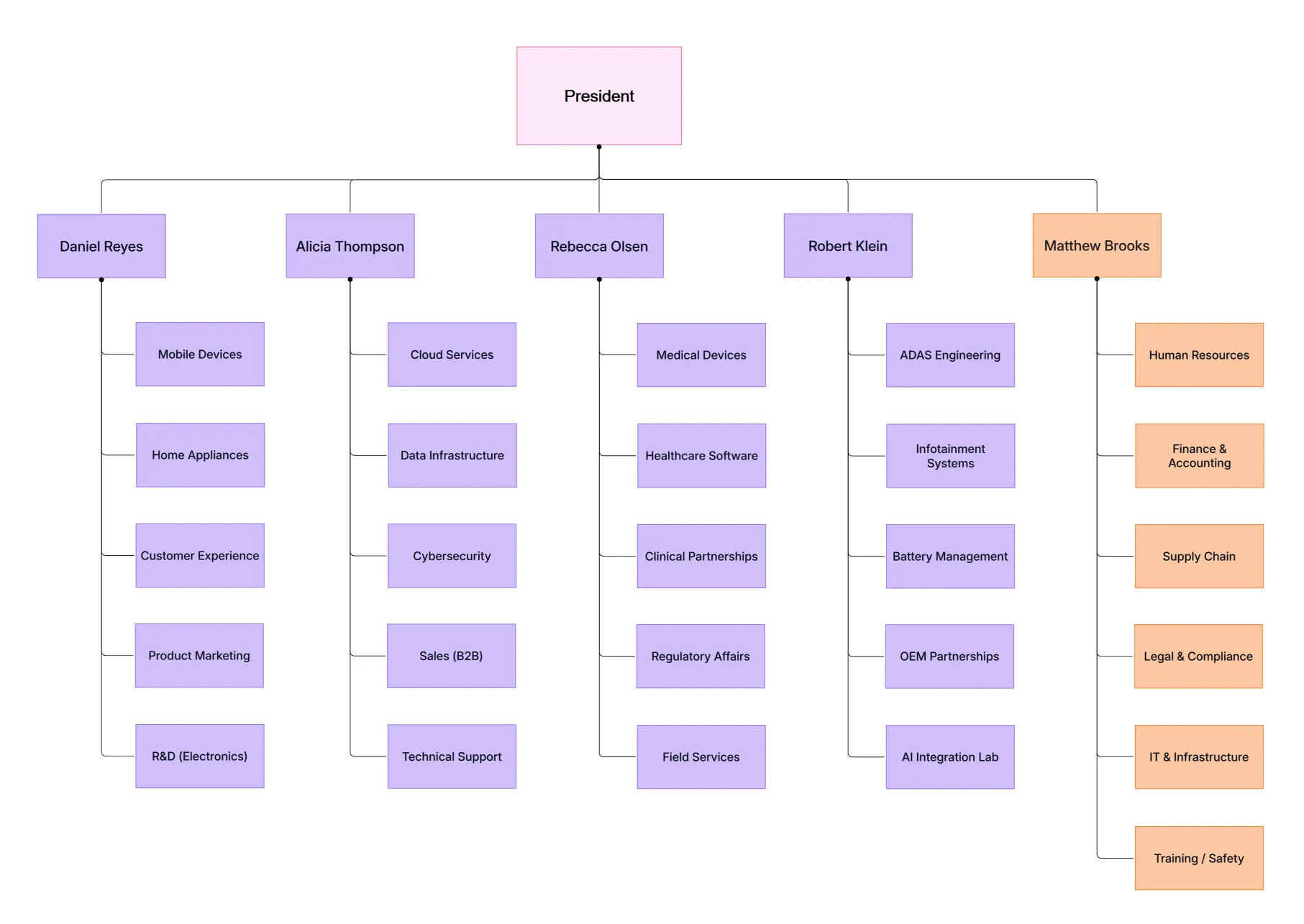
  • Autonomous Business Units: Every division acts as a separate entity taking care of its financial matters, devising its own strategy, and conducting its own operations. To illustrate, a worldwide technology corporation could have different branches for physical devices, programs, and online storage, each with its own management and objectives. This freedom allows quicker responsiveness to local market changes.
  • Customer and Product Focus: Divisions are formed around particular target customers or product categories, which allows for the implementation of specific strategies. For example, a company dealing with consumer goods might establish distinct divisions for such areas as personal care, beverages, and home products considering that there are already existing specific customer requests.
  • Performance-Based Accountability: The heads of divisions bear full accountability for the profits and the performance of the respective divisions The KPIs and success measurements are different for each division, thus promoting creativity, responsibility, and rivalry in the internal units and making them excel.
  • Scalable Structure for Growth: New divisions can be added without difficulty. The expansion of the company can happen through the entrance into a new country or through the extension of a new service line. This modularity guarantees that the organization will be growing without interrupting the already existing divisions.

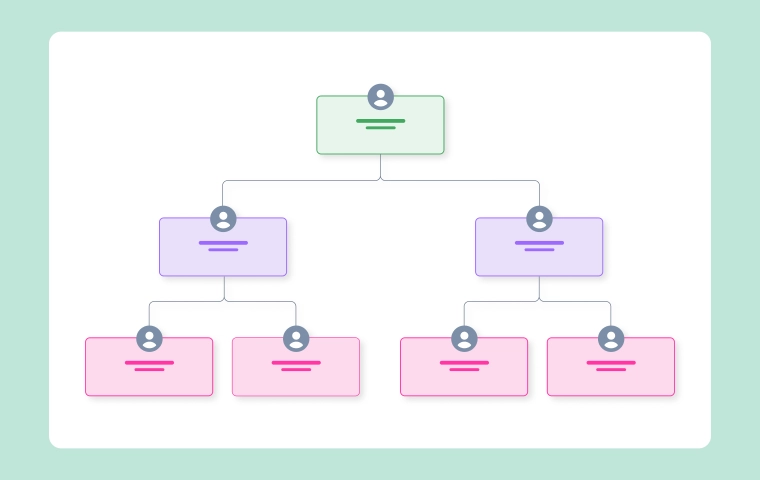
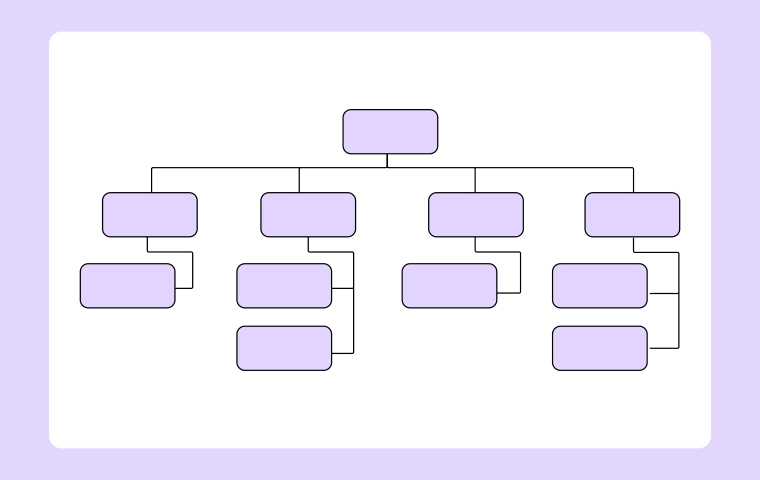
Use the Divisional Organizational Structure Template to visualize this model.

What is a Team-Based Organizational Structure?

A team-oriented company structure abolishes classic departmental barriers and instead, brings up adaptable and co-operating teams. A team consists of people from various fields—like marketing, design, finance, and engineering—working together to complete a common goal. This arrangement encourages inventiveness, quick problem-solving, and flexibility. It is appropriate for such sectors as technology, creative agencies, and research & development firms, where things like innovation, speed, and teamwork are the main reasons for victory. It is possible for teams to be created, dissolved, or rearranged as the project changes, thus allowing for optimum flexibility and resource utilization.

See below for key features of a team-based organizational structure.
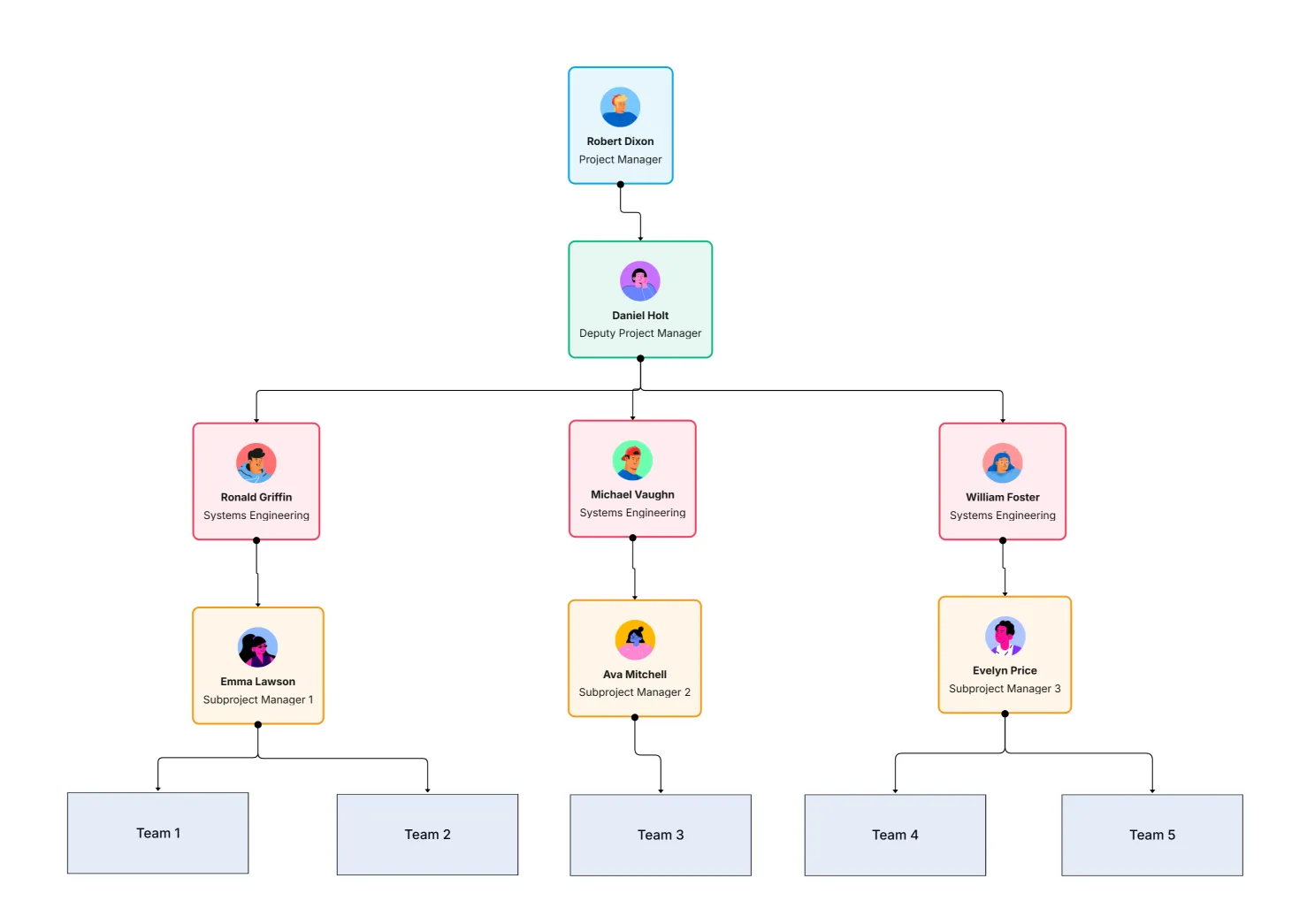
  • Cross-Functional Collaboration: Groups merge skills from distinct fields to address problems in a comprehensive manner. For instance, the product development team could bring together designers, marketers, and engineers who would conduct the working out of solutions through brainstorming, prototyping, and iterating much quicker than if they were working separately in departments..
  • Dynamic and Agile Formation: Strategic initiatives act as the basis around which teams are formed rather than any permanent departments. Once a project is completed, the members come together again in different teams according to the new priorities thus keeping the organization flexible and ready for change.
  • Collective Accountability: The performance of the whole team determines success, not separate departmental results. This collective accountability not only assists in bringing people together but also minimizes finger-pointing and provides a setting where individuals effortlessly move towards shared goals.
  • Empowered Decision-Making: Trust is given to team members in order to make their own operational decisions. This freedom is a contributing factor to the ownership mentality and the agility, which in turn, facilitates rapid changes and decision-making in the field without the need for bureaucratic delays.

Access editable visuals using the Team-Based Organizational Structure Template.

Divisional vs Team-Based Organizational Structure: Key Differences

The divisional vs team-based organizational structure comparison highlights a fundamental distinction: focus versus flexibility. Different markets or product lines are managed independently and specialized in divisional organizations, while team-based structures emphasize cross-function collaboration and adaptability. Divisional systems are suitable for big, diversified companies; team-based setups are better for agile and fast-changing environments. The proper balance allows both accountability and innovation to coexist effectively.

See below for critical differences between divisional and team-based organizational structures.

  • Structure and Hierarchy: The setups of the divisions keep distinct vertical leadership in every unit. To illustrate, the firm that has several product lines has separate top management responsible for operations and profits. On the contrary, the structure based on teams reduces the hierarchy—leadership transfers to the coordinators of the teams, thus allowing the interdisciplinary collaboration to be more flexible.
  • Decision-Making and Authority: Divisions depend on management decisions that are specifically designed according to the market's or the product's condition. On the other hand, group-based approaches give more power to overall participation, which results in faster innovation cycles as teams share and refine their ideas together.
  • Communication Flow: Divisional communication frequently stays just among the members of each unit and that guarantees concentration but on the other hand it causes silos. Team-based models, on the contrary, depend on free and open communication at all levels which links the employees from different departments and therefore information is shared faster.
  • Scalability and Innovation: Adding new units is a way to make divisional frameworks more extensive, whereas making multiple agile teams is the way to scale team-based models. This, in turn, makes it possible for companies to innovate nonstop while still having a lean and flexible structure.

See detailed comparisons at Types of Organizational Structures and Charts.

Advantages of Divisional Organizational Structure

A divisional organizational structure significantly improves accountability, concentration, and responsiveness. Every division has the power to deal with their specific problems and chances. This organization not only reinforces the market specialization and the growth of leaders but also makes sure that the corporate objectives are synchronized among all the business units. This is the case of large multinational corporations with a variety of products where the approach brings the maximum benefit.

See below for the major advantages of a divisional organizational structure.

  • Market-Centric Focus: Divisions adjust their methods according to local circumstances and the habits of the consumers in those areas. For example, a car maker might do different kinds of advertising in luxury and economy divisions. This will lead to more precise positioning and increased positive feelings of customers around the world.
  • Empowered Leadership: Heads of divisions function like small-scale CEOs, managing the entire gamut of activities within their area of responsibility. Such wide-ranging power not only develops but also demands leadership skill and responsibility, at the same time allowing rapid and well-informed choices to be made at the division level.
  • Performance Tracking and Transparency: The distinct financial reporting of every division makes it possible to measure performance with high precision. Definite metrics facilitate the process of recognizing strong points, allocating budgets in an efficient manner, and creating a rivalry that is good for one's health and at the same time is innovation driving.
  • Organizational Agility in Expansion: New markets or products are smoothly incorporated into divisional systems. A retail brand entering a new country, for instance, can create a separate division that operates independently and does not interfere with its main operations.

Build it using the Divisional Organizational Structure Template.

Advantages of Team-Based Organizational Structure

The team-based organizational structure reshapes collaborative efforts, innovation, and engagement among employees. It obliterates departmental silos and instead forms cross-functional teams that are united by a common goal. As a result, this model leads to shared ownership, quicker delivery, and a culture of ongoing learning. The model is especially fruitful in industries that are creative and technologically driven because of the critical need for adaptability.

See below for the primary advantages of a team-based organizational structure.

  • Enhanced Innovation Through Collaboration: Mixed-qualified specialists cooperate to the same objectives, and this results in creative thinking. A product design team may consist of engineers, UX designers, and marketers, who are working together in a way that the new features are introduced quicker than if the separated departments worked.
  • Agile Problem Solving: The teams are able to change their direction right away when they face challenges. For instance, if the feedback from the customers points out a weakness, the same cross-functional team can very quickly, without having to wait for approval from higher management, solve the issue, conduct tests, and release solutions again.
  • Employee Empowerment and Engagement: Co-workers know that they are important contributors as their opinions are taken into account in the final outcome. Such power, in turn, makes people more excited about their work, leads to developing their skills, and opens up loyalty to the company through every project.
  • Adaptability and Speed: Through the shift of team configurations based on the changing objectives, companies could react quickly to the market trends or customer demands, thus maintaining their competitiveness and being future-ready in the ever-changing sectors.

Visualize this using the Team-Based Organizational Structure Template.

Challenges in Divisional vs Team-Based Structures

Although both divisional and team-based organizational structures are effective, they face inherent challenges. Divisional systems might lead to the redundant use of resources and rivalry among the units, whereas team-based structures might not clear the authority and identify the accountability gaps. Finding the right mix between autonomy and coordination is a way to keep the strategic control and innovation in harmony.

see below the common challenges in divisional and team-based organizational structures.

  • Resource Duplication: It may happen that different divisions create the same functions within the company, for example, HR or IT, which will lead to an increase in the overhead costs. The application of shared service centers not only brings about the unification of support functions but also allows for the divisions to remain independent.
  • Internal Competition: Different departments may vie for the same resources or for the same level of recognition, thus causing a division in the collaboration. A common practice of holding alignment meetings regularly and having shared KPIs may help to get the departments together working on the major company objectives.
  • Role Ambiguity in Teams: Sometimes, in a team environment, the shared responsibility might not be very clear and even cause confusion about who owns what. When the roles, rotations, and deliverables are very clear, the accountability is balanced and the performance can be measured.
  • Decision Conflicts: Decision-making might be delayed in case of overlapping goals among the different teams. However, through the implementation of conflict-resolution methods and clear communication channels, the issues will be sorted out, and the focus will be kept on the goals, leading to uninterrupted progress.

Learn mitigation strategies in How to Choose the Right Organizational Chart Structure.

When to Choose Divisional or Team-Based Organizational Structure

Selecting between divisional and team-based organizational structures depends on scale, business model, and culture. Divisional setups work best for large enterprises managing diverse portfolios, while team-based models suit agile organizations where creativity and speed matter. Many companies adopt a hybrid—divisional units supported by cross-functional teams—to achieve the best of both worlds.

See below for guidance on choosing between divisional and team-based organizational structures.

  • Opt for Divisional: Best for enterprises with multiple product lines, regional markets, or services. It ensures local responsiveness and accountability, crucial for multinational corporations or conglomerates.
  • Opt for Team-Based: Ideal for startups, tech firms, and innovation-driven industries where adaptability and creativity are essential. Teams can pivot quickly and align seamlessly with customer needs.
  • Adopt a Hybrid Model: Combine divisional oversight with team-based collaboration. Divisions focus on strategy while teams drive innovation, ensuring both stability and agility coexist.
  • Transition Mindfully: Companies scaling from small teams to divisions should phase changes gradually, ensuring leadership readiness, communication clarity, and system integration.

Compare structures in Types of Organizational Structures and Charts.

How to Create and Customize Your Org Chart

A visual organizational structure chart clarifies authority, reporting lines, and collaboration points. Cloudairy’s AI-powered Organizational Structure Diagram Tool enables you to design both divisional and team-based structures effortlessly. Whether mapping departments or dynamic teams, visuals simplify onboarding, planning, and internal communication.

Follow these steps to design your divisional or team-based organizational structure chart effectively.
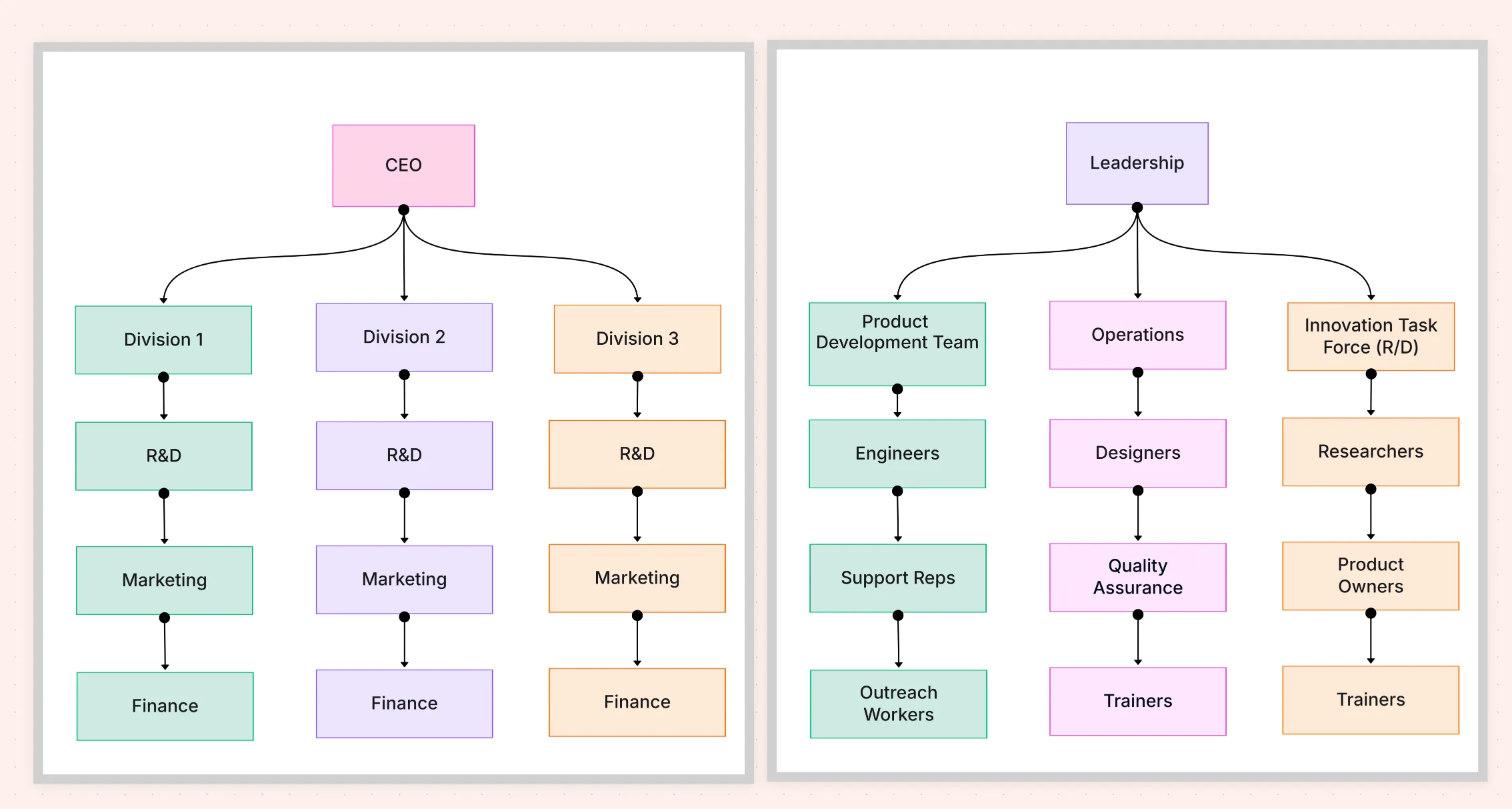
  • Select a Base Template: Begin with the Divisional Organizational Structure Template or Team-Based Organizational Structure Template to save setup time. Adjust hierarchy or team layouts as needed for your context.
  • Define Leadership and Teams: Add divisions, departments, or team leads with detailed roles. Clearly link leadership layers or project connections for clarity in authority and collaboration.
  • Visualize Interdependencies: Use connectors to represent communication paths between divisions or teams. Highlight cross-functional collaboration and escalation routes for decision-making.
  • Collaborate and Share: Invite co-editors, update in real time, and export the chart as PDF, PNG, or interactive Cloudairy link. Keep it living and update frequently as your company evolves.

Conclusion

The divisional vs team-based organizational structure comparison reflects two complementary paths to organizational excellence. Divisional setups empower autonomy and focus, while team-based structures nurture creativity and adaptability. Forward-thinking organizations often blend the two, maintaining independence at the top and collaboration at the core. Choosing the right structure requires clarity of purpose, alignment with strategy, and adaptability to change.

Explore all editable layouts in Types of Organizational Structures and Charts — and Try Cloudairy Free.

FAQs

1. What’s the main difference between divisional and team-based structures?

A divisional structure divides an organization into independent units based on products or regions, while a team-based structure organizes employees into collaborative, cross-functional teams focused on shared outcomes.

2. Which structure fosters innovation?

The team-based organizational structure fosters innovation through open collaboration, faster communication, and diverse problem-solving approaches across various disciplines.

3. Which structure suits global corporations better?

A divisional structure is ideal for multinational companies managing different products or markets, as it allows independent decision-making tailored to local needs.

4. Can organizations combine both models?

Yes. Many modern enterprises implement hybrid systems, where divisions manage strategic direction while team-based models handle innovation and project execution.

5. Where can I find templates to build these structures?

Access both the Divisional Organizational Structure Template and the Team-Based Organizational Structure Template, or create your own in the Organizational Structure Diagram Tool.

Ready to create smarter with AI?

Start using Cloudairy to design diagrams, documents, and workflows instantly. Harness AI to brainstorm, plan, and build—all in one platform.

Recommended for you