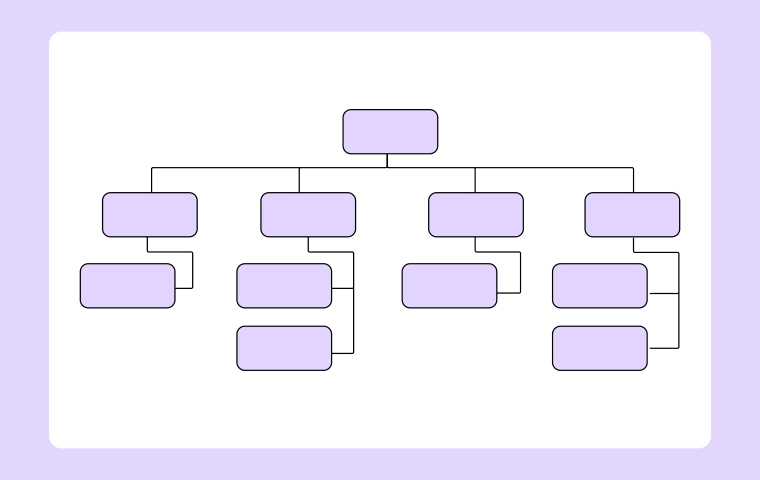
Org Chart
Flat vs Hierarchical Organizational Structure


Get your team started in minutes
Sign up with your work email for seamless collaboration.
The discussion of flat versus hierarchical organizational structure is indicative of two opposing management styles in terms of people, power, and cooperation. A flat organization completely removes management levels, thus it is very agile, has open communication, and empowers employees. A hierarchical organization, on the other hand, requires control, has clear procedures, and allows movement through the power levels that are defined. Each type of organization has its own advantages that are determined by the size, goals, and culture of the company. Knowing their operation allows the leaders to create organizations that are both efficient and innovative. Discover more in Types of Organizational Structures and Charts.
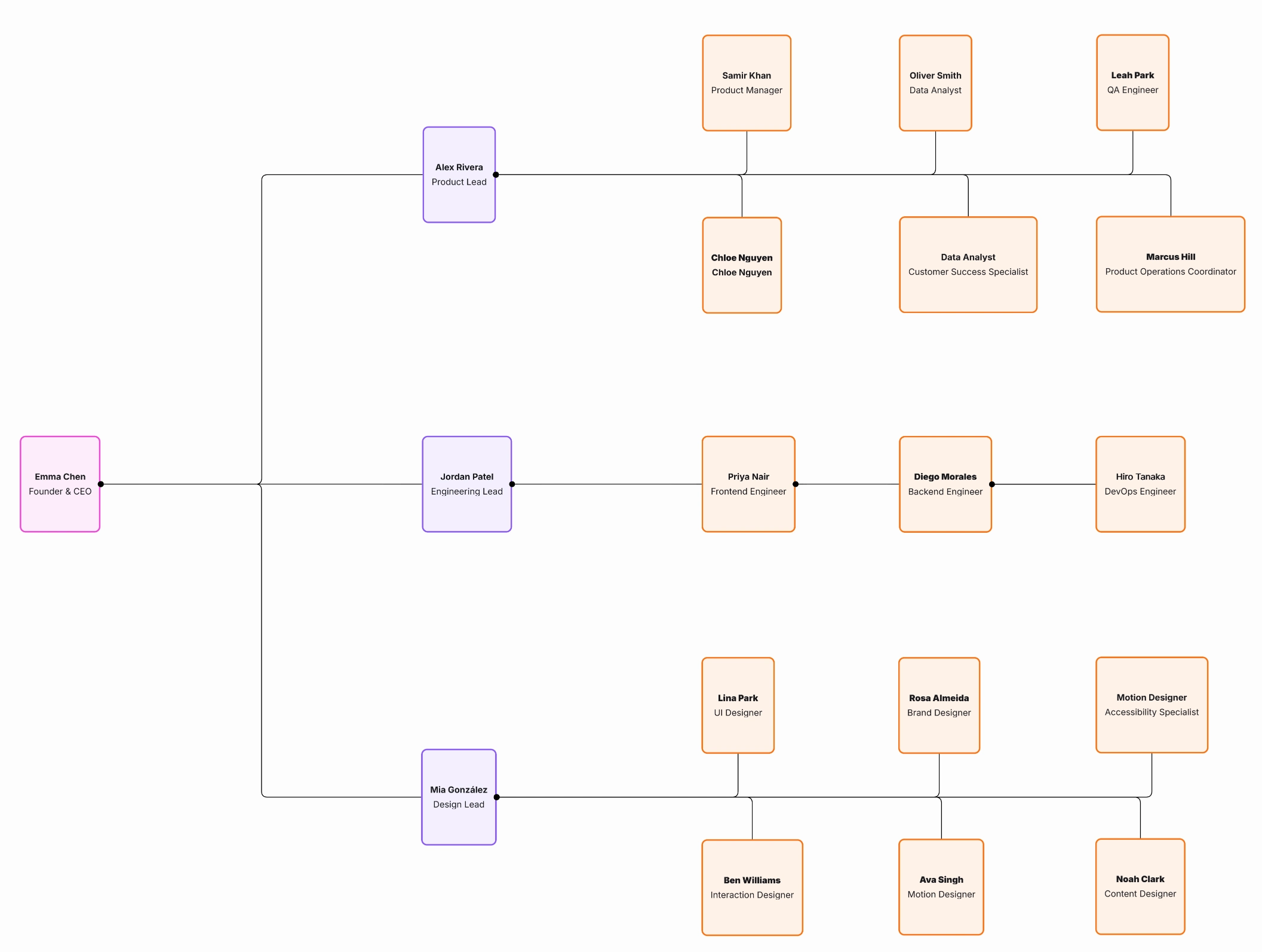
A flat organizational structure reduces the number of managers and promotes communication directly between the employees and the leaders. The method does away with bureaucratic delays and encourages decisions made quickly. It is especially efficient in startups, small enterprises, or creative groups that rely on cooperation and independence. Flat structures give power to the workers to make their own decisions, create trust, and take responsibility for the outcomes, thus to innovation and ownership of the whole organization.
See below for defining features of a flat organizational structure in practice.
Use the editable Flat Organizational Structure Template to visualize this model.
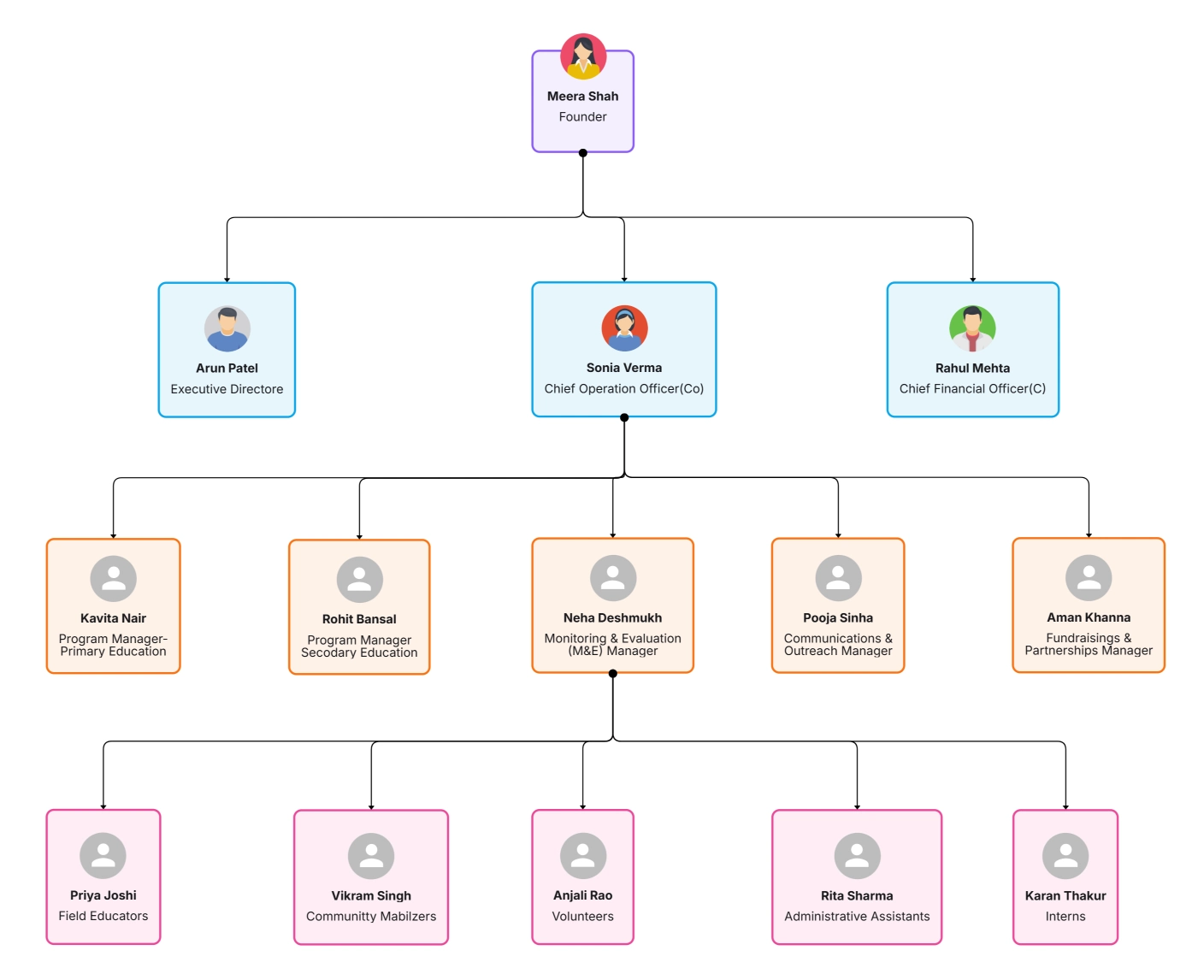
A hierarchical organization structure allocates authority in several levels, from the executives all the way down to the front-line workers. With this arrangement, each worker will have a manager to report to thus making it easy to hold individuals accountable and also making the roles very clear. This model is perfect for large businesses with complicated processes that need to be consistent, governed, and follow the rules. The system gives the employees clarity of a power that is good for their career, and performance that is a common trait of a company that makes use of decision-making through channels to minimize risk..
See below for the main elements of a hierarchical organizational structure in organizations.
You can model this design using the Hierarchical Organizational Structure Template.
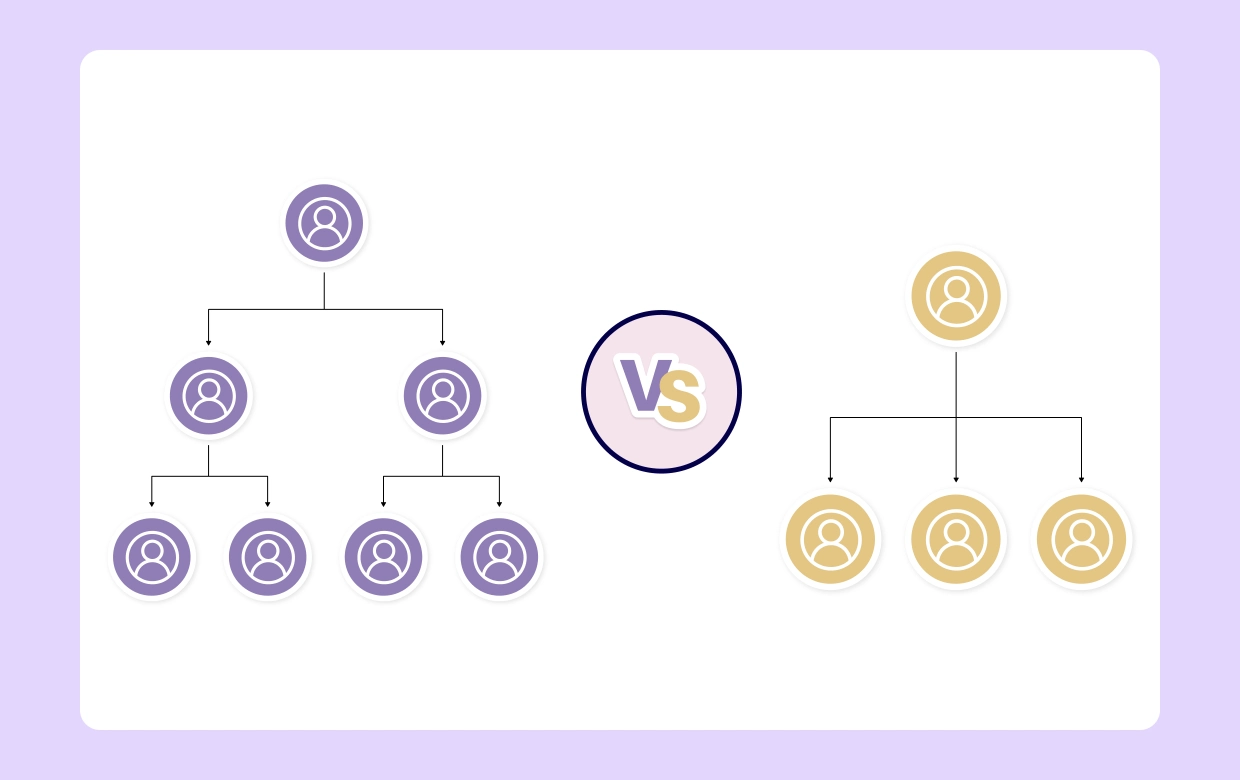
When looking at flat versus hierarchical organizational structures comparisons, one can see major differences between management philosophy, authority and communication. Flat organizations rather promote independence, speed, and collaboration whereas hierarchical systems go for order, clarity, and accountability. The ideal option is set according to the company's requirements—flat for agile innovation and hierarchical for controlled scalability. A great number of successful firms have been employing hybrid structures that merge the flexibility of flat systems with the strictness of hierarchy.
See below for key distinctions between flat and hierarchical organizational structures.
For examples and visual references, explore Types of Organizational Structures and Charts.
A flat organizational structure is an advantage to teams that emphasize collaboration, agility, and innovation. Fewer levels of hierarchy result in faster decision-making and more genuine communication. When employees are responsible for the outcomes, they feel more motivated and accountable. Creative people and the younger generation who want the freedom and power to make their own choices at work usually prefer flat organizations.
See below for major benefits of a flat organizational structure.
See examples with the Flat Organizational Structure Template.
A hierarchical organizational structure can provide stability, clarity and well-defined functions among the major positives. It is most appropriate for very large organizations or for those that operate at strict rules and require total control and continual monitoring. The employees know very well their respective functions, performance standards and their superiors. The hierarchy gives reliable authority at every level which then decreases the chances of conflicting messages and ensures that there will be an agreement in the decision-making process among the different departments.
See below for primary advantages of a hierarchical organizational structure.
Explore the editable Hierarchical Organizational Structure Template.
There are obstacles in both flat and hierarchical organizational structures. Unresponsiveness and decision-making bottlenecks can be the downfall of flat companies, whereas slow communication and inflexibility can be the consequences of hierarchical structures. Empowerment and governance is a challenge to leaders; they need to delimit where the latter is and allow the former to thrive. The best organizations are the ones that keep on re-evaluating their structure during the course of their growth and development.
See below for common challenges in flat and hierarchical organizational structures.
Learn strategies in How to Choose the Right Organizational Chart Structure.
The decision regarding a flat or hierarchical organization structure is determined by the company’s size, its process, and the sector it is involved in. Flat structures are good for young companies or dynamic groups that value innovation and adaptability, whereas hierarchies are the essential part of big companies that need to have control and uniformity. Many businesses choose to go for a hybrid model flat teams within a larger hierarchy—to help manage and maintain the balance between freedom and order more easily.
See below for guidance on selecting between flat and hierarchical organizational structures.
Compare both systems in Types of Organizational Structures and Charts.
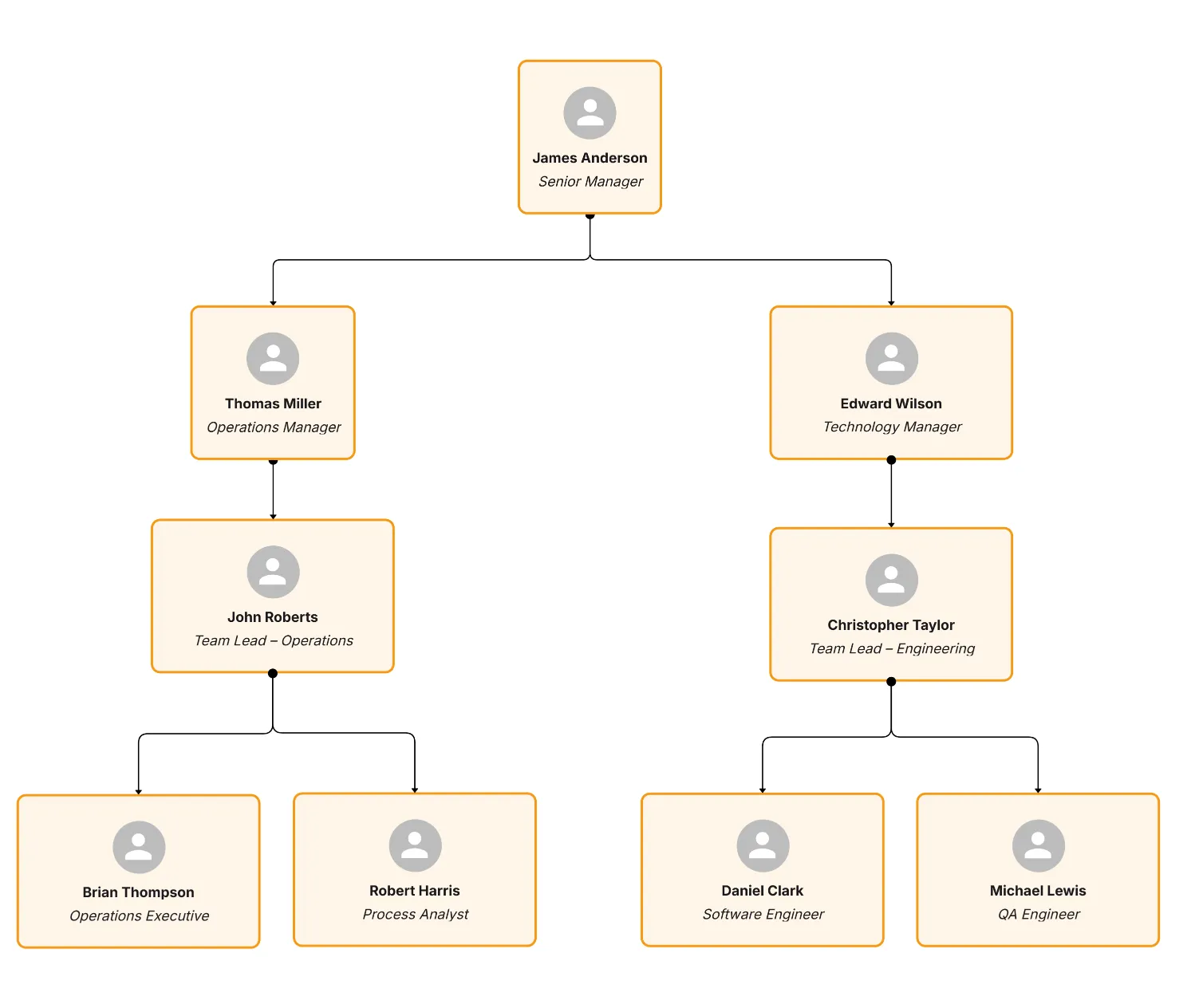
Using Cloudairy's AI-powered platform for making your organizational structure chart is very easy. An org chart, whether flat or hierarchical, reveals the reporting relationships, communication paths, and team responsibilities. You can easily imagine the authority lines, make the onboarding process simple, and decide faster by using the templates that you can customize. The management would be able to use the resources more effectively and make sure everybody is on the same page with the help of the clear visuals.
Follow these steps to build your flat or hierarchical organizational structure chart.
Try the Organizational Structure Diagram Tool Free to start.
The comparison between flat and hierarchical organizational structures boils down to a flexibility and control issue. Flat organizations give power to employees and promote creative ideas but without organization they can turn into chaos. On the other hand, Hierarchical structures provide stability and accountability but at the same time they can hinder quick response. The best organizations frequently mix both - they keep governance while letting teams in the periphery have power. The secret is being clear, open, and continuously adapting as your company expands.
Discover more templates in Types of Organizational Structures and Charts to create your own system today.
1. What’s the main difference between flat and hierarchical structures?
2. Which structure promotes innovation?
3. Is a hierarchical structure outdated?
4. Can organizations combine both structures?
5. Where can I find editable templates for both models?
Start using Cloudairy to design diagrams, documents, and workflows instantly. Harness AI to brainstorm, plan, and build—all in one platform.
Table of Contents

Introduction
 Manage all your work in one placeCollaborate with your teamUse Cloudairy for FREE—forever


 Related Articles



.webp)