What is an Organizational Chart?


Get your team started in minutes
Sign up with your work email for seamless collaboration.
In this guide, you will learn:
From getting the organizational chart what-it-means to peeking at real-world org chart stories, this guide walks through kinds, uses, upsides, and handy tips.
If you are a boss, HR buddy, school kid, or shop chief, knowing how organizational charts work boosts clear-peeks, who-does-it, and friend-play in any group.
Organizational charts started in the Industrial Revolution when big shops outgrew simple boss tricks. Back then, in the mid-1800s, train companies drew the first ones to show boss stacks and team jobs super clear by eye.
Groups kept growing fast, so leaders hunted a fun way to map who-tells-who and how power splits fair.
Through time, org charts turned from scribble-hand pics into sharp, tidy shapes that fit every work spot.
Today’s charts bend for cool new ways like mix-teams, flat groups, and far-away work pals, just like modern playgrounds. Styles shift and shine, but the heart job never flips: bright stacks and easy chats for all!
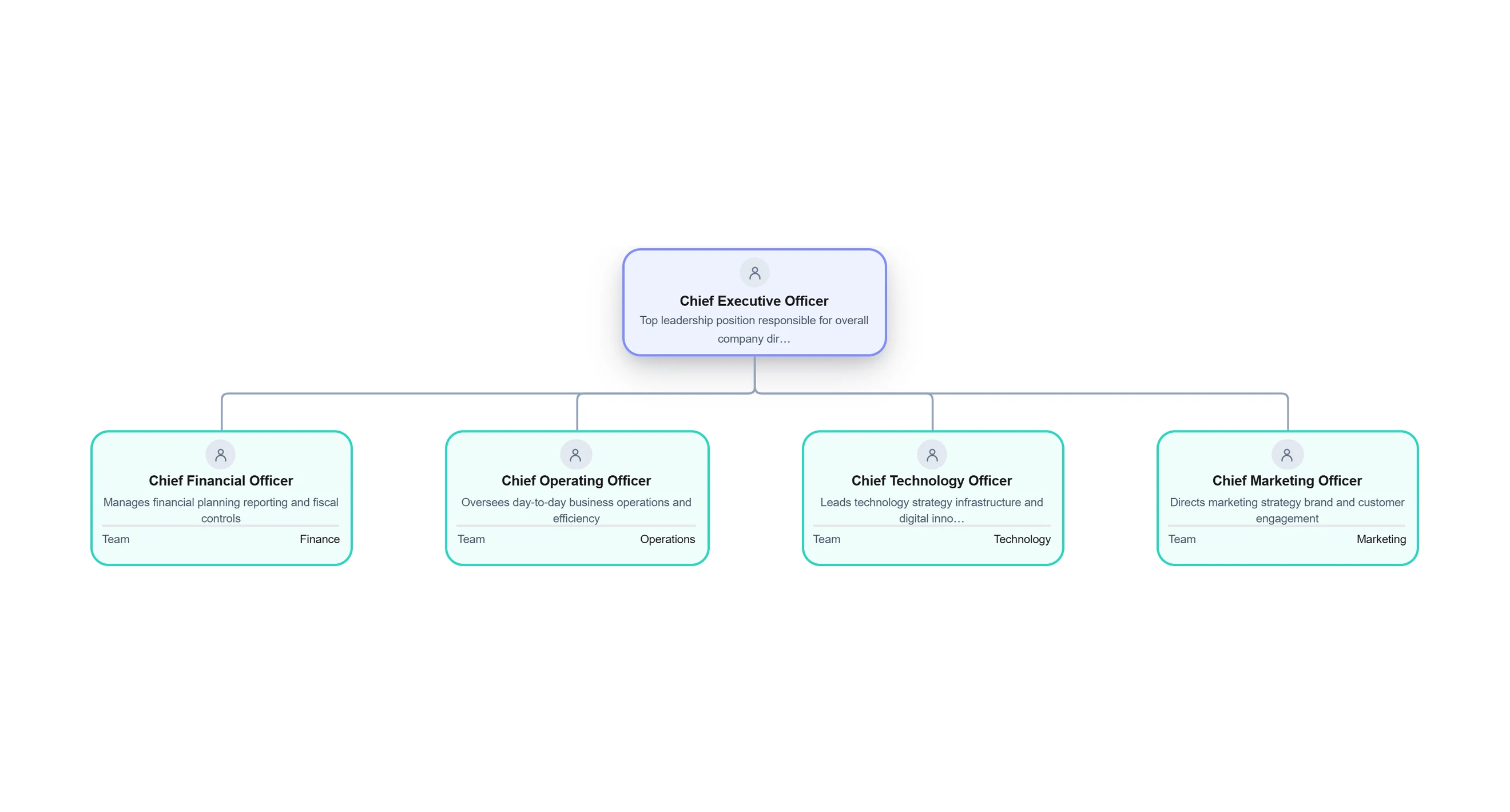
The organizational chart what-it-means pictures a group’s inside shape by eye. It shows jobs, titles, teams, and who-tells-who in a clear, tidy way. To say organizational chart simple, it’s a pic that spells out who answers to who and how duties zip through a group.
The organizational chart meaning goes past stacks. It shares who-owns-what, power steps, and team ties too.
The org chart meaning helps workers see their spot in the group and how they team-up with pals.
Called organization chart, organisational chart, or org chart, it’s a top boss tool that never fades.
The purpose of organizational chart making is to bring neat shape and see-through ways to a group. By picturing stacks and jobs, groups cut mix-ups and boost team-play.
Here are some purposes:
Organizational charts matter big because they zap mix-ups and make everything see-through. When workers get who-tells-who stacks, picks flow smooth and fun.
Org charts help bosses spot empty spots, double-ups, and slow team bits too. A top win is matchy-matchy views everyone sees the same neat shape, so chats stay clear. They shine bright in change times like team-merges or zoom-grows. Knowing what an organizational chart is keeps groups lined up tight, even as shapes shift and play.
Every organizational chart packs standard bits that shape the stack-up and pecking order. These parts team up to make a clear organization chart.
Groups pick different organizational chart kinds based on shape and aims.
1. Hierarchical Organizational Chart
A hierarchical organizational chart shows top-down stacks with top bosses up high and workers below. It spells out power, who-tells-who, and to-dos clear in organization charts.
.webp)
2. Flat Organizational Chart
A flat organizational chart cuts boss steps and boosts open chats. This organization chart shape fits start-ups and small teams for team-fun and zippy picks.
.webp)
3. Matrix Organizational Chart
A matrix organizational chart lets workers tell more than one boss, by job and project. This shape backs cross-team play and smart share of stuff.
.webp)
4. Divisional Organizational Chart
A divisional organizational chart bunches teams by goods, helps, spots, or sales lands. This organization chart lets big groups run side-units on their own.
.webp)
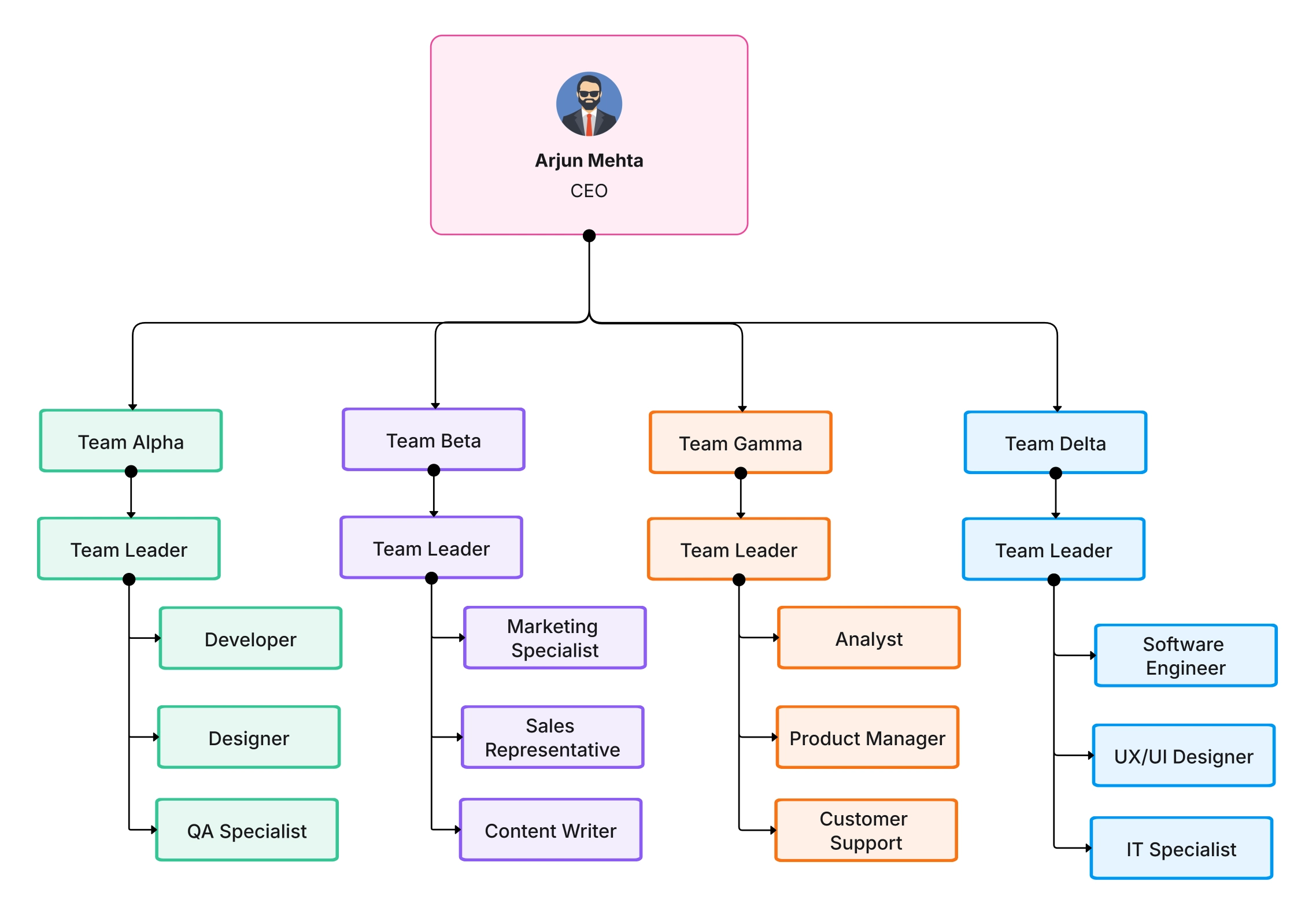
5. Team-Based Organizational Chart
A team-based organizational chart spots groups chasing same goals. It shrinks stacks and sparks bendy ways, great for team-play and quick-shift spots.
6. Virtual Organizational Chart
A virtual organizational chart pics far-off or spread-out teams. It shows jobs, chat-flow, and who-tells-who in spread organization charts.
.webp)
7. Functional Organizational Chart
A functional organizational chart sorts workers by jobs like sales, money, or do-work. This organisational chart boosts skill-sharp and smooth run-fun.
.webp)
8. Horizontal Organizational Chart
A horizontal organizational chart cuts power steps and pushes equal team-up. It grows see-through and fast chats across organization charts.
.webp)
9. Inverted Pyramid Organizational Chart
An inverted pyramid organizational chart puts leads down low to lift workers up top. This shape cheers power to folks, help-boss ways, and worker-first picks.
.webp)
Organizational chart samples help folks see how groups set up jobs, power, and to-dos. These organization charts show real-life shapes in shops, projects, help-groups, and change-times. By peeking at org chart fun-stories, you pick the best layout for your team or spot.
Organizational charts are used for communication, planning, training, restructuring, and performance management. They help HR teams, executives, and employees understand structure and responsibility, making organization charts essential tools for business clarity.
Making an org chart turns super easy and zippy with Cloudairy’s Organizational Chart Maker.
Cloudairy rocks as a top, easy-peasy Organizational Chart Maker for quick pro charts. It packs drag-and-drop fun, live team-play edits, and stretchy layouts that grow with you.
Perfect for all from small teams to big shops Cloudairy zips up sharp org pics with no fuss.
Cloudairy packs bendy organizational chart template that zip design and save oodles of time. These setups let you tweak shapes, jobs, and stacks super easy, making organizational charts matchy, clear, and show-ready.
Jump in, drag-drop your changes, and pop out pro charts that fit your team perfect no start-from-scratch fuss!
Some org charts pop up way more than others across work worlds.
The perks of organizational chart fun stretch wide for chats and boss-play.
Key Advantages
Creating effective organization charts requires thoughtful planning.
Start using Cloudairy to design diagrams, documents, and workflows instantly. Harness AI to brainstorm, plan, and build—all in one platform.
Table of Contents

Introduction
 Manage all your work in one placeCollaborate with your teamUse Cloudairy for FREE—forever