hero-bg-pricing

Get your team started in minutes

Sign up with your work email for seamless collaboration.

Nonprofit & Hospital Organizational Chart
Org Chart

Nonprofit & Hospital Organizational Chart Examples
Author
Cloudairy
By Cloudairy Team
January 10, 2026
10 min read

A nonprofit organizational chart and a hospital organizational chart are vital for clarity, compliance, and impact. Each of these designs points out the leaders, the governing bodies, and the people working in different operations so that the decision-making process will be both fast and open. The chart is of great importance in the donor's trust, in the delivery of programs, and in the co-ordination of volunteers for the non-profits. On the other hand, charts for hospitals are helpful in making sure the patients are safe, in the promotion of interdisciplinary teamwork, and when the hospitals are making themselves ready for the accreditation. These frameworks, thus, eliminate confusion, and at the same time, increase the level of responsibility. Before you start designing, take a look at the industry context in the Pillar: Industry-Specific Organization Charts.

What Is a Nonprofit Organizational Chart?

A nonprofit organizational chart for a nonprofit organization shows the relationships among the board, executive director, department heads, and volunteers. It clears up the decision process, increases the coordination of programs, and keeps track of the accountability for the purpose of audits and grants. Since the resources of nonprofits are frequently spread among different programs, a clear-cut chart not only minimizes overlap but also hastens the impact of the community. In addition, it gives a solid grounding for the understanding of roles in the case of part-time staff or committees. Begin quickly with the Nonprofit Organizational Chart Template and control the expansion by using the Guide.
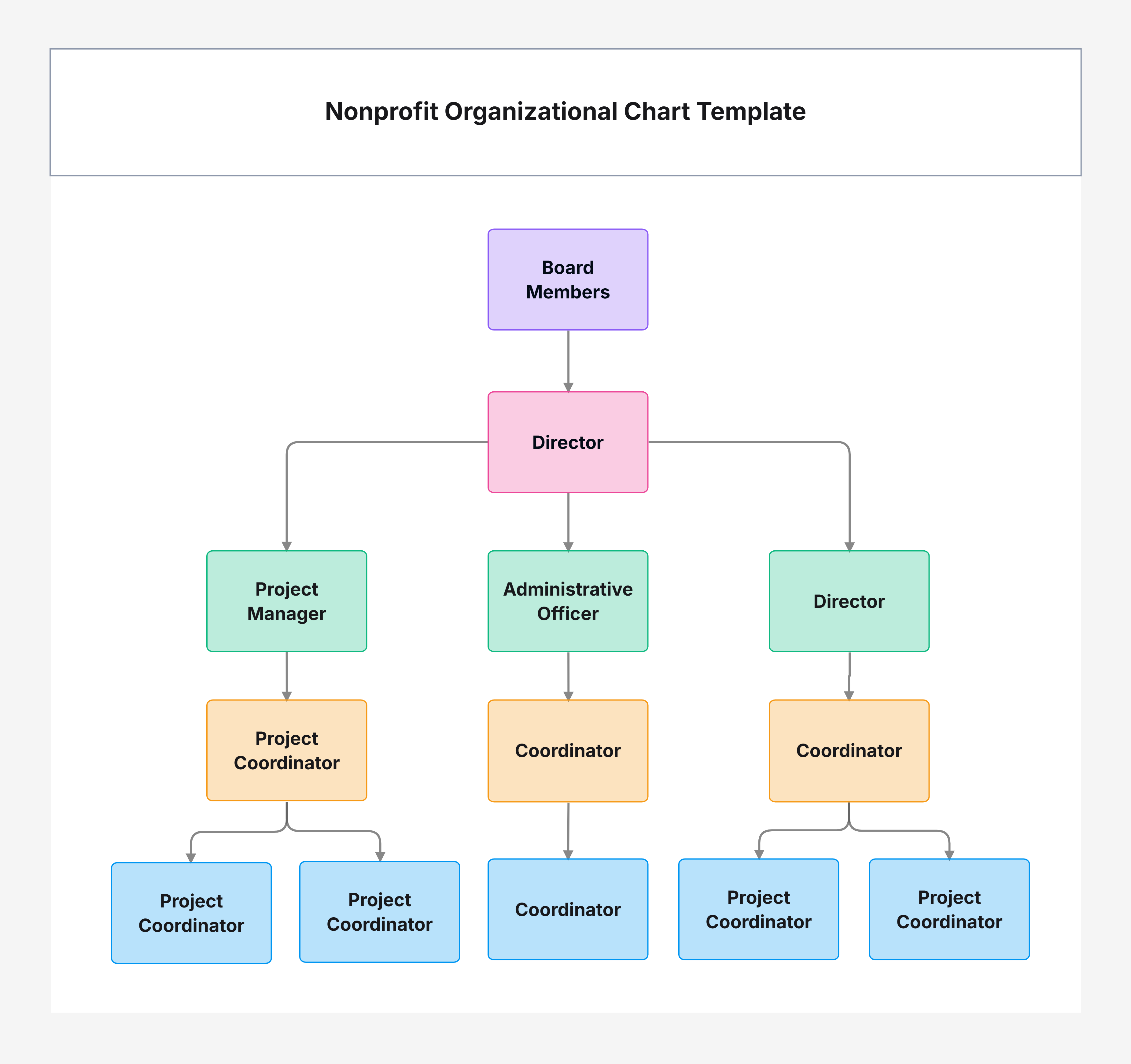
Nonprofit Organizational Chart Template

Below are the primary roles within the nonprofit sector that are illustrated in the organizational chart.

  • Board of Directors & Committees: Dictate mission, strategy, and fiduciary duties. Committees—finance, development, governance handle primary functions with clear charters. Presenting these divisions in the nonprofit organizational chart not only wins donor trust but also makes reporting cycles shorter and clarifies the paths for escalating matters that need board-level review or policy updates due to operational issues.
  • Executive Director / CEO: Turns board policy into action, manages directors, and acts as the nonprofit's face to the outside world. It is a position that is both strategic and operational, budgeting and programming the objectives. By placing this point prominently in the nonprofit organizational chart, it not only speeds up decision-making but also aligns the different departments to achieve measurable outcomes in the community.
  • Program & Operations Leads: The areas of fundraising, programs, outreach, and finance fall under your supervision. These leaders in the nonprofit hierarchy are given responsibilities and resource plans. They are the ones who transform grant goals into service. Clear reporting channels can get rid of unnecessary work, make grant audits faster, and let the organization change quickly when there is a change in need or new funding is available.
  • Volunteers & Field Teams: They connect the community and the nonprofit organization, which allows the latter to have a bigger impact. The desirable organization chart of the nonprofit should indicate the link between the volunteers and the coordinators by displaying the different factors such as supervision, training, and safety measures involved. Such transparency will not only improve the bond with the volunteers but also build the trust in the programs as they will always be compliant, secure, and caring at the various places while delivering quality service.

What Is a Hospital Organizational Chart?

The hospital organizational chart illustrates the entire hierarchy of staff members working in different departments within a hospital from board to bedside. It shows the arrangement of the leaders managing the departments of medicine, nursing, diagnostics, pharmacy, and facilities in order to provide safe and efficient patient care. By clearly stating the reporting lines, hospitals are able to minimize delays, make better transfers, and reach the requirements of accreditation. The chart is also useful in planning for increased demand and in improving quality. Start with the Hospital Organizational Chart Template and verify HR linkages in the HR Template.

Major hospital roles that are usually found in the organizational chart are listed below.
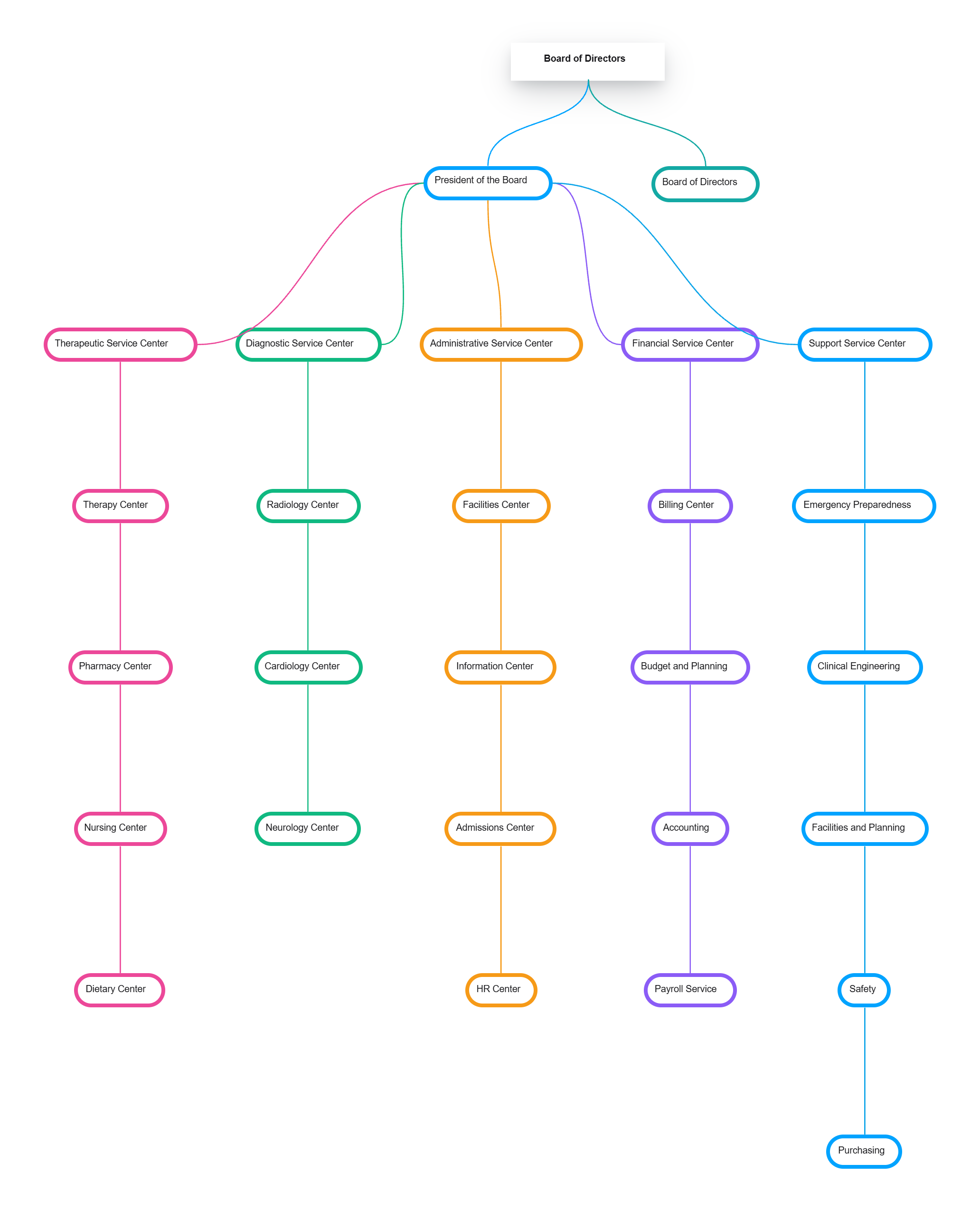
  • Board & Executive Leadership: The hospital’s strategic decisions, its performance monitoring, and compliance to regulations are all under the supervision of the medical organization chart which on the one hand aligns investments with community's needs, quality targets, and risk controls, while on the other hand, it enables regulators and donors to be part of the transparent governance. Moreover, it allows the medical leaders to take safe actions through the different departments and satellite clinics.
  • Chief Executive Officer / Hospital Director: The hospital’s quality services are paired with the efficient operations of the organization. The organizational chart of the hospital should indicate that this position is in contact with the leaders in medicine, nursing, and administration for congruent decisions. The positioning makes it evident that during incidents, escalation of communications will be faster with regard to public stakeholders, thereby enabling quicker response, resource allocation, and coordinated communication.
  • Clinical Departments & Nursing: Care is delivered by doctors, surgeons, specialists, and nursing. Displaying these teams in the hospital organizational chart will clarify which department is in charge, and the call schedules as well as the consult pathways. It will also develop the practice of multi-disciplinary rounds, decrease the gaps among the wards, and provide the necessary staff for critical services like emergency medicine or intensive care.
  • Administration, IT, and Support Services: HR, finance, IT, supply chain, and facilities are the backbone of the hospital and their support makes the operation a smooth ride. When the hospital organizational chart clearly illustrates these functions, the teams are able to coordinate maintenance, staffing, electronic health record (EHR) upgrades, and infection control. This level of visibility boosts the patient experience and in addition, it guarantees the continuity of logistics, billing, and security.

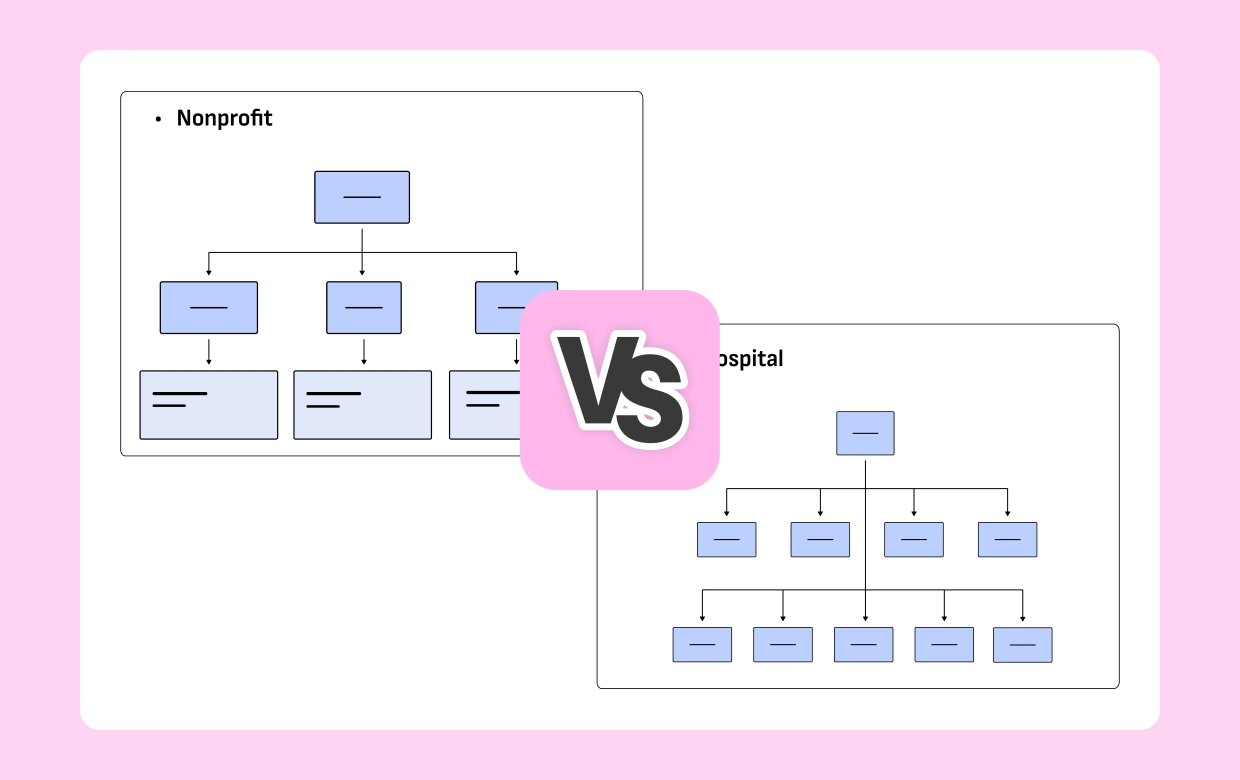
Nonprofit vs. Hospital Org Chart: Key Differences

Although both emphasize accountability, a nonprofit organizational chart centers on mission governance and volunteer orchestration, while a hospital organizational chart focuses on clinical safety and interdisciplinary coordination. Nonprofits orient around programs and fundraising; hospitals orient around patient flow and regulated procedures. Funding flows and risk profiles differ substantially. Use the Corporate Template for governance contrasts, and the Pillar to see how industry demands shape structures.

See below for practical distinctions to reflect in your chart.

  • Governance Emphasis: Nonprofits highlight board committees and grant stewardship; hospitals emphasize clinical governance and medical leadership. Tailor nodes to show approvals, audits, and credentialing paths. This distinction ensures stakeholders find owners quickly whether for donor reporting or clinical policy changes needing immediate executive signoff.
  • Operational Cadence: Nonprofits align to campaigns, events, and program cycles. Hospitals run 24/7 operations with shift-based staffing and rapid incident escalation. Your chart should mirror rhythms—volunteer coordination versus on-call rotations—so communication norms and accountability windows are visible to all.
  • Risk & Compliance: Nonprofits face grant conditions and safeguarding rules; hospitals manage licensure, patient safety, and data privacy. Embed responsible officers in your organizational chart and expose escalation paths. This reduces audit friction and clarifies who signs off on changes or breach notifications under regulated timelines.
  • Talent & Resourcing: Nonprofits blend staff and volunteers; hospitals blend clinicians, residents, and allied professionals. Visualizing training ladders, supervision, and scope of practice inside the organizational chart prevents overload, supports mentoring, and sustains safe, consistent service delivery throughout growth phases.

Best Practices for Nonprofit & Hospital Structures

Designing an effective nonprofit organizational chart or hospital organizational chart means translating strategy into visible responsibilities. Clarity wins especially during audits, incidents, or leadership transitions. Pair structure with meeting cadences, role charters, and metrics. Interlink HR and project structures to synchronize hiring and initiatives. For reference designs, compare the Nonprofit Template and Hospital Template inside Cloudairy.

See below for proven practices to embed in your org chart.

  • Publish Authorities & Escalations: Label policy owners, signatories, and crisis roles. Adding these to the organizational chart shortens response times and avoids ambiguity. Include alternates for continuity. This is crucial for hospitals’ incident command and nonprofits’ grant deadlines, where minutes and details materially affect outcomes.
  • Integrate Volunteers & Committees: Map volunteer roles to staff supervisors, and committees to board liaisons. This prevents duplicated work and improves inclusion. In nonprofits, clarity sustains morale and retention; in hospitals, similar clarity for committees (e.g., pharmacy & therapeutics) accelerates safe, standardized clinical decisions.
  • Link Structure to Rituals: Tie the chart to standing meetings—quality rounds, development reviews, safeguarding check-ins. Visible rhythms make collaboration predictable. When everyone knows the forum for decisions, issues move faster, reducing unproductive side channels and risk-laden delays.
  • Measure & Iterate: Revisit your organizational chart quarterly. Collect feedback post-incident or post-campaign to realign spans and resources. This discipline keeps structures living, supports growth, and ensures alignment between strategy, staffing, and real-world operational pressures.

How to Build Your Chart with Cloudairy

Cloudairy’s Industry Org Chart Maker accelerates building a nonprofit organizational chart and hospital organizational chart with AI-driven alignment, collaboration, and exports. Start from specialty templates, add departments, and share securely with boards or clinical leaders. Interlink to the Guide for deeper design patterns and the Report for trends.

Here are the steps to create your chart efficiently.

  • Pick the Right Template: Choose the Nonprofit Organizational Chart Template or Hospital Organizational Chart Template. These include common nodes and save hours. You can also start in the Industry Org Chart Maker if your structure is highly specialized or hybrid.
  • Add Leadership & Departments: Insert board, executive, clinical, or program leads. Use color accents for governance vs. operations. Cloudairy’s auto-layout keeps spacing readable, even as you add branches for nursing units, outreach teams, or committees that meet monthly.
  • Clarify Roles & Escalations: Add labels for approvals, reporting lines, and substitutes. Attach notes on credentialing, grant ownership, or incident command. This turns your chart into a working reference, not just a picture for onboarding or presentations.
  • Share, Export, Update: Collaborate with stakeholders in real time. Export to PDF/PPT for audits, donor decks, or accreditation. Revisit quarterly to reflect staffing shifts, new programs, or clinical expansions like telemedicine or community health hubs.

Example Scenarios & Use Cases

A nonprofit organizational chart might place the board and executive director at the top, branching to fundraising, programs, and operations. Volunteers connect to program coordinators through dotted lines with clear safeguarding protocols. This model helps with grant reporting, donor transparency, and efficient event planning. For a ready layout, customize the Nonprofit Template and adapt HR linkages via the HR Template to sustain growth.
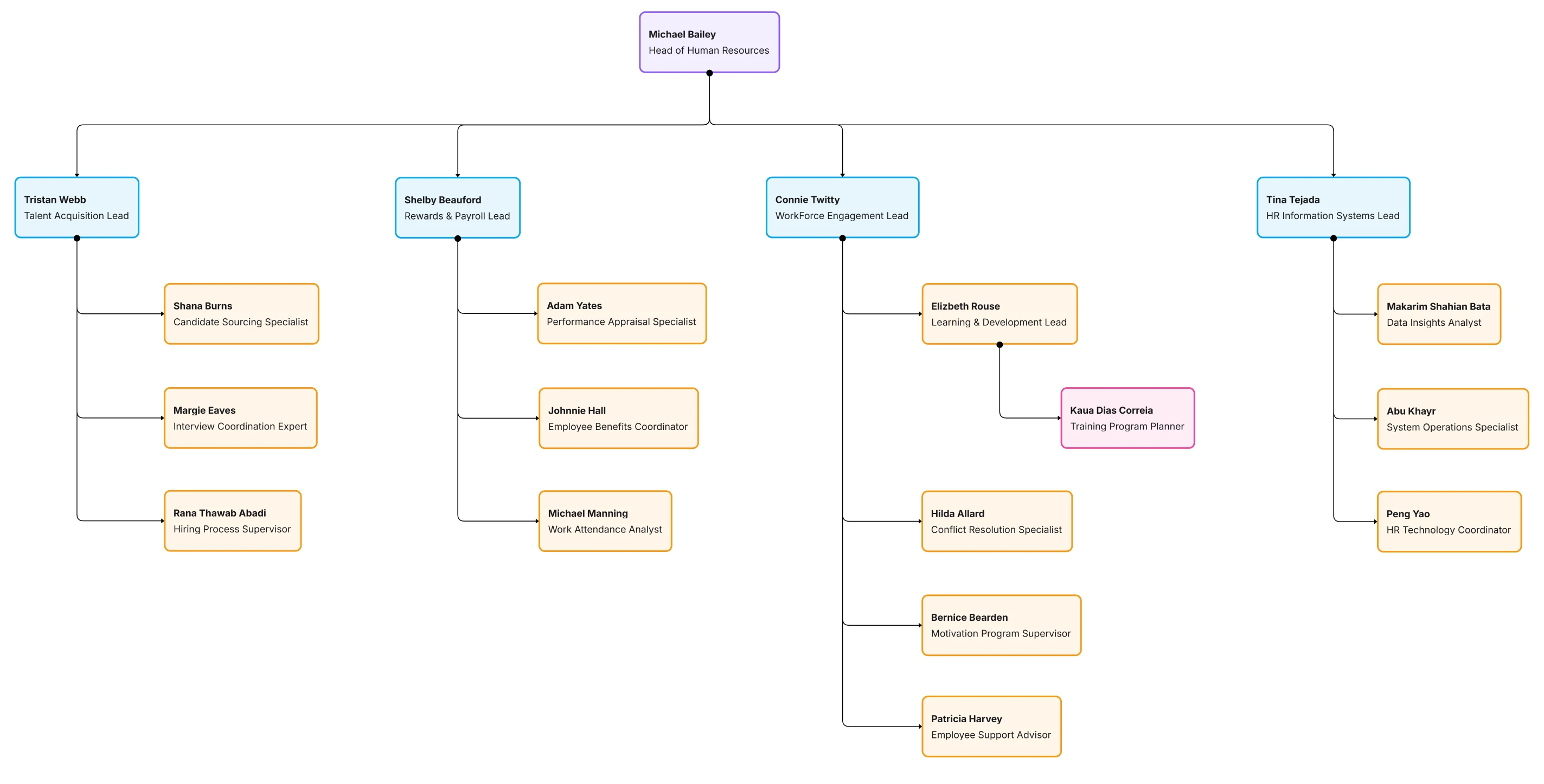
See below for nonprofit use-case highlights to mirror in your chart.

  • Grant-Funded Program Expansion: When new funding arrives, add a program lead, finance liaison, and monitoring role. Visualizing these nodes clarifies accountability for deliverables, disbursements, and reporting terms—helping teams hit milestones while remaining compliant with grant timelines and outcome metrics.
  • Volunteer-Heavy Campaigns: Map volunteer captains under a staff coordinator with training, safety, and shift protocols. Clear lines prevent burnout and confusion, boosting retention. This structure also simplifies incident escalation and public communications during large community events or seasonal drives.
  • Partnership Consortia: Show shared services—communications, data, or logistics—across partners with dotted lines. This keeps ownership clear while enabling resource pooling. It helps avoid duplicated outreach and maintains consistent messaging when several nonprofits deliver one multi-year program together.
  • Board Committee Revamp: Redraw finance, governance, and development committees with charters and meeting cadences. Add liaisons to programs for better oversight. This reduces approval delays and strengthens stewardship during audits, annual reports, and leadership transitions.

Hospital Organizational Chart Example

A hospital organizational chart typically shows the board and CEO, then the chief medical officer, chief nursing officer, and administrative executives. Below sit clinical departments (e.g., medicine, surgery), diagnostics, pharmacy, and support services. Clear escalation paths aid incident command and accreditation. Start with the Hospital Template and link specialty staffing to the IT Template for EHR reliability.

See below for hospital use-case highlights to incorporate.

  • Emergency Surge Planning: Add incident command roles, bed management, and triage coordinators with on-call schedules. Making these nodes explicit shortens response times, clarifies responsibilities, and supports drills—vital for pandemics, weather events, or mass-casualty incidents requiring rapid resource reallocation.
  • Quality & Safety Programs: Display infection control, pharmacy & therapeutics, and mortality review committees. Clear lines to clinical leaders speed decisions and standardize practice, improving compliance and patient outcomes while preparing robust evidence for accreditation bodies.
  • Telemedicine Expansion: Introduce virtual care leads and device support under IT and clinical ops. Showing cross-links with data privacy and security ensures safeguarded workflows, consistent credentialing, and reliable remote consults that integrate with existing inpatient and outpatient pathways.
  • Multi-Site Networks: Visualize regional leadership, shared services, and site-level managers. Standardized charts make policies portable across campuses, reduce variation in patient experience, and help executives compare performance and staffing models transparently.

Conclusion 

Clear nonprofit organizational charts and hospital organizational charts transform governance into action—accelerating decisions, ensuring compliance, and protecting stakeholders. By mapping roles and escalations, you enable reliable programs and safe patient care. Start from proven templates, then iterate with metrics and feedback. Cloudairy’s AI-assisted builder keeps charts accurate and collaborative as you grow.
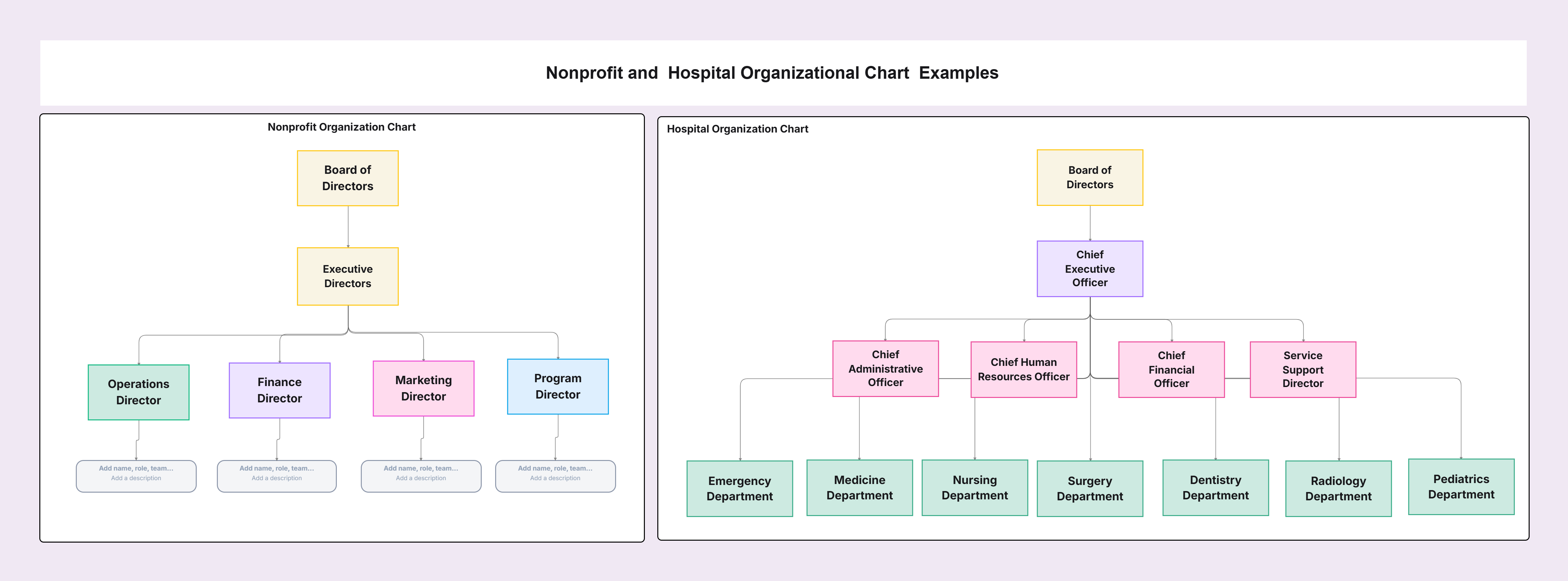
Build yours today with the Industry Org Chart Maker and customize the Nonprofit and Hospital templates for immediate clarity.

FAQs

1. What is the difference between a nonprofit organizational chart and a hospital organizational chart?

A nonprofit organizational chart emphasizes board committees, fundraising, and volunteer management, while a hospital organizational chart centers on clinical leadership, interdisciplinary care, and regulatory readiness. Both require clear escalation paths, but hospitals add extensive clinical governance and 24/7 operational coverage.

2. Why are these charts important for compliance and accreditation?

Both nonprofit organizational charts and hospital organizational charts document accountability for audits, grants, and standards. Showing policy owners, incident roles, and approval workflows reduces audit friction and proves governance. Hospitals also align with clinical committees and safety programs to meet accreditation expectations.

3. How can templates speed implementation?

Editable nonprofit organizational chart templates and hospital organizational chart templates reduce setup time by providing proven nodes, color cues, and role examples. You can adapt them quickly to your size and programs, then export for audits, donor reports, or accreditation packets with minimal rework.

4. Can we manage volunteers and clinical units in the same tool?

Yes. Using the Industry Org Chart Maker, you can map volunteers with dotted lines and clinical units with formal reporting. This hybrid view clarifies supervision, training, and safety, while preserving the detail needed for ward coverage, on-call schedules, and credentialing.

5. How often should we update nonprofit and hospital org charts?

Update nonprofit organizational charts when grants, programs, or committees change; update hospital organizational charts after leadership shifts, service expansions, or safety program updates. A quarterly review with stakeholders keeps both structures current, accurate, and aligned with evolving strategy and regulatory requirements.

Ready to create smarter with AI?

Start using Cloudairy to design diagrams, documents, and workflows instantly. Harness AI to brainstorm, plan, and build—all in one platform.

Recommended for you