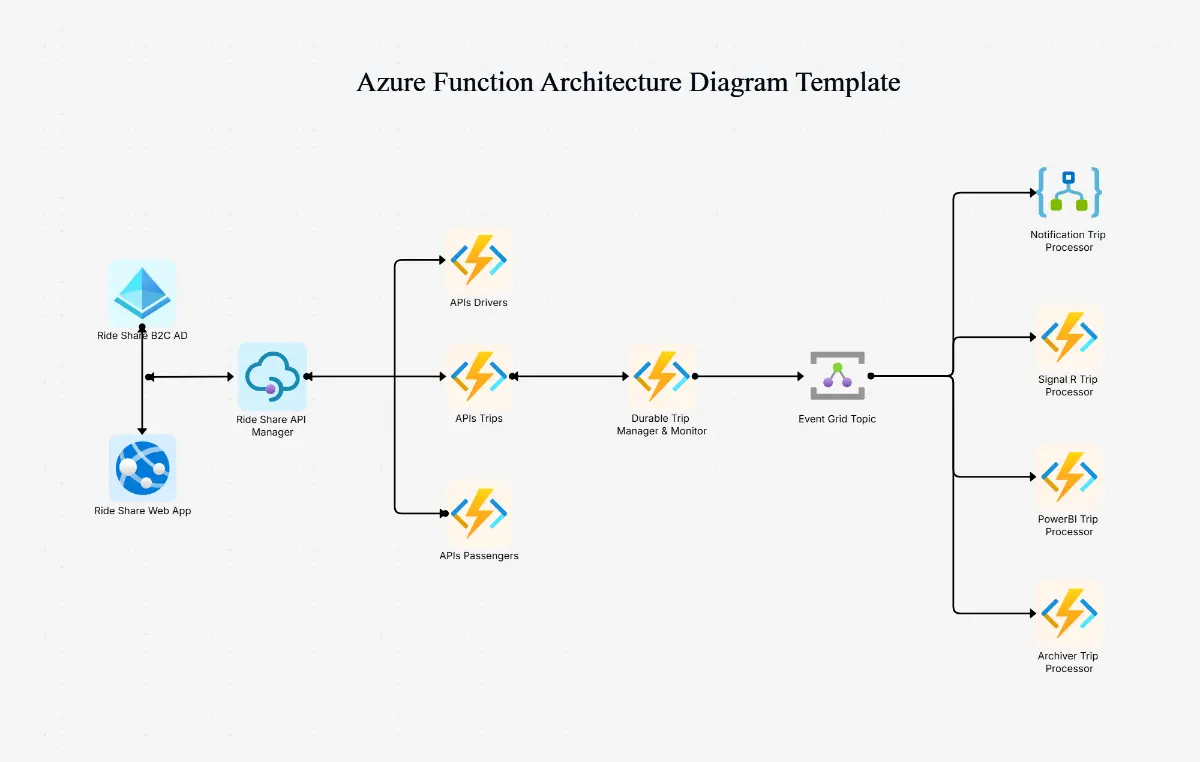
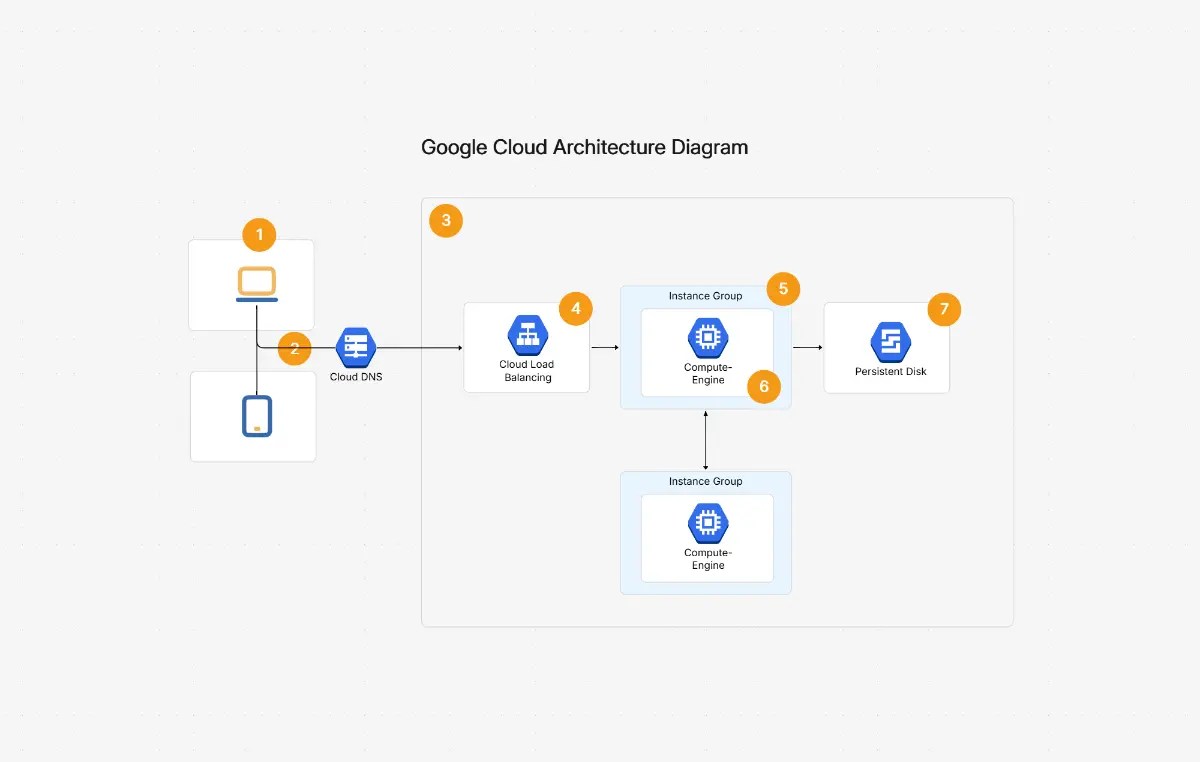
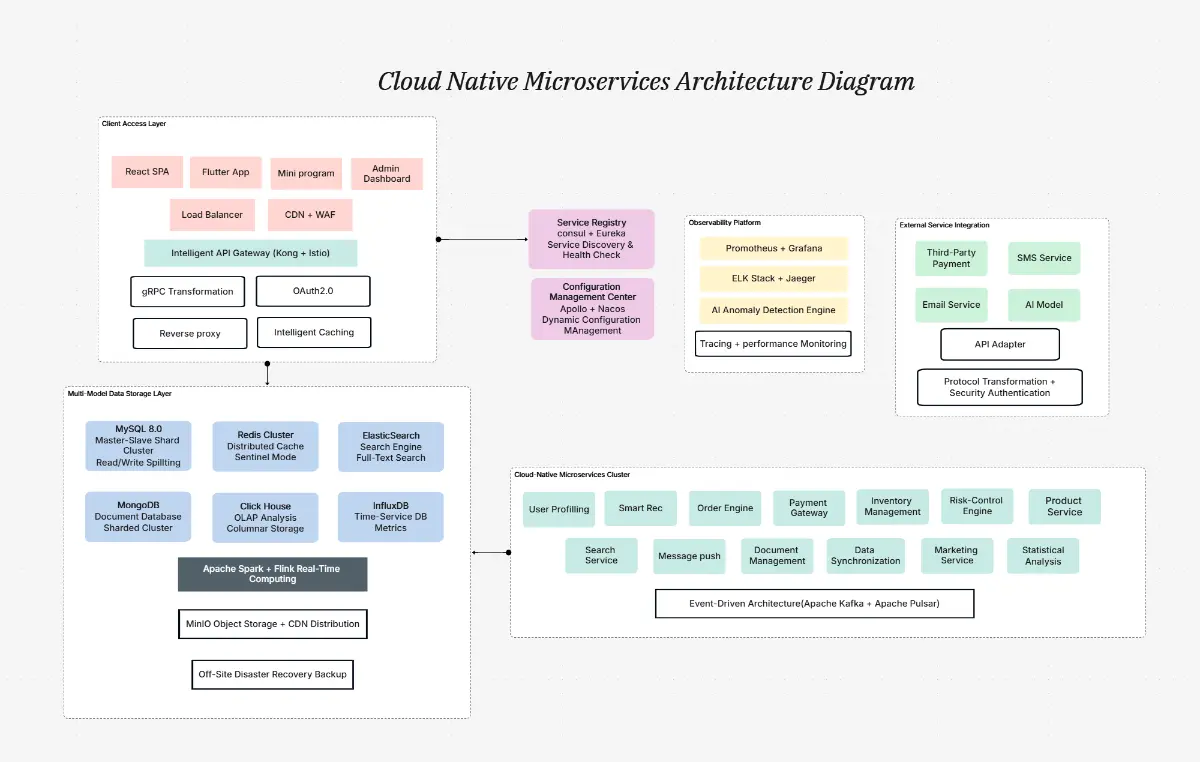
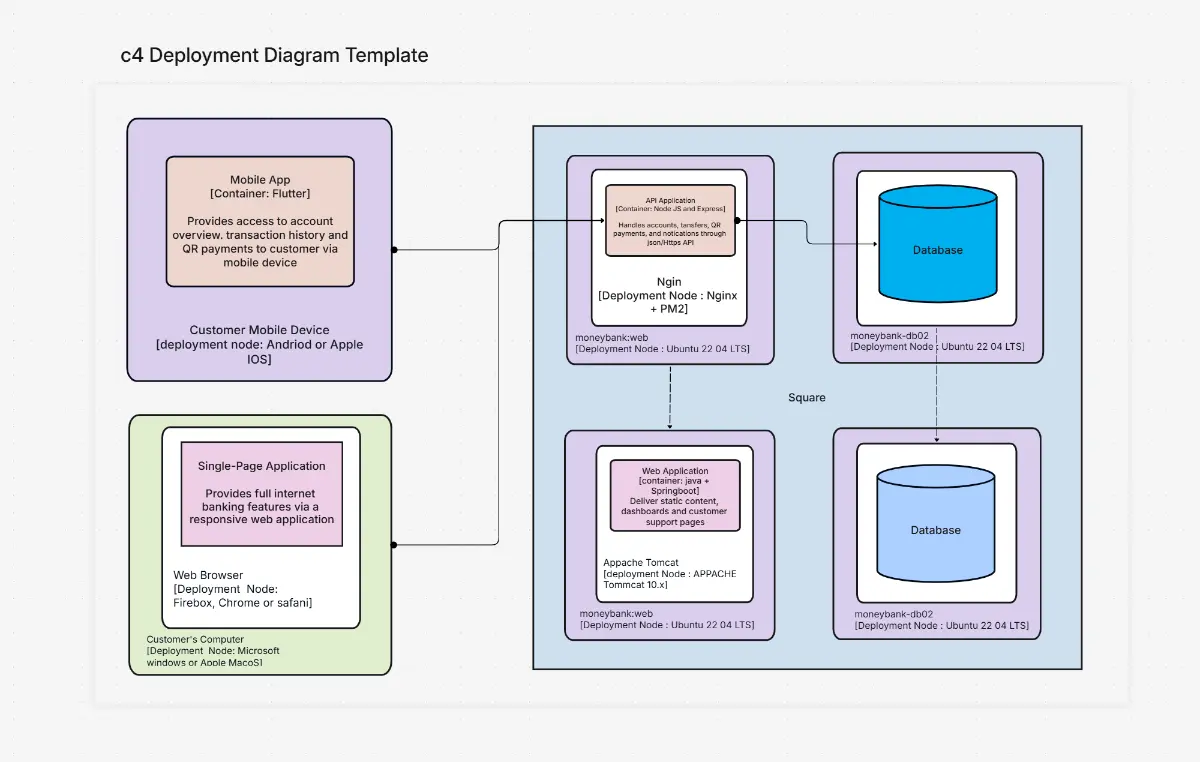
50,000 + Trusted Users with
star star star star star

Trusted by Professionals at Leading Companies

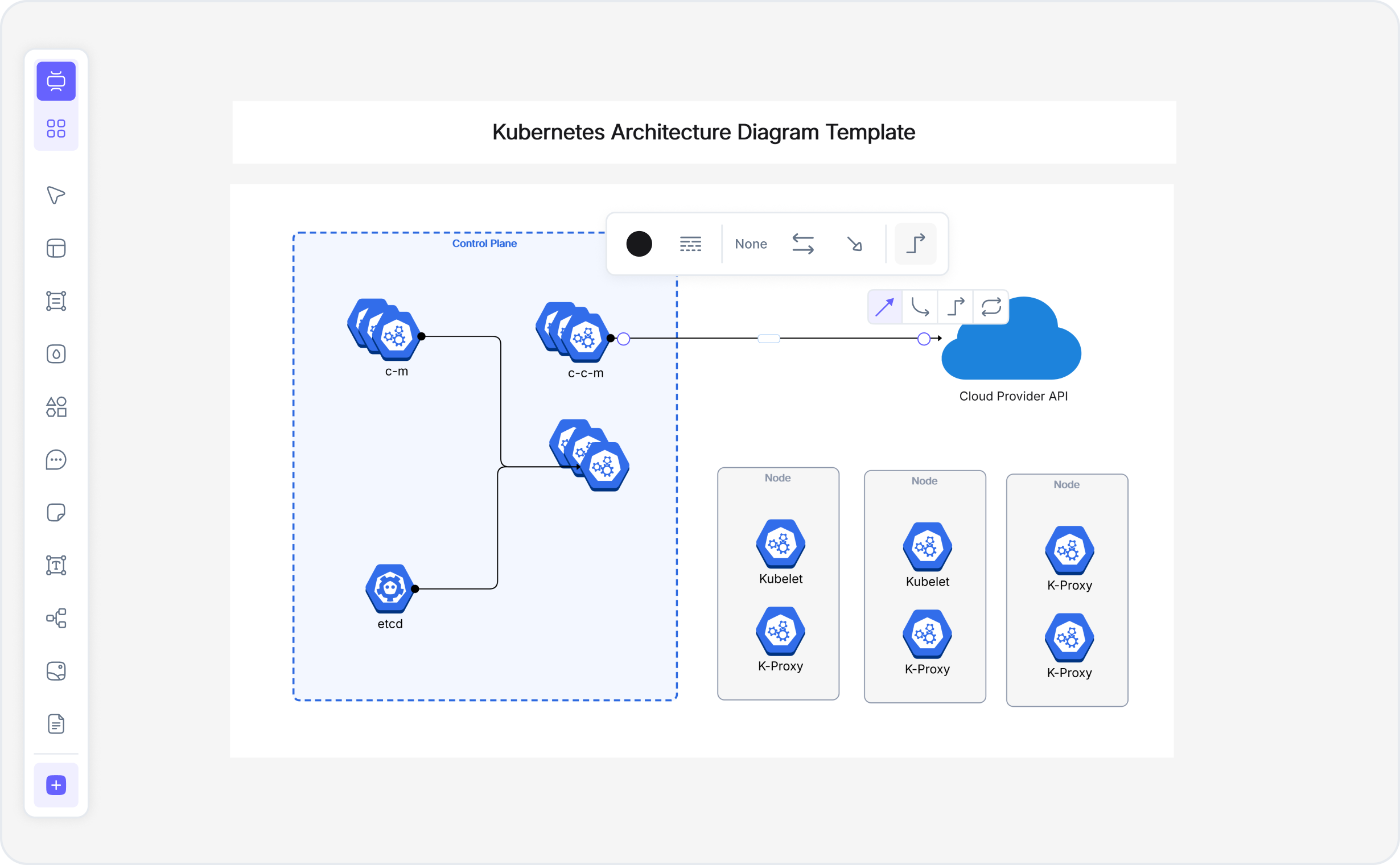
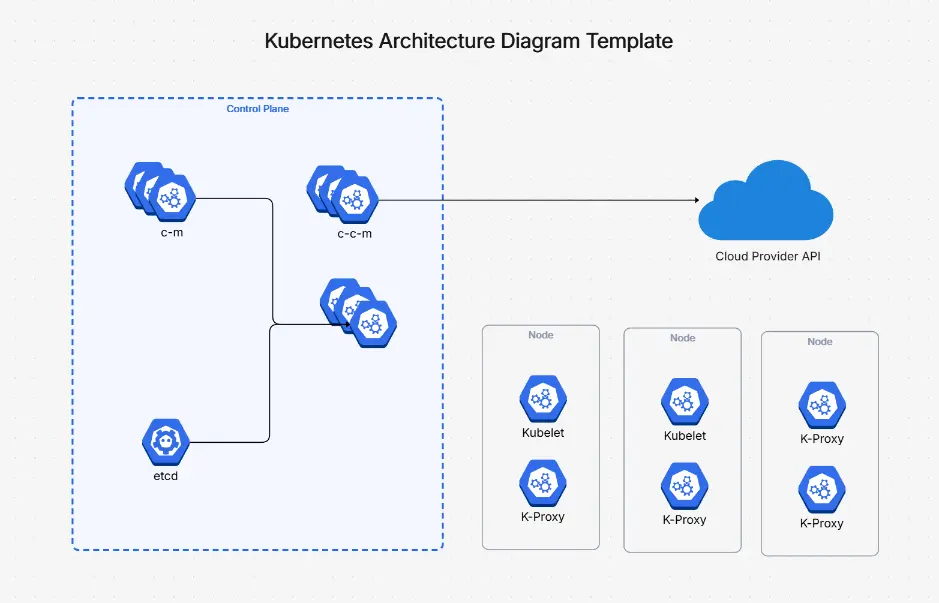
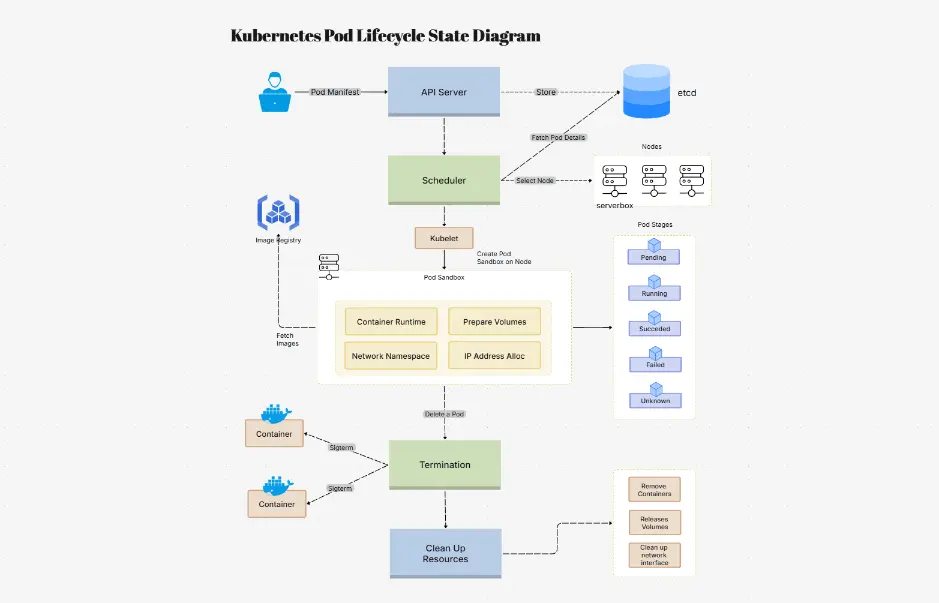
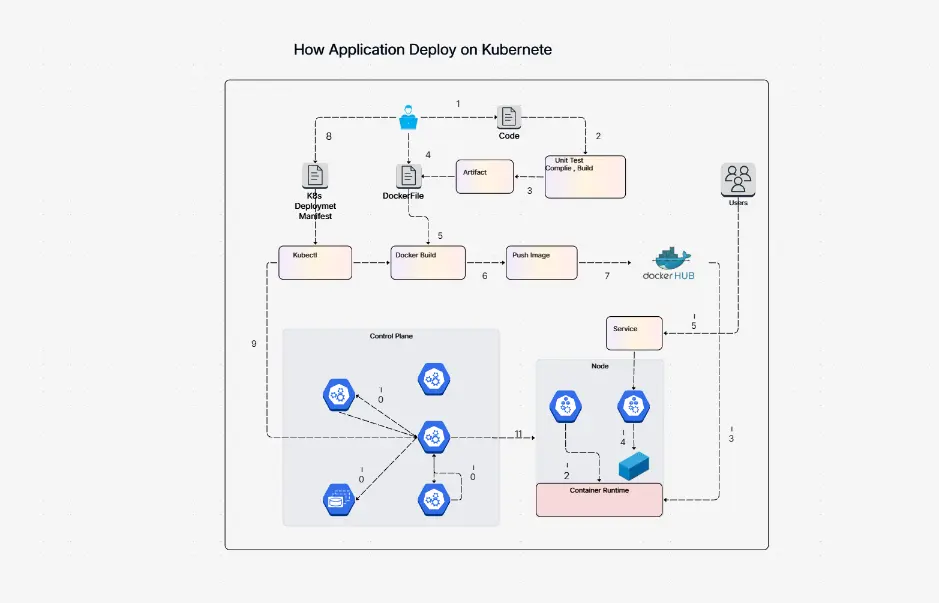
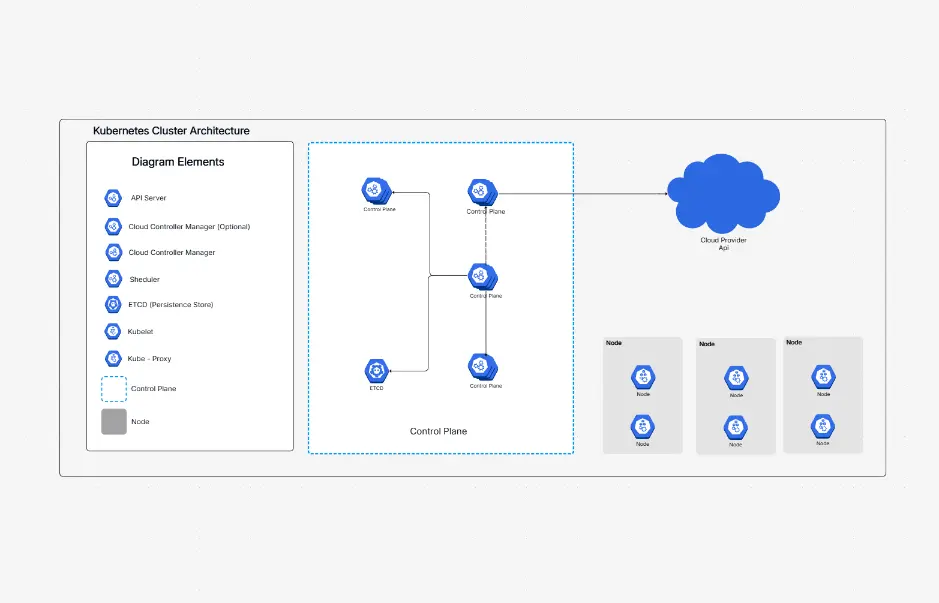
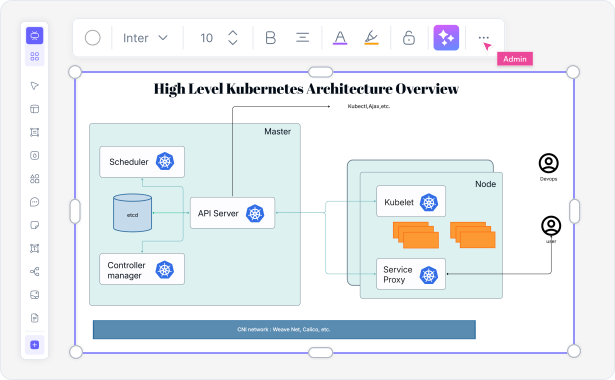
What is a Kubernetes diagram — example showing pods, nodes, services, ingress, and control plane components

What Is a Kubernetes Diagram?

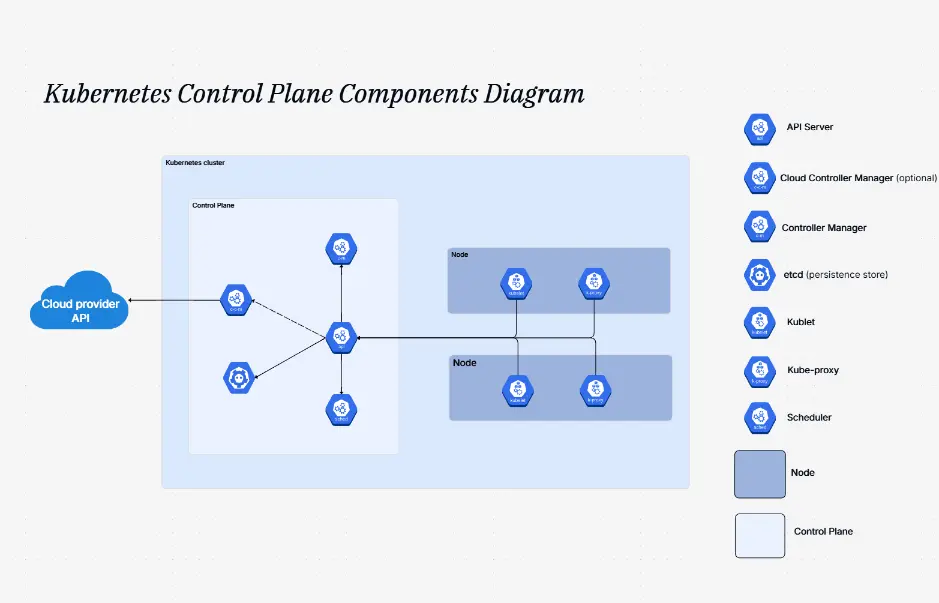
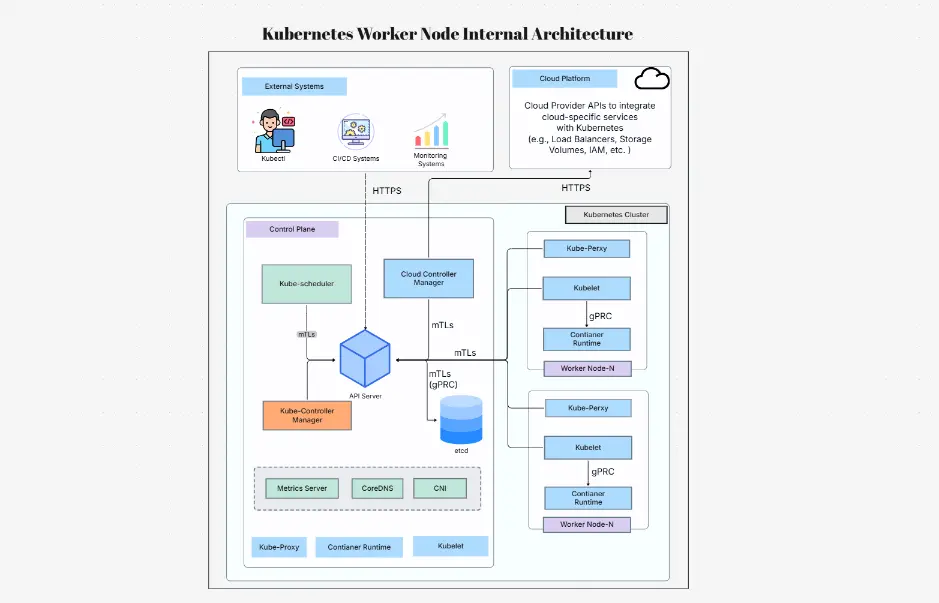
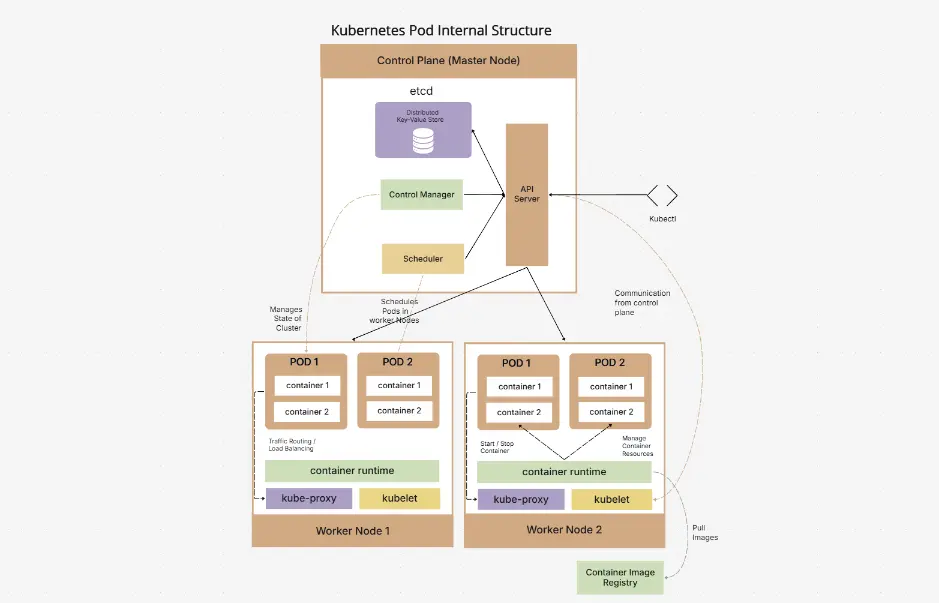
A Kubernetes diagram (K8s diagram) is a visual representation of a Kubernetes cluster's architecture, showing how components like pods, nodes, services, and ingress controllers interact. Diagrams typically illustrate the master/control plane (API server, etcd, scheduler, controller manager), worker nodes with running pods, networking (service discovery, DNS, network policies), and external ingress routing. Kubernetes diagrams are essential for documentation, architecture reviews, multi-cloud planning, and onboarding new team members.

Kubernetes diagrams serve DevOps engineers, SREs, platform engineers, CTOs, and solution architects documenting cloud deployments, multi-cloud strategies, and internal topology. Whether you're designing an AWS EKS cluster, an Azure AKS deployment, or a GKE microservices platform, Kubernetes diagrams provide the clarity needed for architecture reviews, compliance documentation, and team onboarding.

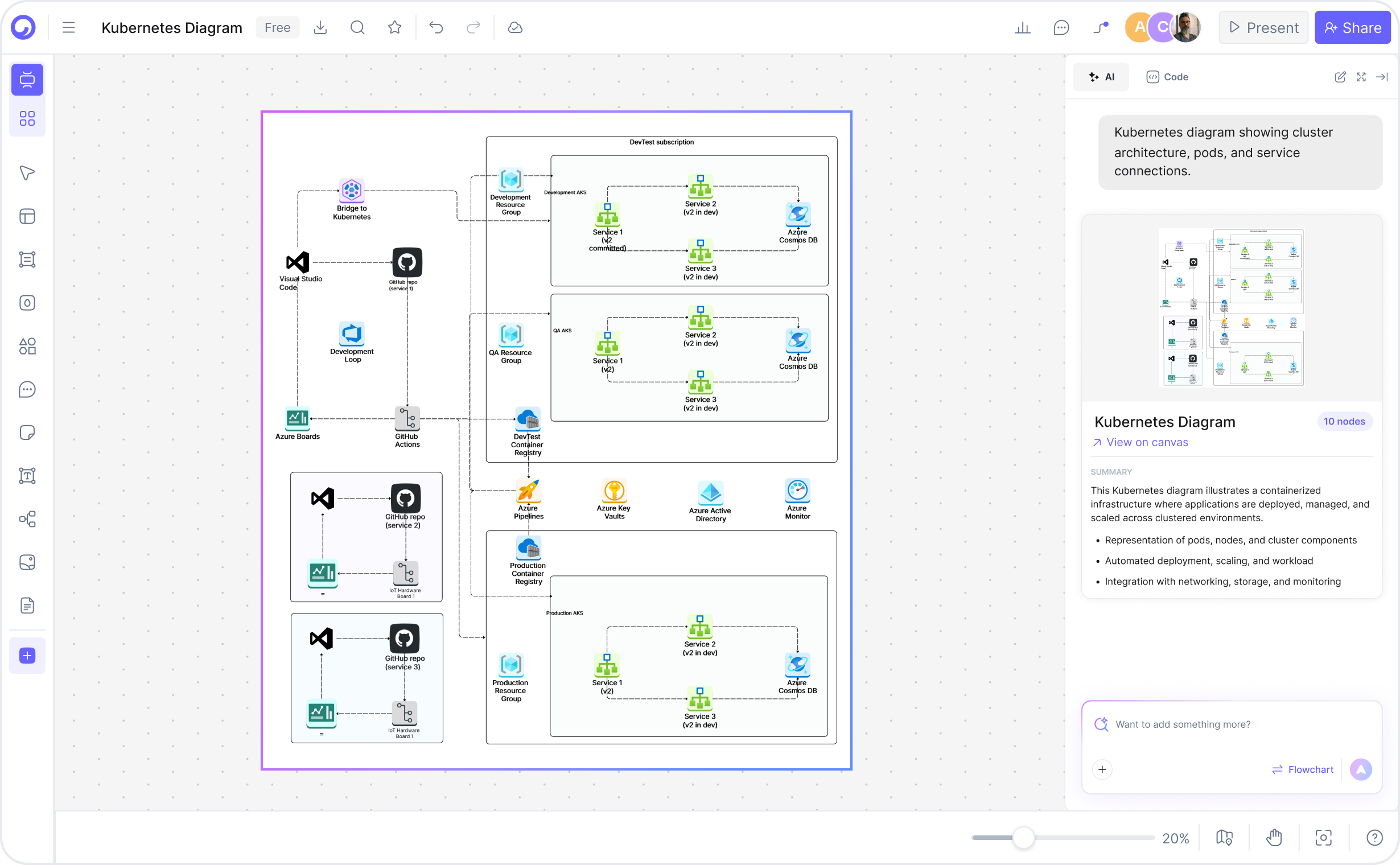
Cloudairy's AI Kubernetes Diagram Maker eliminates the 45–90 minutes of manual diagramming in tools like Lucidchart or Visio. Describe your K8s cluster in plain English — "Build an EKS cluster with 3 worker nodes, 2 microservices, Nginx ingress, and RDS backend" — and the AI generates a complete architecture diagram with official Kubernetes icons in under 3 minutes. No cluster connection required. Export to PNG, SVG, PDF, or Visio for documentation and sharing.

How to Create a Kubernetes Architecture Diagram (6 Steps)

Go from cluster topology idea to a professional Kubernetes architecture diagram in six steps — no manual drawing, no cluster connection required.

1

Identify your cluster components

List your Kubernetes components: worker nodes, pods, services, ingress controllers, storage (PVC/PV), config maps, and secrets. Decide the scope — single cluster, multi-cluster, or microservices service mesh.

2

Map the topology

Define the master/control plane (API server, etcd, scheduler, controller manager) and worker node layout. Identify namespaces and how workloads are distributed across nodes.

3

Design networking

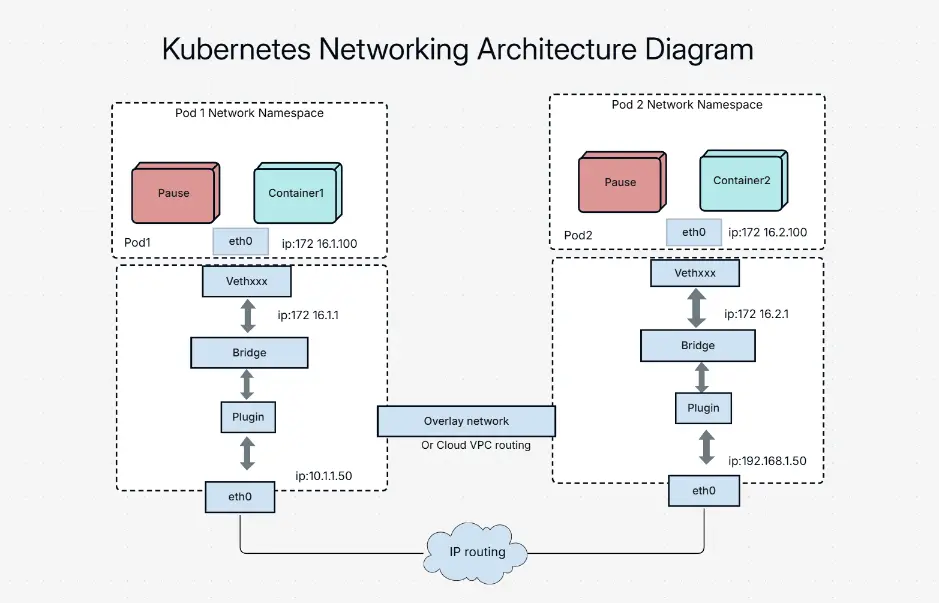
Plan service discovery (ClusterIP, NodePort, LoadBalancer), ingress routing rules, network policies (CNI), and DNS configuration. Map external traffic flow through the ingress controller.

4

Add services and workloads

Place Deployments, StatefulSets, DaemonSets, CronJobs, and ConfigMaps. Connect microservices with service-to-service communication paths and define resource limits.

5

Plan ingress and storage

Add Ingress controllers (nginx, AWS ALB, GCE), TLS termination, and persistent storage (PVC, StorageClass). Link to database backends and cloud storage services.

6

Export and share

Export to PNG, SVG, PDF, Visio (.vsdx), or draw.io. Share a live collaboration link with your DevOps and platform engineering team for architecture review and sign-off.

How to create a Kubernetes architecture diagram with Cloudairy — six steps from cluster description to export

Start Creating Your Kubernetes Diagram Free

Join DevOps engineers, platform engineers, and solution architects worldwide who use Cloudairy to create professional Kubernetes diagrams in under 3 minutes. AI generation. Official K8s icons. EKS/AKS/GKE templates. Multi-format export.

No credit card required • Start creating in seconds

Why Use Cloudairy as Your Kubernetes Diagram Tool

Cloudairy is the only AI Kubernetes diagram maker that combines AI natural language generation with the official K8s icon library, EKS/AKS/GKE templates, real-time collaboration, and two-way Visio/draw.io import — no cluster connection required.

AI Prompt-to-K8s-Diagram

AI Prompt-to-K8s-Diagram

Describe your Kubernetes cluster in plain English and get a complete architecture diagram in under 3 minutes. The AI understands EKS, AKS, GKE, pods, nodes, services, ingress, Helm, and Istio — no manual icon placement required. Reduces K8s diagram creation from 45–90 minutes to under 3 minutes.

Official Kubernetes Icon Library

Official Kubernetes Icon Library

Use native Kubernetes icons from the official K8s project — pods, nodes, services, ingress controllers, CRDs, Helm charts, Istio service mesh, and cloud-provider-specific components. Competitors use generic cloud icons; Cloudairy uses the real K8s icon set.

EKS AKS GKE Templates

EKS, AKS & GKE Templates

Pre-built templates for AWS EKS, Azure AKS, and GKE multi-tier architectures, service-mesh (Istio), GitOps (ArgoCD), and multi-cluster deployments. Accelerate design for platform engineers without starting from scratch.

No Cluster Connection Required

No Cluster Connection Required

Design and visualize Kubernetes architectures without live cluster API access — unlike Hava's cluster-dependent approach. Plan before implementation, conduct pre-deployment reviews, and document multi-cloud strategy without touching running infrastructure.

Real-Time Collaboration

Real-Time Collaboration

Multiple team members edit the same Kubernetes diagram simultaneously with live cursor positions, comment threads, and permission controls (edit/view/comment). Ideal for distributed architecture reviews, design workshops, and cross-team DevOps planning.

Two-way Visio and draw.io Import

Two-Way Visio & draw.io Import

Import existing Visio or draw.io architecture diagrams, edit in Cloudairy, and export back to the original format. Enterprise workflow integration — bring your existing K8s documentation into the AI-powered editor without losing any work.

Cloudairy vs Competitors — Kubernetes Diagram Tools Compared

See how Cloudairy's AI Kubernetes diagram maker compares to general diagram tools, legacy architecture tools, and specialist K8s platforms.

Feature Cloudairy Lucidchart Visio draw.io Eraser Hava
AI Prompt-to-K8s-Diagram Yes No No No AI visual (limited K8s) No
Official K8s Icon Set (pods/nodes/services) Yes Partial Partial Partial No Proprietary cluster icons
No Cluster Connection Required Yes Yes Yes Yes Yes No (cluster-dependent)
Real-time Collaboration Yes (comments, presence) Yes (enterprise) Yes (Office) Yes (beta) Yes (limited) Yes (basic)
Export: PNG/SVG/PDF Yes (all 3) PDF, PNG, Visio, PPT PNG, PDF, Visio PNG, SVG, PDF, XML PNG, PDF, SVG PNG, SVG
Templates: EKS/AKS/GKE Yes (all 3 + multi-cluster) Yes (limited) Limited Community Limited Cluster-specific
Two-way Visio/draw.io Import Yes Limited Visio Native Yes No No
Free Tier Unlimited diagrams + exports 5 diagrams 30-day trial Unlimited Limited Freemium with limits

Who Uses Kubernetes Diagrams?

DevOps Engineers & SREs

Document cluster topology, design deployment pipelines, and plan incident response. Generate K8s architecture diagrams from cluster descriptions for runbooks, postmortems, and on-call documentation.

Platform Engineers

Design internal developer platforms, multi-cluster architectures, and GitOps workflows. Use pre-built EKS, AKS, and GKE templates to accelerate platform design and documentation without starting from scratch.

Solution Architects

Create client-ready Kubernetes architecture proposals and system design diagrams. Visualize microservices topologies, service mesh patterns, and cloud migration strategies for stakeholder presentations.

CTOs & Engineering Managers

Communicate cloud-native strategy to leadership and stakeholders. Generate clear K8s topology diagrams and multi-cloud architecture overviews for board presentations, technical roadmaps, and compliance audits.

Cloud & Infrastructure Teams

Plan cloud migrations, multi-cloud strategies, and deployment architectures. Document EKS, AKS, and GKE environments without requiring live cluster API access — design on paper, then implement.

DevOps engineers, platform engineers, and solution architects using Cloudairy for Kubernetes diagrams

Frequently Asked Questions

A Kubernetes diagram (K8s diagram) is a visual representation of a Kubernetes cluster's architecture, showing how components like pods, nodes, services, and ingress controllers interact. Diagrams typically illustrate the master/control plane (API server, etcd, scheduler, controller manager), worker nodes with running pods, networking (service discovery, DNS, network policies), and external ingress routing. Kubernetes diagrams are essential for documentation, architecture reviews, multi-cloud planning, and onboarding new team members to DevOps infrastructure.

With Cloudairy, describe your Kubernetes cluster in plain English—for example, 'Build an EKS cluster with 3 worker nodes, 2 microservices (api and web), Nginx ingress, and RDS backend'—and the AI generates a complete architecture diagram with proper Kubernetes icons, connections, and labels. You can then refine the diagram, add more services, configure ingress rules, or export to Visio/draw.io. The AI approach eliminates the need to manually place 30–50 shapes and connectors, reducing design time from 60+ minutes to under 3 minutes.

Yes. Cloudairy includes pre-built templates and AI understanding of AWS EKS (Elastic Kubernetes Service), Azure AKS (Azure Kubernetes Service), and Google GKE (Google Kubernetes Engine) architectures. Each cloud provider has distinct networking, storage, and ingress patterns—Cloudairy's templates and AI prompt recognition handle these differences. For example, EKS uses VPC networking and AWS Load Balancer Controller; AKS uses Azure networking and ingress-nginx; GKE uses GCP VPC and Google Cloud Load Balancing.

No. Unlike tools like Hava that require live cluster API access, Cloudairy does NOT require a cluster connection. You can design and visualize Kubernetes architectures directly in Cloudairy without touching your running infrastructure—ideal for planning before implementation, pre-deployment reviews, and multi-cloud strategy documentation. If you have a live cluster, you can still use Cloudairy to document its architecture through manual design or AI prompt; no API integration is needed.

Yes. Cloudairy supports one-click export to PNG, SVG, PDF, Visio (.vsdx), PowerPoint (.pptx), and draw.io formats. This flexibility allows you to embed diagrams in architecture documents, compliance presentations, design systems, cloud migration plans, and technical RFCs. Exported files are fully editable in their native applications for further refinement.

Yes. Cloudairy offers a completely free tier with unlimited Kubernetes diagram creation, export, and storage. No signup is required to start creating diagrams; you can save work by creating a free account. The free tier includes all core features: AI generation, Kubernetes templates, multi-format export, real-time collaboration comments, and access to the official Kubernetes icon library. Premium tiers add enterprise features like advanced analytics and priority support.

Cloudairy's three key differentiators: (1) AI Prompt-to-Diagram—describe your K8s architecture in English and AI generates the diagram instantly (Lucidchart has no K8s AI; Hava requires cluster connectivity); (2) Official Kubernetes Icon Set—native pods, nodes, services, ingress, CRDs, Helm, Istio icons from the Kubernetes project itself, not generic cloud icons; (3) No Cluster Connection—design and document K8s architectures without touching your live infrastructure, unlike Hava's cluster-dependent approach.

Yes. Cloudairy supports real-time collaboration—multiple team members can edit the same Kubernetes diagram simultaneously with live cursor positions, typed-text synchronization, and comment threads. You can assign permissions (edit/view/comment), mention teammates, and track version history. This is ideal for distributed design reviews, architecture workshops, and collaborative capacity planning across DevOps and platform engineering teams.

A service mesh diagram shows how Istio or similar service mesh technology (Linkerd, Consul) manages microservice communication in Kubernetes. It includes data plane (Envoy sidecars injected into each pod), control plane (Istiod managing VirtualService, DestinationRule, ServiceEntry resources), observability components (Prometheus, Grafana, Kiali for distributed tracing), and traffic management (circuit breaking, retry policies, load balancing). Cloudairy includes pre-built Istio templates for visualizing service mesh architectures.

Yes. Cloudairy templates include multi-cluster architectures (federation, global load balancing, disaster recovery topologies) and GitOps workflows with ArgoCD (Git repository → ArgoCD controller → multiple target clusters). These are critical for production deployments, high-availability infrastructure, and continuous delivery pipelines. Cloudairy's AI and templates simplify designing these complex architectures.

Success Stories from Our Community

See how cloud architects, solutions engineers, and DevOps teams use Cloudairy to create Azure architecture diagrams faster and with better results.

As a cloud architect, I need precision and speed. Cloudairy helps me design complex Azure architectures in minutes without losing detail or accuracy. The official Azure icons save me hours every week.

Cloudairy makes Azure solution design so simple. I can create client-ready architecture diagrams instantly and focus on delivering value instead of spending hours formatting Visio files.

I'm studying for AZ-305 and Cloudairy helps me visualize Azure reference architectures instantly. I can generate a landing zone diagram from a single sentence and use it as a study aid.

I use Cloudairy to teach Azure architecture in my courses. The AI generator lets students produce real-world diagrams on the first day instead of spending weeks learning Visio.

Our team uses Cloudairy to document every Azure deployment. The Visio export means our diagrams drop straight into client deliverables without any reformatting. Huge time saver.

Secure, compliant, and enterprise-ready

Cloudairy safeguards your work with enterprise-grade security, compliance, and access controls — so your teams can create, collaborate, and scale with confidence.

SOC 2 Type II
SOC 2 Type Ⅱ

Cloudairy is SOC 2 Type Ⅱ certified and penetration tested annually, ensuring your architecture diagrams and data meet the highest standards for security and reliability.

GDPR
GDPR

We comply with the European Union General Data Protection Regulation (GDPR) and extend it to all our customers even those outside of the EU.

ISO 27001
ISO 27001

Our Information Security Management System is ISO 27001 certified — the leading global standard for information security.

Flexible Pricing for Every Team

Free

Discover what Cloudairy can do for you. Start for free

$0

for unlimited members
Try for free

Upgrade now

Show key features

up-arrow

Includes:

Starter

Unlock unlimited and private boards with important features

$4

per member / month

billed annually

monthly

Show key features

up-arrow

Includes everything in Free, plus:

money-back

Business

MOST POPULAR

Ideal for agencies or growing businesses managing multiple projects.

$5

per member / month
billed annually

Show key features

up-arrow

Includes everything in starter, plus:

Enterprise Plan

For large organizations needing scalability, control, and security.

contact-pricing
Contact for pricing
Contact us

Upgrade now

Show key features

up-arrow

Includes everything in Business, plus: