50,000 + Trusted Users with
star star star star star

Trusted by Professionals at Leading Companies

What is a ladder diagram — example showing PLC contacts, coils, timers, and counters in IEC 61131-3 notation

What Is a Cause & Effect Diagram?

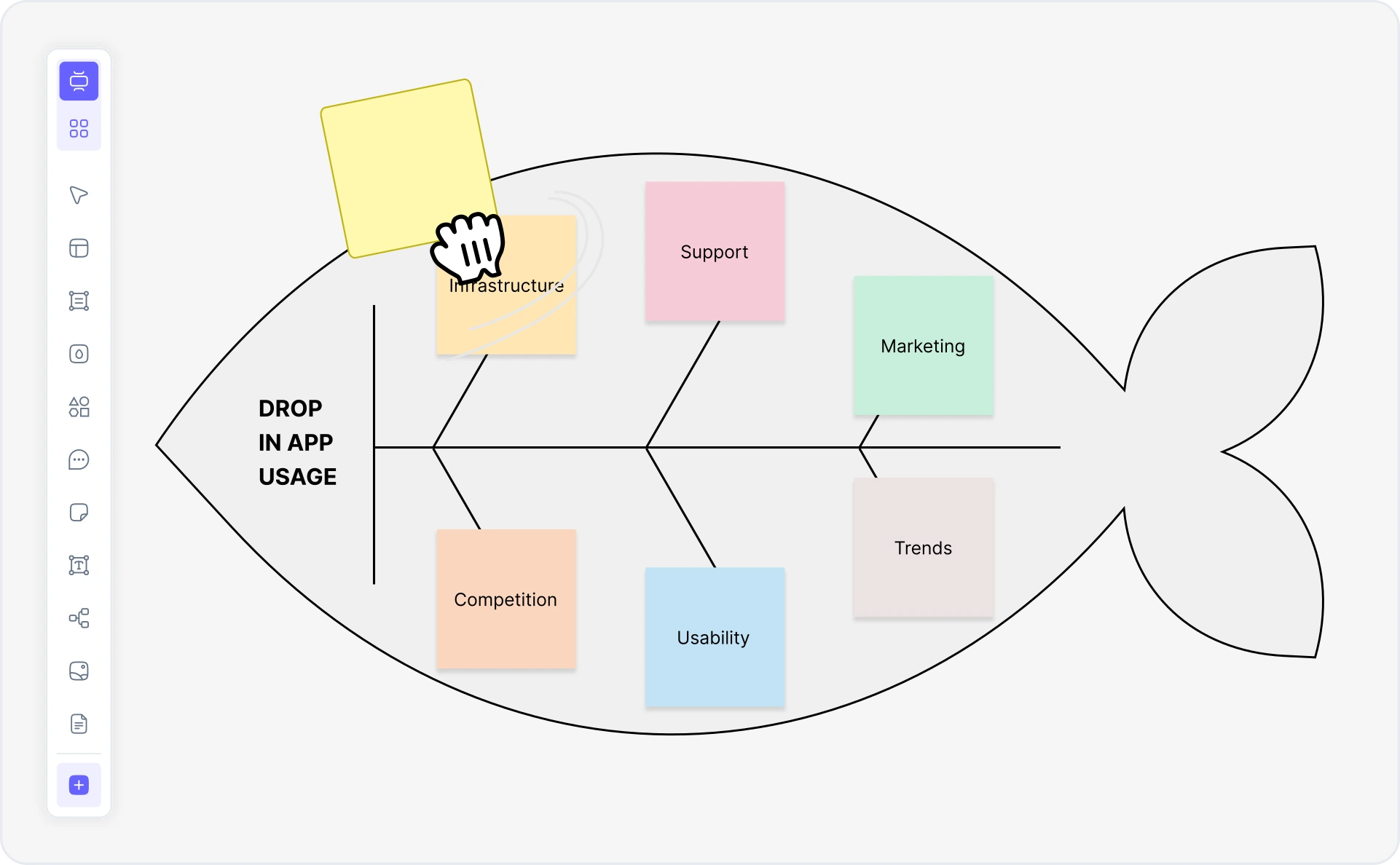
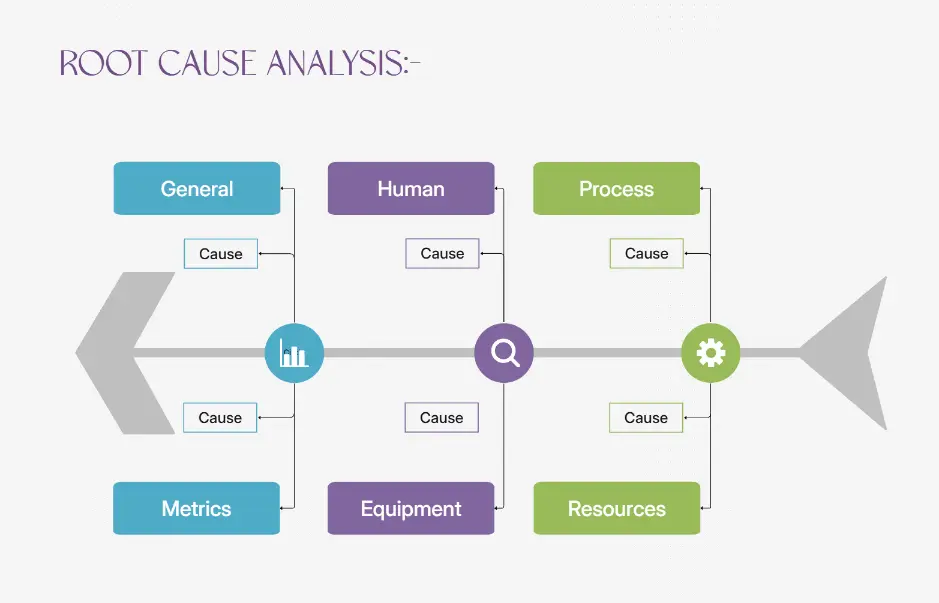
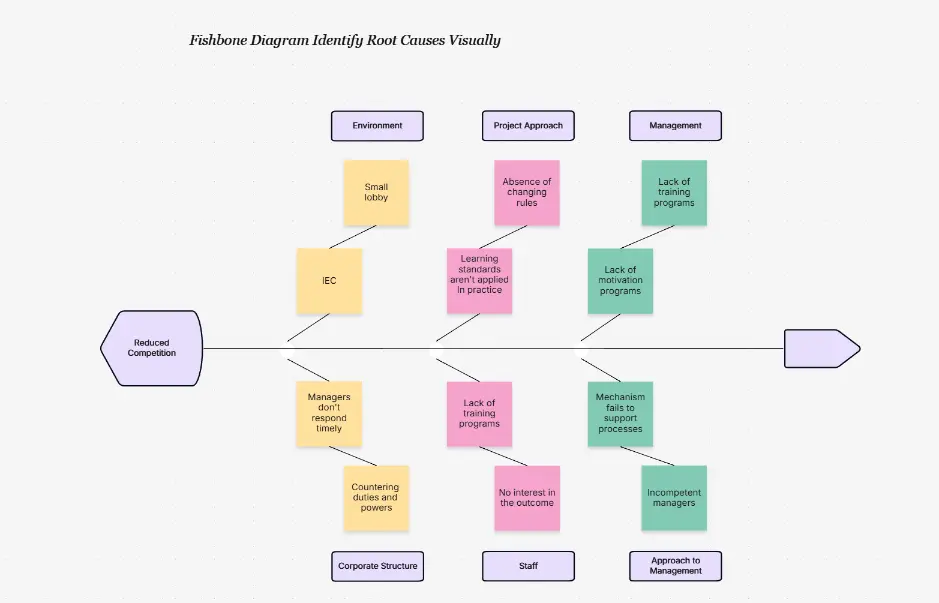
A cause-and-effect diagram (also called a fishbone or Ishikawa diagram) is a visual problem-solving tool used to identify root causes of quality problems, operational failures, and process defects. It maps the relationship between a problem (effect) and all possible causes contributing to it—organized into categories like people, process, equipment, materials, environment, and methods—to reveal underlying systemic issues rather than just surface symptoms.

Cause-and-effect diagrams are fundamental to quality management, Six Sigma DMAIC methodology, ISO 9001 continuous improvement, and incident root cause analysis. They support the 5 Whys technique, forcing teams to ask "why" repeatedly until reaching the true root cause instead of mistaking contributing factors for the core issue. Used across manufacturing, healthcare, software, incident response, and process improvement teams to prevent problem recurrence.

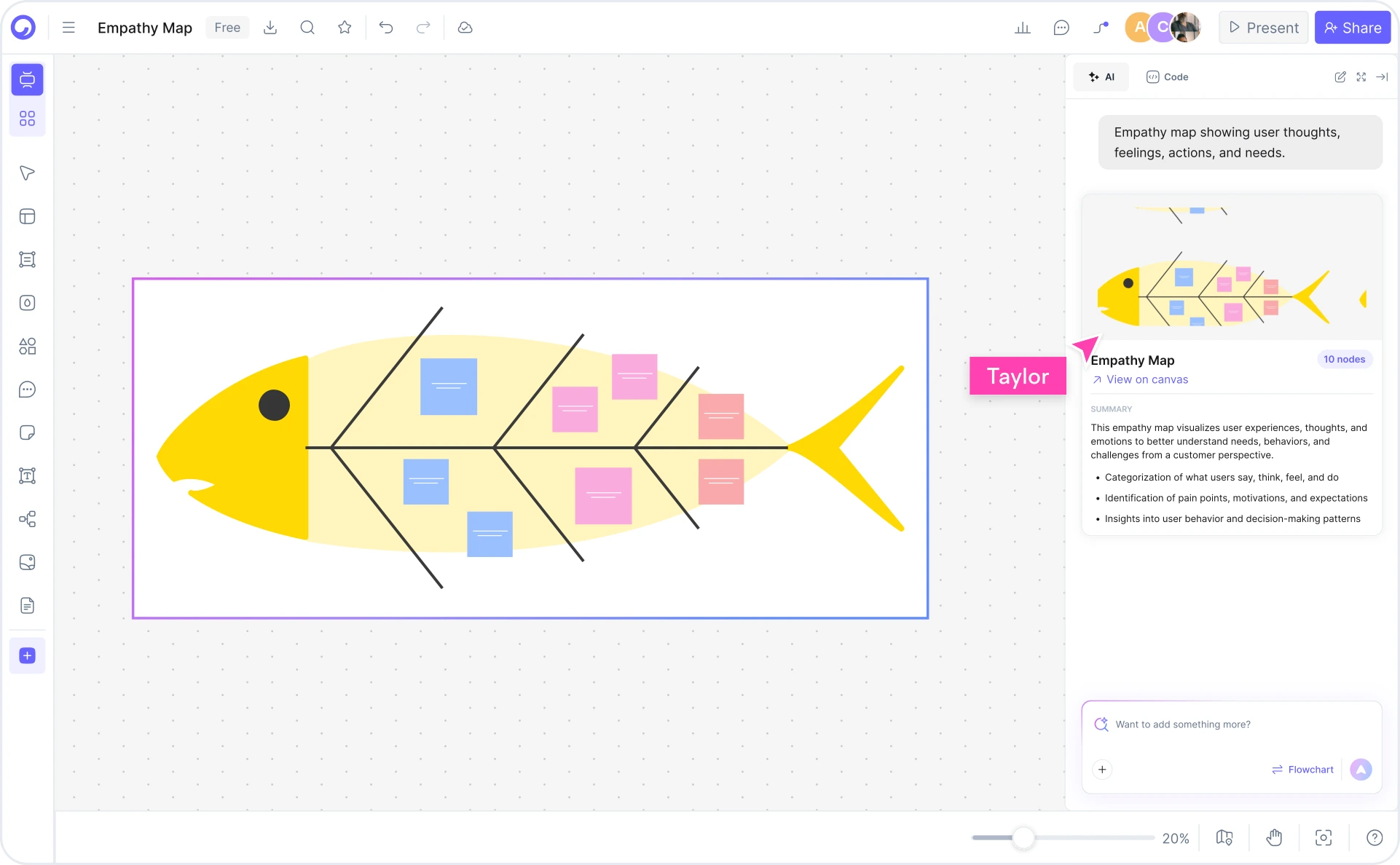
Cloudairy's AI Cause & Effect Diagram Maker eliminates manual brainstorming and unstructured problem analysis. Describe your problem in plain English — "Quality defects increased 15% last quarter" or "Customer payment gateway timeouts doubled" — and the AI generates a complete, structured cause-and-effect diagram with root causes, contributing factors, and causal chains. Export to Visio for documentation, draw.io for collaboration, PDF for sharing, or PowerPoint for presentations. Perfect for quality engineers, Six Sigma black belts, operations managers, incident response teams, and continuous improvement leaders.

How to Create a Cause & Effect Diagram with AI (5 Steps)

Go from problem statement to complete root cause analysis in five steps — AI-powered cause mapping, fishbone methodology, 5 Whys integration, and professional exports for quality teams.

1

Define the problem (effect statement)

Describe the quality problem, operational failure, or process defect in plain English. For example: "Product defect rate increased 15% last quarter", "Customer payment gateway timeouts doubled", or "Manufacturing cycle time exceeded SLA by 20%". Be specific about what went wrong and when.

2

AI analyzes causal patterns and generates the diagram

Cloudairy's AI instantly generates a complete cause-and-effect (fishbone/Ishikawa) diagram. The AI structures root causes into standard categories: People, Process, Equipment, Materials, Environment, and Methods — automatically mapping causal chains and contributing factors.

3

Populate main cause categories with specifics

Refine each fishbone category by adding specific factors and root causes. Use the integrated 5 Whys tool to ask "why" repeatedly under each category, drilling down from symptoms to systemic issues. Drag-and-drop to reorganize branches and add contributing factors.

4

Add causal chains and sub-factors

Connect secondary causes to primary causes, showing how multiple factors compound the effect. Label arrows with evidence, data points, or references to root cause analysis findings. Highlight the most likely root causes for focused problem-solving and preventive action planning.

5

Export for collaboration and documentation

Export to Visio VSD for formal documentation, draw.io XML for team collaboration, PDF for sharing across departments, or PowerPoint for presenting findings to leadership. Perfect for incident reviews, CAPA (Corrective and Preventive Action) reports, Six Sigma DMAIC projects, and continuous improvement initiatives.

How to create a cause and effect diagram with Cloudairy — five steps from problem definition to export

Start Creating Your Cause & Effect Diagram Free

Join quality engineers, Six Sigma black belts, operations managers, and continuous improvement teams who use Cloudairy to solve root causes in minutes. AI-powered fishbone analysis. 5 Whys methodology. Real-time collaboration. Multi-format export.

No credit card required • Start creating in seconds

Why Use Cloudairy as Your Cause & Effect Diagram Tool

Cloudairy is the only AI cause-and-effect diagram maker that combines AI problem-to-fishbone generation with 5 Whys methodology, Six Sigma integration, root cause analysis templates, and professional export for quality teams — all on a single platform.

AI Problem-to-Diagram

AI Problem-to-Diagram

Describe your quality problem, operational failure, or process defect in plain English and get a complete, structured cause-and-effect diagram in seconds. No brainstorming fatigue, no scattered sticky notes, no incomplete analysis. The AI maps causal chains across People, Process, Equipment, Materials, Environment, and Methods.

5 Whys Methodology

5 Whys Methodology Integration

Built-in 5 Whys tool forces teams to drill down from symptoms to root causes. Ask "why" at each branch until reaching systemic issues instead of surface explanations. Prevents misidentifying contributing factors as root causes — the most common RCA mistake in manufacturing and operations.

Quality Frameworks

Six Sigma, DMAIC & ISO 9001 Ready

Generate cause-and-effect diagrams aligned with Six Sigma DMAIC methodology (Define, Measure, Analyze, Improve, Control), ISO 9001 continuous improvement processes, and Lean manufacturing frameworks. Export findings directly into CAPA (Corrective and Preventive Action) reports and incident post-mortems.

Multi-Format Export

Professional Multi-Format Export

Export to Visio VSD for formal documentation, draw.io XML for team collaboration, PDF for cross-department sharing, or PowerPoint for executive presentations. Your root cause analyses stay portable across quality systems, CMS platforms, and compliance tools.

Real-Time Collaboration

Real-Time Team Collaboration

Work with quality engineers, operators, supervisors, and management simultaneously on the same cause-and-effect diagram. Add comments on root causes, mention team members, resolve action items, and track contributing factor ownership in real-time without context switching to email or chat.

Version History and RCA Templates

RCA Templates & Version History

Start from pre-built root cause analysis templates for common scenarios (quality defects, delivery delays, safety incidents, process failures, customer complaints). Track every version of your analysis and branching logic. Perfect for incident response, post-mortems, trend analysis, and continuous improvement documentation.

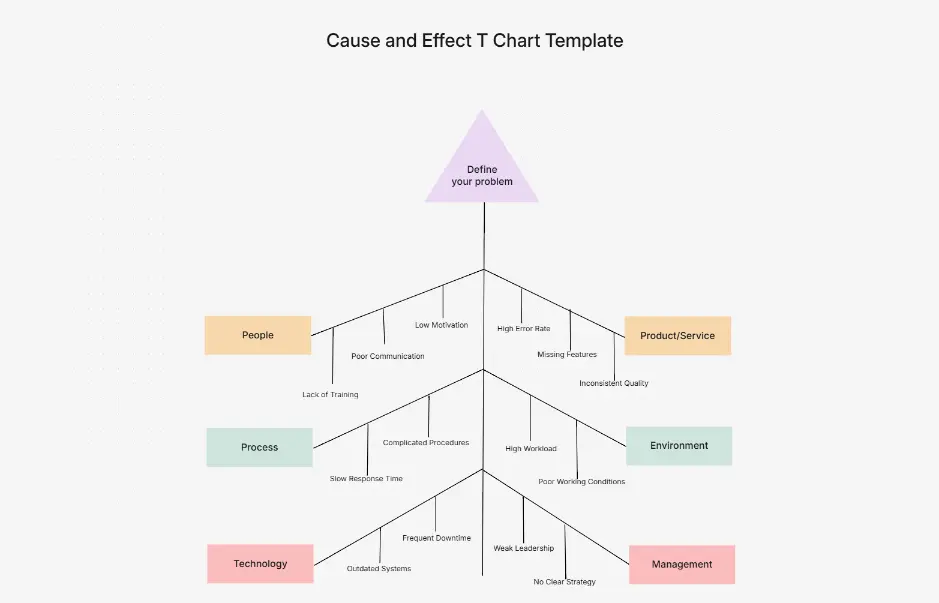
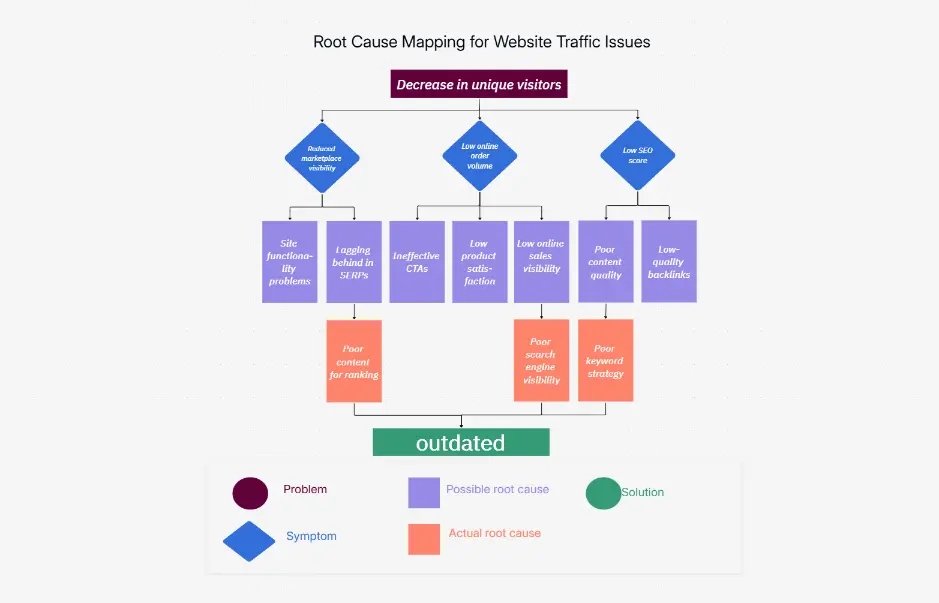
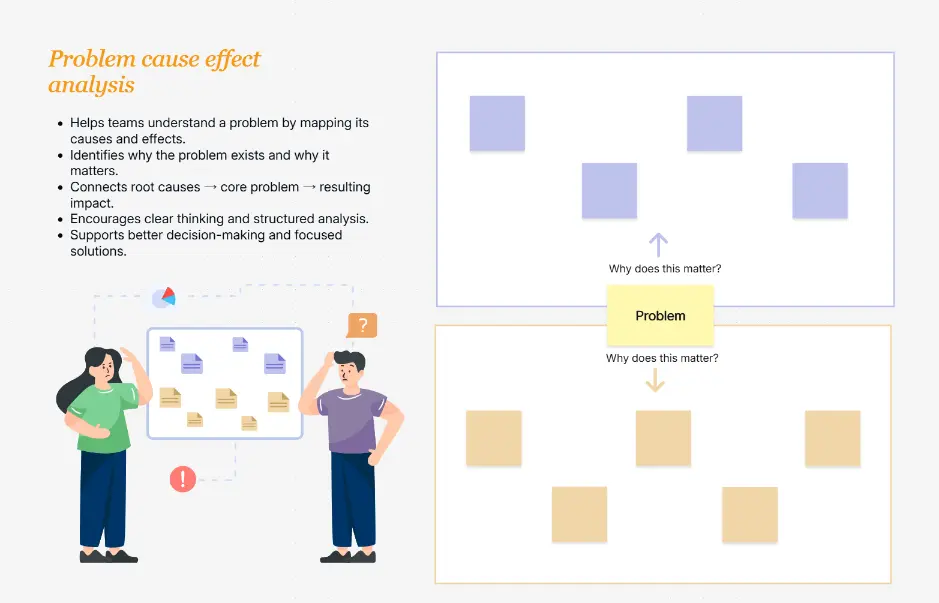
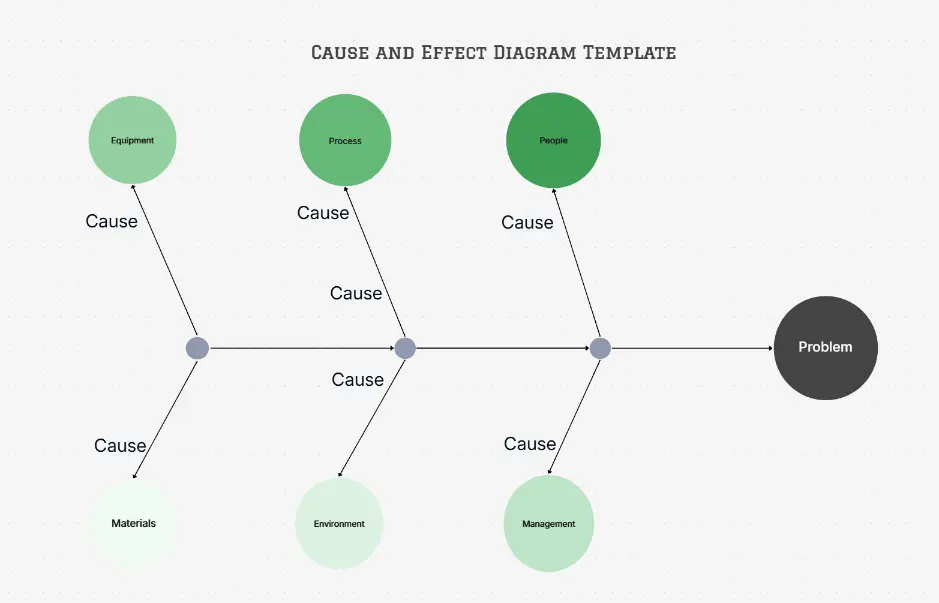
Cause & Effect Diagram Examples — Real-World RCA Scenarios

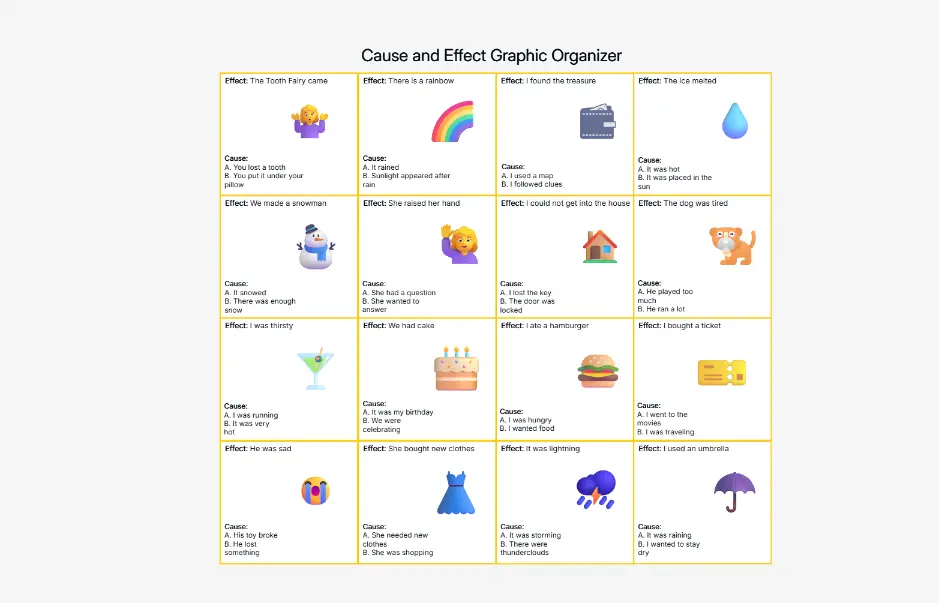
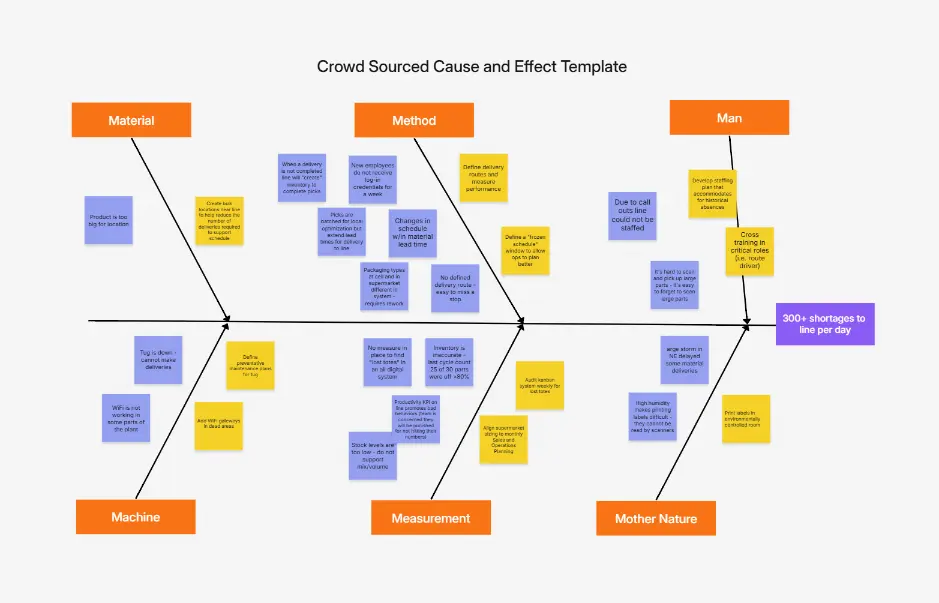
Explore cause-and-effect diagrams from real root cause analysis scenarios. Each example shows problem statement, cause categories, root causes, and corrective actions — adaptable for quality, manufacturing, operations, and continuous improvement projects.

Cloudairy vs Competitors — Cause & Effect Tools Compared

See how Cloudairy's AI cause-and-effect diagram maker compares to traditional diagramming tools, collaboration platforms, and enterprise quality management systems.

Feature Cloudairy SmartDraw Miro Canva Lucidchart Creately
AI Generation from Text Yes No No No Limited No
Fishbone/Ishikawa Diagrams Yes Yes Yes (templates) Yes (templates) Yes Yes
5 Whys Integration Yes No No No No No
Six Sigma / DMAIC Ready Yes Limited No No Limited Limited
RCA Templates Yes Limited Limited No Limited Limited
Free Tier Yes Limited (14 days) Yes Yes Yes Yes
Quality Team Collaboration Yes Yes Yes Limited Yes Yes

Who Uses Cause & Effect Diagrams?

Quality Engineers

Investigate quality defects and process failures. Use fishbone diagrams to map root causes, identify systemic issues, and develop corrective actions. Export to Visio or PDF for CAPA reports and regulatory documentation.

Six Sigma Black Belts

Conduct root cause analysis during the Analyze phase of DMAIC projects. Use cause-and-effect diagrams with 5 Whys methodology to drill down from symptoms to systemic issues and prevent problem recurrence.

Operations & Production Managers

Solve production delays, equipment downtime, and yield problems. Collaborate with team members to map causal chains, assign action items, and track improvements to SLA targets and KPIs.

Continuous Improvement Teams

Drive lean and kaizen initiatives. Conduct root cause analysis for waste identification, bottleneck resolution, and process optimization. Track problem-solving trends and document lessons learned for organizational knowledge.

Incident Response Teams

Analyze service outages, customer issues, and system failures. Generate incident post-mortems with root cause identification, corrective actions, and preventive measures. Share findings with leadership and engineering teams.

Quality engineers, Six Sigma black belts, and operations managers using Cloudairy for cause-and-effect diagrams

Frequently Asked Questions

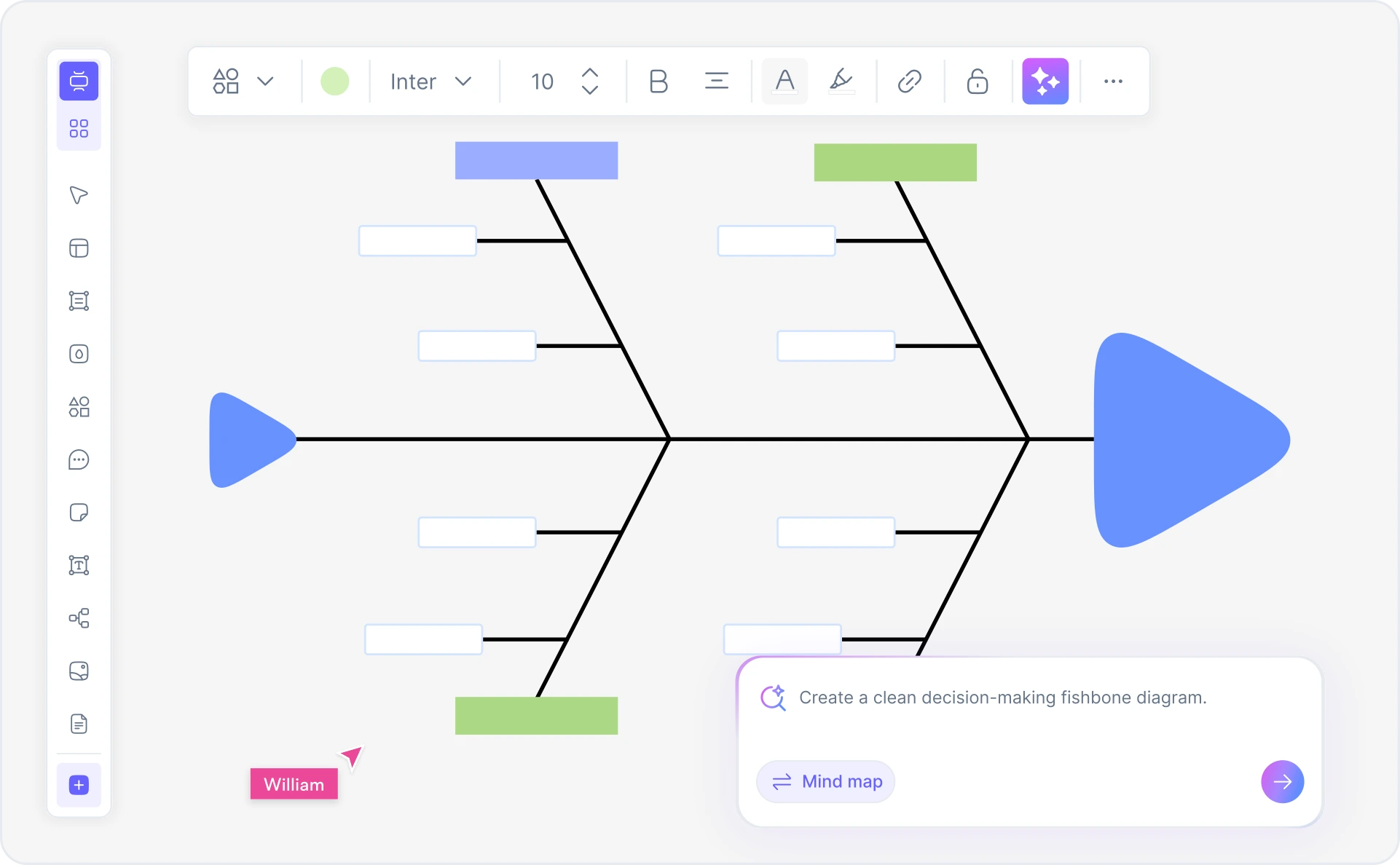
A cause-and-effect diagram (also called a fishbone or Ishikawa diagram) is a visual tool used in root cause analysis to systematically identify and organize potential causes of a problem. It displays the effect (problem statement) on the right, with main cause categories branching off as "bones," each subdivided into specific contributing factors. It's widely used in quality management, Six Sigma, incident investigation, and continuous improvement to drill down from symptoms to root causes.

The fishbone diagram (also called Ishikawa diagram, named after Dr. Kaoru Ishikawa) is a structured method for identifying root causes of a problem. It organizes potential causes into six main categories: People, Process, Equipment, Materials, Environment, and Methods. Each category branches into sub-factors, creating a visual "skeleton" that resembles a fish. It's a cornerstone tool in Six Sigma DMAIC (Analyze phase), quality audits, and CAPA (Corrective and Preventive Action) investigations.

Cause-and-effect diagrams are essential during the Analyze phase of Six Sigma's DMAIC methodology (Define, Measure, Analyze, Improve, Control). The diagram helps Black Belts and Green Belts systematically list and evaluate potential root causes from multiple perspectives, prioritize the most likely culprits using data and hypothesis testing, and inform targeted countermeasures. Cloudairy's fishbone tool integrates seamlessly with Six Sigma workflows, quality audits, and ISO 9001 continuous improvement initiatives.

Yes. Cloudairy supports real-time team collaboration, allowing quality engineers, operators, supervisors, and cross-functional teams to build cause-and-effect diagrams simultaneously. Team members can comment on causes, suggest sub-factors, and iterate on the analysis in real-time. This is invaluable for RCA sessions, incident post-mortems, and collaborative problem-solving, ensuring all perspectives are captured during the investigation.

Cloudairy supports multiple export formats tailored for quality and compliance workflows: Visio (.vsdx) for PowerPoint presentations and incident reports, draw.io XML for team collaboration and versioning, PDF for printable documentation and regulatory audits, and PowerPoint for management briefings and CAPA reports. Export directly from the editor to embed diagrams in quality reports, Six Sigma project documentation, and incident post-mortem files.
Yes. Cloudairy's free tier includes unlimited cause-and-effect diagram generation using the fishbone template, integrated 5 Whys methodology tool, PDF export, and basic team collaboration. Premium plans unlock advanced features like Visio (.vsdx) and draw.io XML export, PowerPoint export for reporting, RCA templates library, unlimited team members, and priority support.

Yes. Cloudairy supports importing existing cause-and-effect diagrams from draw.io XML and Visio formats. You can also describe a quality problem or failure mode in plain English and have AI generate the equivalent fishbone diagram with populated categories and root causes. This is ideal for documenting historical RCAs, transitioning from other tools, or accelerating incident post-mortems.

Cause-and-effect diagrams are essential in manufacturing, healthcare, software/IT operations, pharmaceutical and chemical processing, food and beverage, automotive, telecommunications, financial services, and quality management organizations. Any organization pursuing Six Sigma, ISO 9001, continuous improvement (lean/kaizen), or incident response uses fishbone diagrams for systematic problem-solving and root cause analysis.

Start with Cloudairy's free cause-and-effect diagram maker and integrated 5 Whys tool. Use AI generation to create fishbone diagrams from quality problems, learn the 5 Whys methodology for iterative problem decomposition, and practice with RCA templates (defect analysis, customer complaints, process failures). Combine with Six Sigma training (Green Belt/Black Belt), ISO 9001 quality audits, and incident response frameworks to build systematic problem-solving skills.

Success Stories from Our Community

See how cloud architects, solutions engineers, and DevOps teams use Cloudairy to create Azure architecture diagrams faster and with better results.

As a cloud architect, I need precision and speed. Cloudairy helps me design complex Azure architectures in minutes without losing detail or accuracy. The official Azure icons save me hours every week.

Cloudairy makes Azure solution design so simple. I can create client-ready architecture diagrams instantly and focus on delivering value instead of spending hours formatting Visio files.

I'm studying for AZ-305 and Cloudairy helps me visualize Azure reference architectures instantly. I can generate a landing zone diagram from a single sentence and use it as a study aid.

I use Cloudairy to teach Azure architecture in my courses. The AI generator lets students produce real-world diagrams on the first day instead of spending weeks learning Visio.

Our team uses Cloudairy to document every Azure deployment. The Visio export means our diagrams drop straight into client deliverables without any reformatting. Huge time saver.

Secure, compliant, and enterprise-ready

Cloudairy safeguards your work with enterprise-grade security, compliance, and access controls — so your teams can create, collaborate, and scale with confidence.

SOC 2 Type II
SOC 2 Type Ⅱ

Cloudairy is SOC 2 Type Ⅱ certified and penetration tested annually, ensuring your architecture diagrams and data meet the highest standards for security and reliability.

GDPR
GDPR

We comply with the European Union General Data Protection Regulation (GDPR) and extend it to all our customers even those outside of the EU.

ISO 27001
ISO 27001

Our Information Security Management System is ISO 27001 certified — the leading global standard for information security.

Flexible Pricing for Every Team

Free

Discover what Cloudairy can do for you. Start for free

$0

for unlimited members
Try for free

Upgrade now

Show key features

up-arrow

Includes:

Starter

Unlock unlimited and private boards with important features

$4

per member / month

billed annually

monthly

Show key features

up-arrow

Includes everything in Free, plus:

money-back

Business

MOST POPULAR

Ideal for agencies or growing businesses managing multiple projects.

$5

per member / month
billed annually

Show key features

up-arrow

Includes everything in starter, plus:

Enterprise Plan

For large organizations needing scalability, control, and security.

contact-pricing
Contact for pricing
Contact us

Upgrade now

Show key features

up-arrow

Includes everything in Business, plus: