Cloud System Architecture Template

Cloudairy
 Copy link

Get your team started in minutes
Sign up with your work email for seamless collaboration.
Whiteboard
Copy link

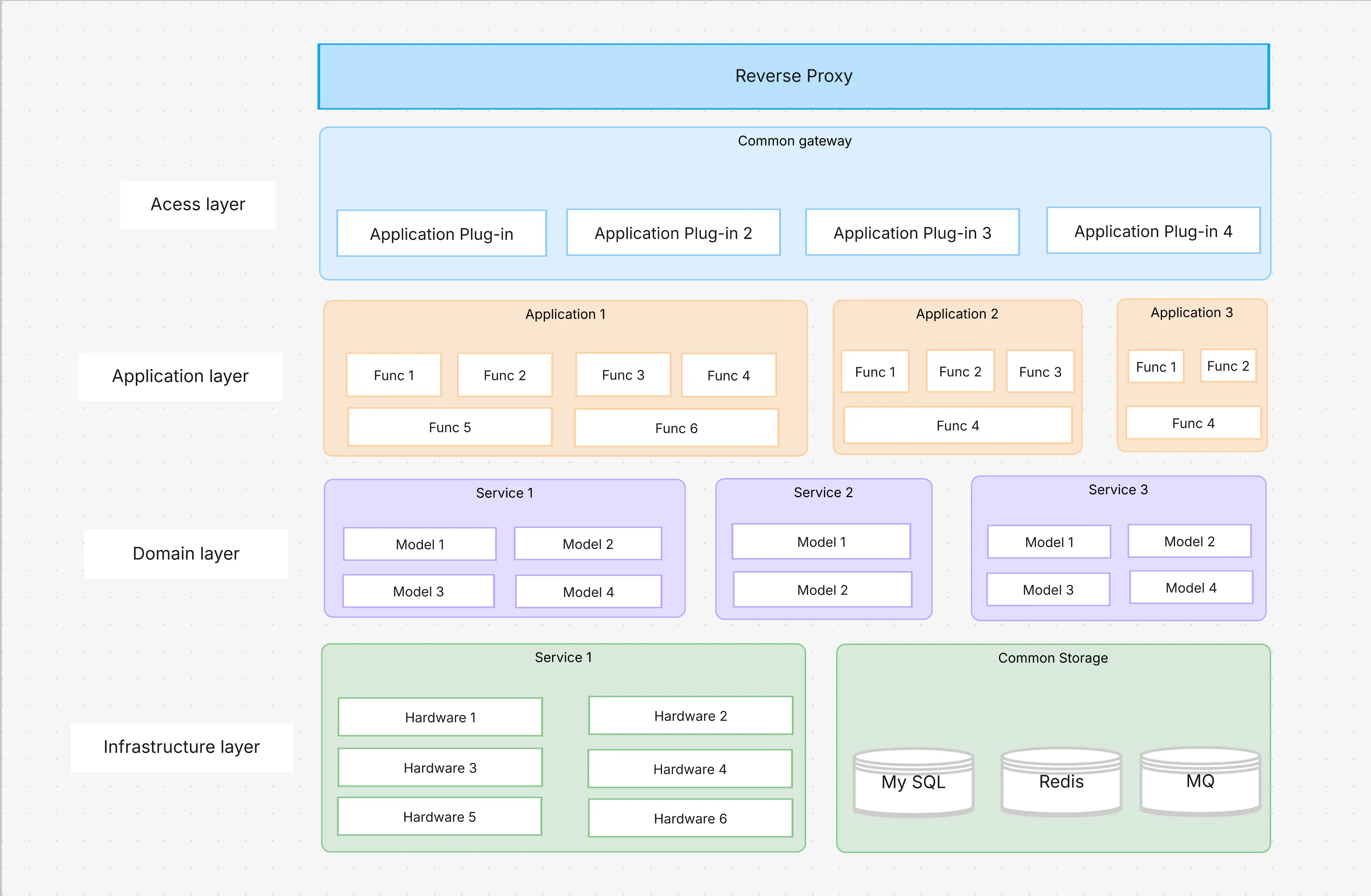
Design scalable cloud system architecture using this editable template. Easily visualize cloud application architecture and cloud-based enterprise deployments to plan, customize, and communicate robust, high-performance systems.
Design scalable cloud system architecture using this editable template. Easily visualize cloud application architecture and cloud-based enterprise deployments to plan, customize, and communicate robust, high-performance systems.
A diagram representing the architecture of a cloud system is a very detailed illustration of the collaboration of all the applications, services, and the infrastructure that exist in the cloud. It displays the components of compute, storage, networking, and identity that support the operation of the application workloads. By means of this template, you can represent cloud application architecture (in terms of front-end, back-end, and integration layers) and cloud-based architecture (pointing out distributed systems, scalability, and high availability) also. It is made for the purpose of providing a clear understanding to the teams involved in the processes of planning, migrating, or optimizing cloud solutions.
The template provided here contains the necessary elements for the creation of cloud architectures at both the application and infrastructure levels. The template includes ready-made parts to show the software layers, system dependencies, and infrastructure resources, making sure that the diagrams are complete but easy to understand. The template is application-focused with icons that show infrastructure and compliance layers, thus allowing for the capturing of every aspect of cloud system architecture in a single, cohesive view.
This template is absolutely perfect for times when you need to create, assess, or outline cloud environments that are the backbone of today's applications. It has great applicability in both technical and business contexts and thus becomes a good communicator not only for system architects but also for DevOps teams, compliance officers, and even executives. The template that gives a unified view of things not only aids in clearing up misconceptions but also guarantees that the IT strategies and business objectives are in line with one another.
This template is not only for a specific purpose; it can be used for different industries, providers, and workloads making it a very flexible solution for different cases. It can be scaled very easily; from a straightforward application-level view to a very large enterprise deployment with a combination of public and private clouds. Moreover, the template with its modifiable parts and notes allows the teams to point out the areas of governance, compliance, and optimization while making the diagrams understandable for both technical and non-technical audience.
Cloud system diagrams are widely used across industries to align IT with business goals. They serve as a blueprint for system modernization, application migration, and enterprise-wide digital strategies. By visually mapping workloads, dependencies, and compliance zones, these diagrams support decision-making and accelerate adoption of cloud-based architectures.
This section answers common questions about designing and documenting cloud systems.
1 What is the difference between cloud system architecture and cloud application architecture?
Cloud system architecture covers infrastructure and operations, while cloud application architecture focuses on the design of front-end, back-end, and integration services that run on the system.
2 Can this template be used for hybrid or cloud-based architectures?
Yes. The template supports both hybrid and cloud-based architectures, making it suitable for organizations with diverse environments.
3 Is this template only for enterprise use?
No, it works equally well for startups, SMEs, and enterprises designing application-centric or infrastructure-heavy systems.
Loading subcategories...
 Manage all your work in one place
Collaborate with your team
Use Cloudairy for FREE—forever
Explore More