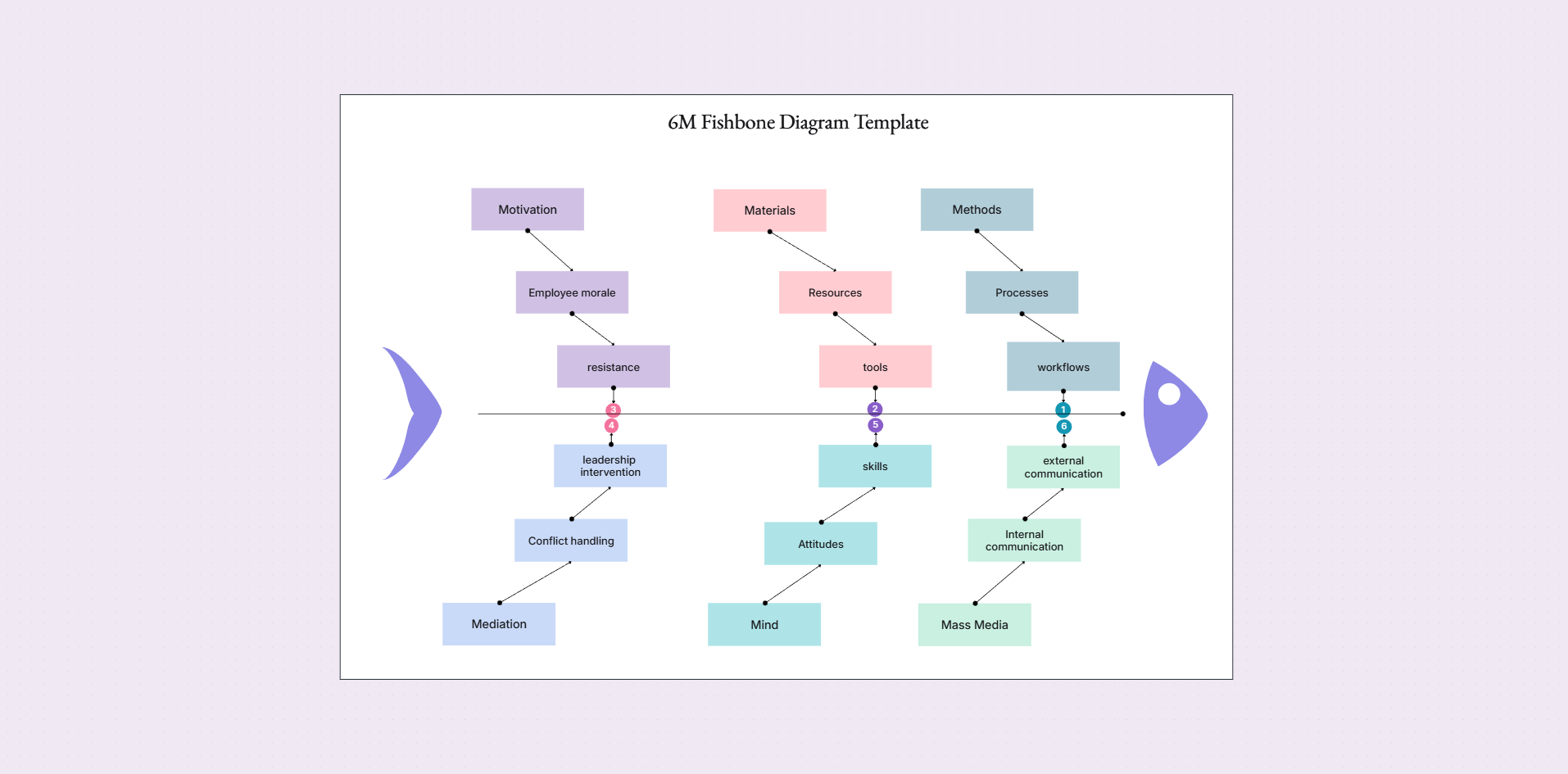
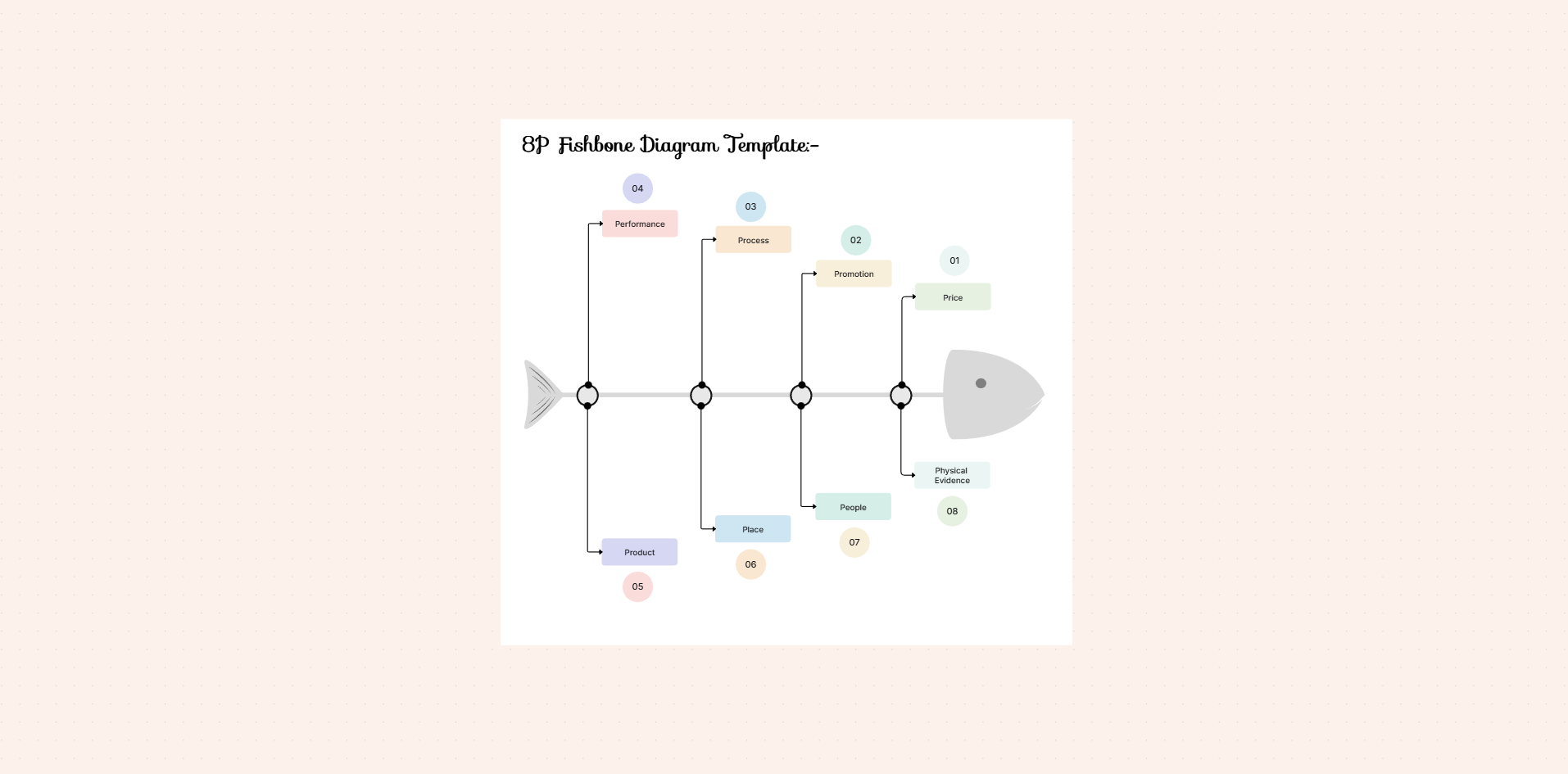
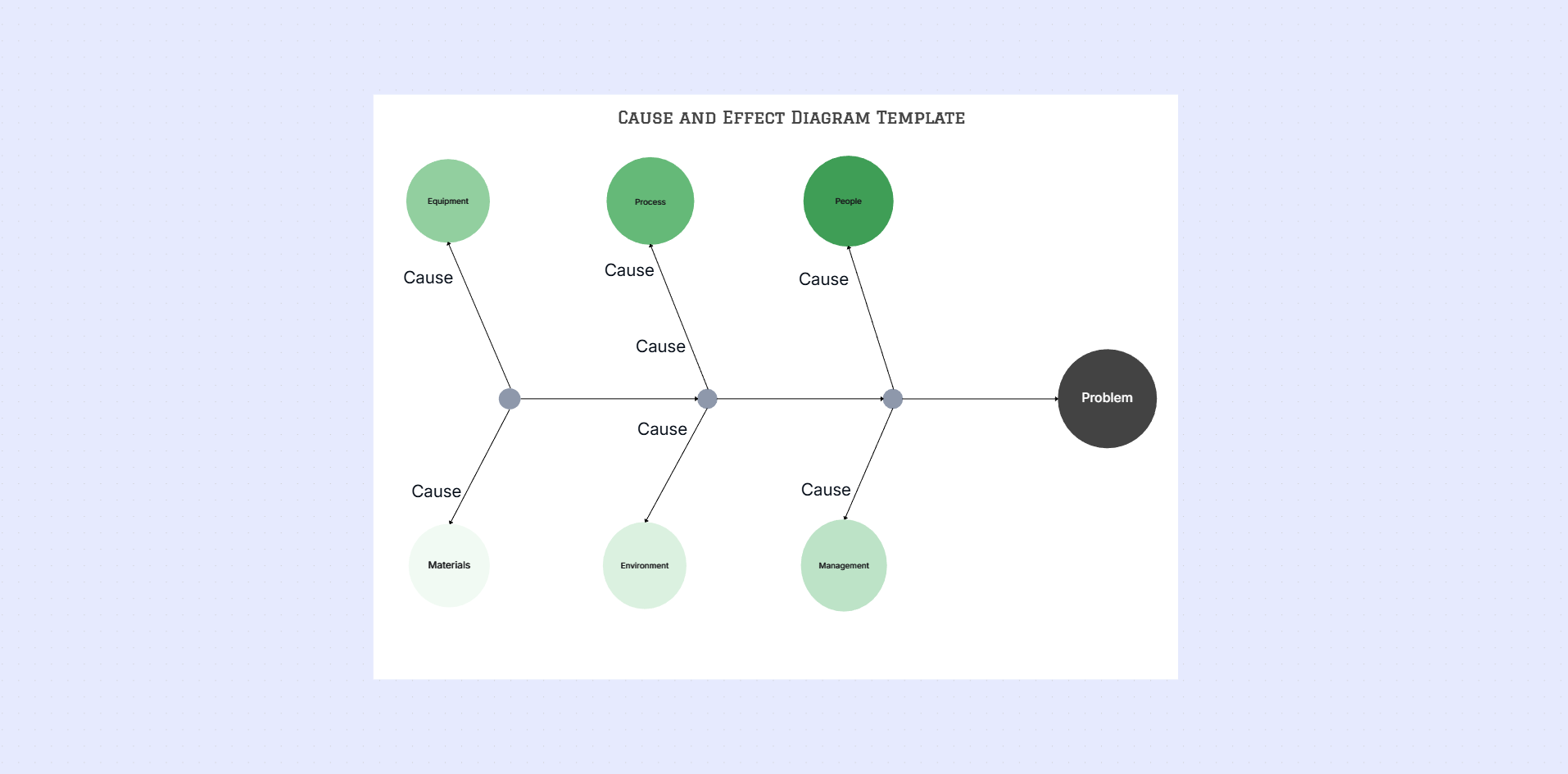
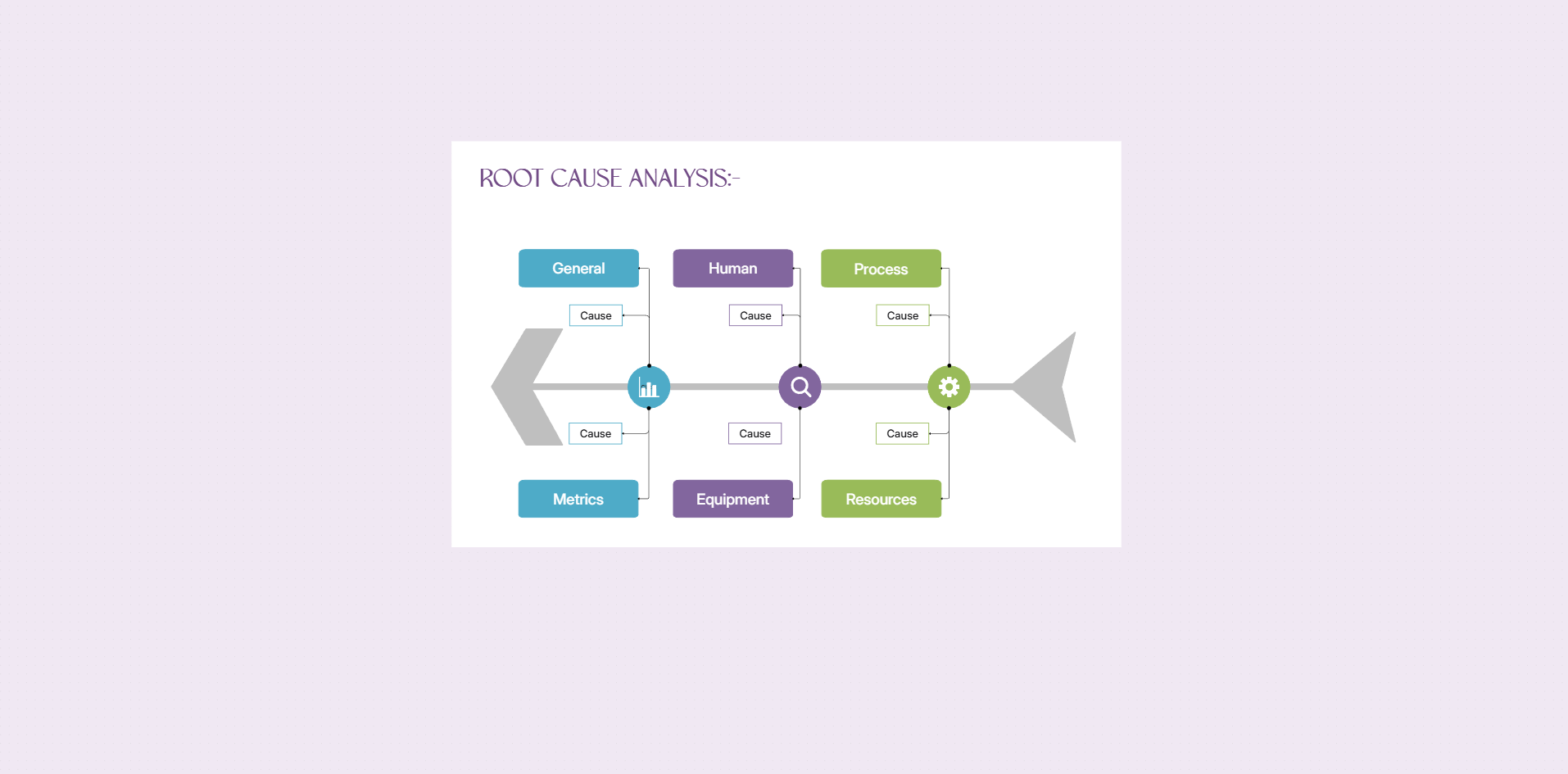
A fishbone diagram — also called an Ishikawa or cause-and-effect diagram — is a visual tool for root-cause analysis. The problem you are investigating sits at the "head" of the fish, and a central "spine" branches into major cause categories, each with sub-causes drawn as smaller bones. Instead of stopping at symptoms, it helps a team map every possible cause and pinpoint the real source of an issue, which makes it a staple of quality management, manufacturing, healthcare, and Six Sigma.
With Cloudairy you can build one in minutes: start from a fishbone template, write the problem at the head, add your cause categories, brainstorm sub-causes with your team, then share a live board.
Get to root cause fast with ready-made Ishikawa templates, AI drafting, real-time team brainstorming, and an infinite canvas built for clear, shareable cause-and-effect diagrams.
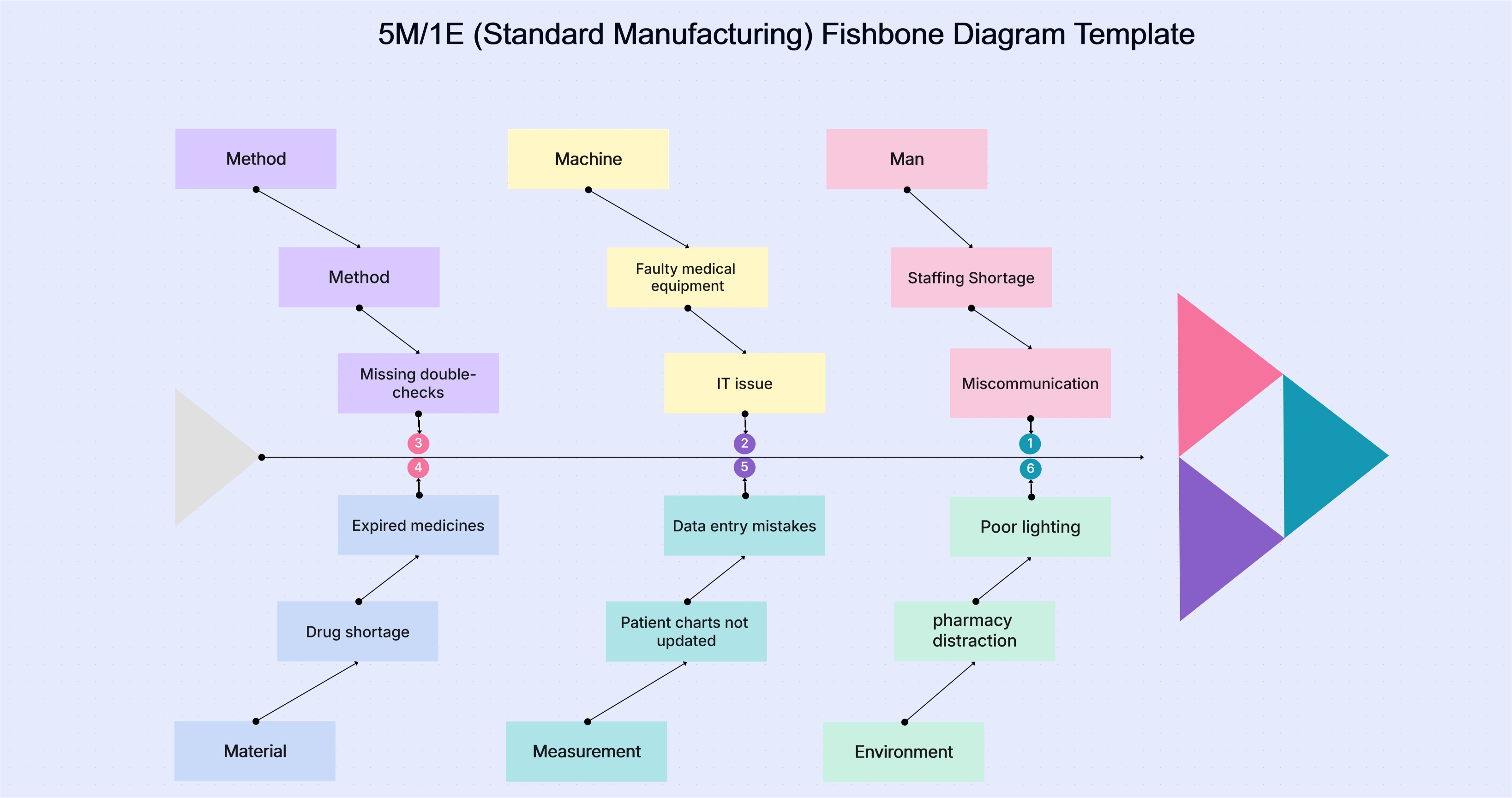
Create a clear fishbone diagram in four steps.
Write the problem or effect you are analyzing at the head of the fish, on the right of the canvas.
Draw the spine and add major cause branches — for example the 6 Ms: Method, Machine, Material, Manpower, Measurement, and Environment.
With your team, add possible causes as smaller bones off each category, asking “why” until you reach root causes.
Highlight the most likely root causes, then share the live board or export it as an image or PDF.
A fishbone diagram, also called an Ishikawa or cause-and-effect diagram, is a visual tool for root-cause analysis. The problem (the effect) sits at the head, and branches off a central spine group the possible causes into categories so a team can find the true source of an issue.
It is named after Kaoru Ishikawa, the Japanese quality-control expert who popularized it in the 1960s. It is also called a fishbone diagram because its shape resembles a fish skeleton, and a cause-and-effect diagram because it links causes to an effect.
The 6 Ms are the classic cause categories used in manufacturing: Method, Machine, Material, Manpower (People), Measurement, and Mother Nature (Environment). They are a starting framework — you can rename or replace the branches to fit your problem.
Use a fishbone diagram when you need to find the root cause of a recurring problem, run a structured brainstorming session, or prepare for a Six Sigma or quality-improvement project — anywhere you want to move past symptoms to underlying causes.
Start from a fishbone template or a blank canvas, write the problem at the head, add your main cause categories as bones off the spine, brainstorm sub-causes on each branch, then analyze and share the board with your team.
Yes, you can create fishbone diagrams free — no credit card required — with AI drafting, ready-made templates, and real-time collaboration.
Start fast with Cloudairy's ready-made fishbone and cause-and-effect templates — for manufacturing, quality, healthcare, and problem-solving. Customize any of them in minutes.
Cloudairy makes every kind of diagram — here are a few teams reach for most.
Welcome offer
Get Cloudairy Starter at 60% off — everything, without the cap. Welcome-offer pricing for your first 72 hours.